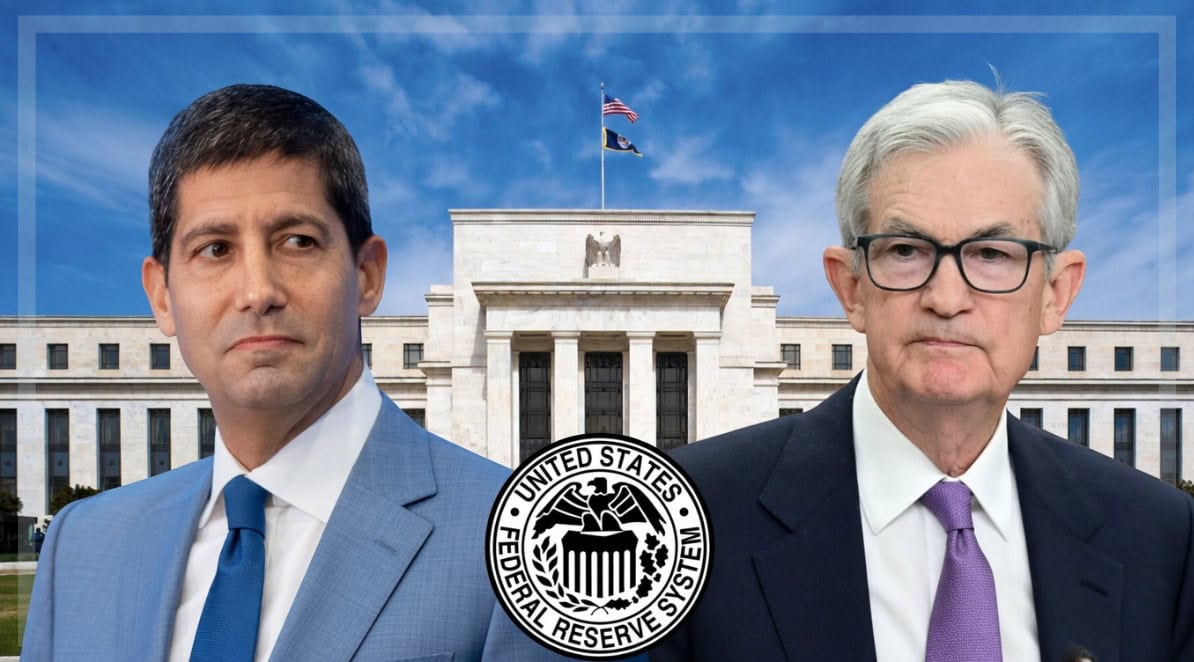
The Federal Open Market Committee (FOMC) held interest rates steady at 3.5% to 3.75% on Wednesday in what is almost certainly Jerome Powell’s final FOMC meeting as chair. Four dissents highlighted deep divisions as Kevin Warsh cleared a key Senate hurdle the same day. Markets reacted with caution amid ongoing uncertainties from the Iran conflict, the closure of the Strait of Hormuz, and persistent inflation pressures.
The latest FOMC decision marked the third consecutive hold this year. With Powell’s chair term ending on May 15, his announcement that he will remain a Fed governor, potentially until 2028, has created one of the most unusual leadership transitions in modern central banking history.
At the same time, Warsh advanced out of the Senate Banking Committee on a 13-11 party-line vote, setting the stage for what could become a defining era for the FOMC.
After eight years spanning three administrations, 66 interest-rate-setting meetings, a pandemic, a criminal probe and countless attacks from the Trump administration, Jerome Powell capped his final policy meeting as chair of the Federal Reserve on Wednesday.…
— CNN (@CNN) April 30, 2026
Powell’s Final Act: Will It Deliver Stability Amid FOMC Transition?
In his prepared remarks and post-FOMC press conference, Powell struck a tone of continuity. He highlighted solid progress toward the Fed’s dual mandate of maximum employment and price stability but emphasized the need for patience.
Elevated inflation risks from Middle East supply shocks, tariffs, and a still-resilient labor market all factored into the decision. Powell described current policy as moderately restrictive and near the higher end of neutral after years of challenging economic conditions.
Powell directly addressed the leadership change, congratulating Warsh on his committee approval.
“There is only ever one Chair of the Federal Reserve Board,” he stated. “When Kevin Warsh is confirmed and sworn, he will be that Chair.” He downplayed potential friction from staying on as a governor, saying he plans to maintain a low profile and support a smooth FOMC handover while upholding institutional independence.
However, Powell’s continued presence on the Board creates an atypical dynamic.
Powell said he felt he had “no choice” but to stay, citing an unprecedented wave of legal attacks from the Trump administration that are “battering” the central bank’s independence.
“These legal actions by the administration are unprecedented in our 113-year history,” Powell said. “I worry that these attacks are battering the institution and putting at risk the thing that really matters to the public.. the ability to conduct monetary policy free from political considerations.” He added that he will remain in the governor role “for a period of time to be determined.”
The four dissents, the highest since 1992, revealed clear internal FOMC divisions, with some members favouring faster rate cuts and others supporting the current cautious stance. Powell described these differences as natural given the range of risks facing the economy.
Markets showed mixed reactions. Equities ended the day mostly lower, with the Dow and S&P 500 in the red amid rising oil prices, while the Nasdaq posted slight gains ahead of major tech earnings. The dollar held steady and Treasury yields edged higher as investors assessed the implications of the divided FOMC signals heading into the June meeting.
Warsh Moves Closer: What His Leadership Could Mean for the FOMC
Warsh’s nomination now heads to the full Senate, where Republican majorities suggest confirmation could come in the coming weeks.
A former Fed governor from 2006 to 2011, Warsh has been a vocal critic of the central bank’s expanded balance sheet and prolonged easy-money policies. He has consistently advocated for greater monetary discipline, higher real interest rates, and a meaningfully smaller Fed footprint.
While US President Donald Trump has called for lower borrowing costs, Warsh’s track record indicates he will place primary emphasis on inflation control over rapid policy easing.
Prospective Federal Reserve Chair Kevin Warsh keeps coming up with justifications to lower interest rates. None stand up to scrutiny, says former New York Fed President Bill Dudley https://t.co/YbXkMt0N0T
— Bloomberg Opinion (@opinion) April 30, 2026
What are the Market and Sector Implications of the FOMC Outcome?
The latest FOMC hold keeps borrowing costs elevated, creating headwinds for fintech lenders and digital asset firms at a time when many startups are actively seeking growth capital. Payments companies and crypto platforms, already managing tariff impacts and geopolitical risks tied to the Iran situation, must now prepare for a leadership shift that could reshape capital requirements and regulatory oversight in coming FOMC meetings.
Despite the high-profile leadership transition and ongoing debate around the size of the Fed’s balance sheet, many analysts predict these factors are unlikely to materially alter near-term FOMC policy.
The Powell-Warsh handover could prove turbulent on the surface, yet the Chair represents only one of twelve voting members on the FOMC. Warsh’s incentives are also expected to evolve once he is in office and no longer subject to removal.
The federal funds rate remains the primary policy instrument for now. A potential compromise could involve tweaks to the structure of policy rates to encourage banks to hold fewer reserves, rather than a dramatic shift in the overall operating framework.
The Road Ahead: Collaboration or Conflict for the FOMC?
Powell’s decision to remain as governor brings valuable institutional experience to the FOMC transition but also introduces the possibility of tension. He has stressed the importance of consensus-building and protecting the Fed’s independence from political pressure. Warsh, during his confirmation process, has pledged to maintain policy independence while implementing changes he believes are necessary to move beyond outdated approaches.
Powell’s final FOMC meeting delivered measured stability at the end of a tenure defined by multiple supply shocks. The coming months will reveal whether the two can collaborate effectively or whether internal FOMC divisions grow as the new chair charts his course.
Author: Ruben McCarthy
See Also:
Balance Sheet and Leadership Uncertainty Unlikely To Impact Fed Policy | Disruption Banking