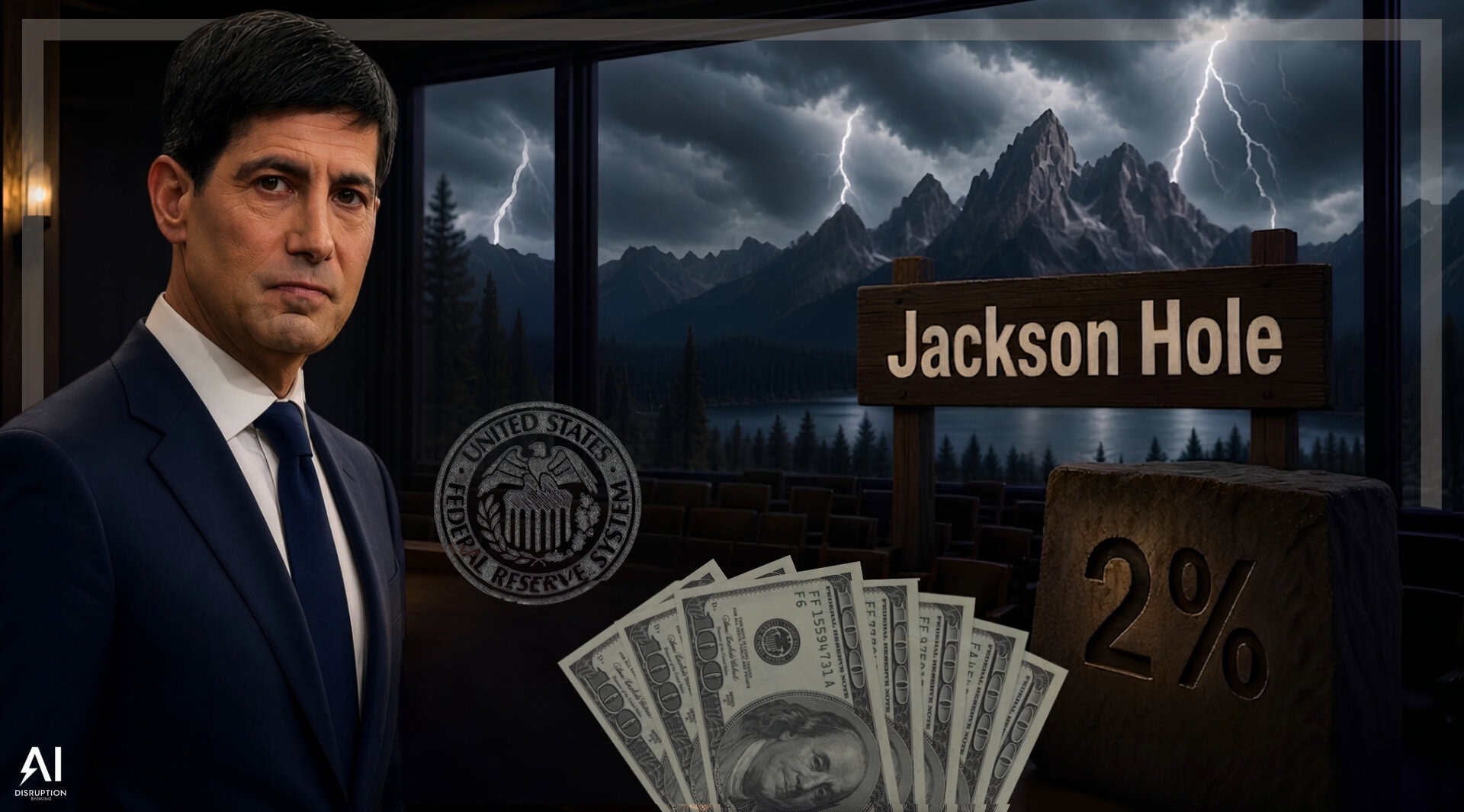
When Kevin Warsh chaired his first Federal Open Market Committee (FOMC) meeting on June 17, the rate decision itself was never in doubt. CME FedWatch put the odds of a hold at roughly 97% ahead of the meeting. The Fed duly held the benchmark federal funds rate at 3.50%–3.75%, where it has sat since the December 2025 cut, in a unanimous 12-0 vote.
What the market was watching was something else entirely. It was whether a new Fed chair would dismantle a decade-old communication framework, and whether the dot plot would signal cuts, holds, or hikes for the rest of 2026. On both counts, Warsh delivered a hawkish shock. The updated dot plot showed that 9 of 18 FOMC participants projected at least one rate hike by year-end, marking a sharp reversal from March when the median still implied a cut. The S&P 500 shed 1.21%, the Dow Jones fell 507 points, and the Nasdaq 100 dropped 0.99%. The 10-year Treasury yield jumped nearly seven basis points to 4.497%. Rates didn’t move. Markets did.
The Inflation Problem Kevin Warsh Inherited: 4.2% CPI, 6.5% PPI, and No Easy Cut
Warsh was confirmed by the Senate in a 54-45 vote on May 13, the most partisan confirmation of a Federal Reserve (Fed) chair in recent history. He was sworn in as the 17th chair on May 22. He inherits a central bank that has held rates through four consecutive meetings and an economy that has made cutting deeply complicated.
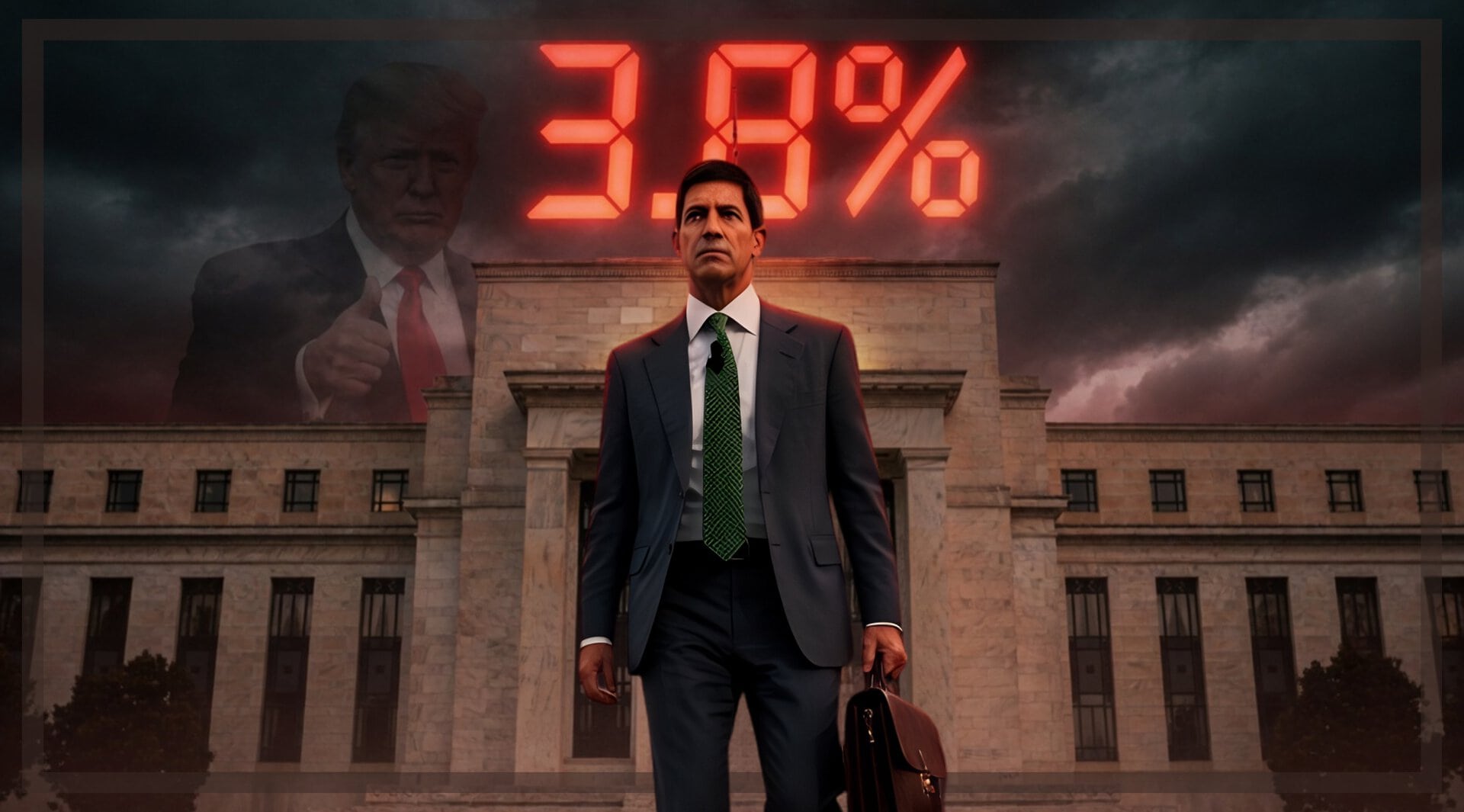
The consumer price index rose 4.2% year-over-year (YoY) in May. Its highest reading in more than three years, driven in large part by energy costs that surged roughly 23.5% amid the Iran conflict and Strait of Hormuz disruption. Producer prices climbed 6.5% YoY in May, a leading indicator of continued consumer price pressure. The personal consumption expenditures (PCE) price index, the Fed’s preferred gauge, ran at 3.8% in April. The labor market offered little cover either: the May non-farm payrolls report showed 172,000 jobs added, well above expectations, with unemployment at 4.3%.
The new FOMC projections reflect this reality. The median forecast now sees total PCE inflation at 3.6% at year-end, up sharply from 2.7% in March projections, while GDP growth was revised down to 2.2%.
Why Markets Wanted Cuts, and Why the Data No Longer Supported Them
For much of the Warsh nomination process, markets had priced in a more accommodative Fed. A leadership change, combined with expectations of AI-driven productivity and a belief that tariff-driven price pressures would prove temporary, had led investors to anticipate lower borrowing costs. Lower rates matter enormously to the assets that now dominate US indices: high-duration technology stocks, AI infrastructure plays, and growth equities whose valuations depend heavily on discount rates. The Nasdaq’s concentration in names like Nvidia and a handful of semiconductor and cloud companies means that any shift in rate expectations lands disproportionately in the index.
After the strong May jobs data, Goldman Sachs dropped its forecast for a December 2026 rate cut and pushed its expected cuts to 2027. A signal that even before the June meeting, the case for near-term easing had weakened materially.
Why Cutting Too Early Could Be Risky
The case for patience was written in the data. Inflation has run above the Fed’s 2% target for more than five years, a streak Warsh addressed directly at his first press conference. “We recognize that inflation has been running well ahead of the Fed’s long-stated inflation goal of 2 percent,” he said. “The commitment to deliver is strong, unanimous, and unambiguous. And that’s I think an important message we’ve missed for five years, and we’re going to fix that.”
The risk of easing into a period of re-accelerating prices, particularly with commodity markets still absorbing geopolitical shocks, weighed heavily on the committee. Of the 18 participants who submitted projections, 17 judged the risks to inflation as tilted to the upside. Matthew Luzzetti, chief US economist at Deutsche Bank, said after the meeting: “The risk that they might need to raise rates has clearly risen given what we got today.”
Deutsche Bank had flagged the risk in advance: “With growth solid, the labor market showing increasing signs of stabilization, inflation accelerating and fiscal policy and financial conditions supportive, the Fed’s policy stance might be miscalibrated,” Luzzetti and colleague Matthew Raskin, head of US rates research, had written.
Trump, Warsh, and Fed Independence
The political dimension of this latest FOMC meeting is impossible to ignore, though Warsh worked carefully to keep it at arm’s length. President Trump nominated Warsh because he wanted lower rates, and reportedly said in February 2026 that he would not have chosen Warsh if he wanted rate hikes. The June dot plot, pointing toward hikes, not cuts, is a direct rebuke of that expectation from within the FOMC itself.
Warsh’s response was to emphasize institutional credibility over political signals. He declined to submit his own dot plot entry, the only FOMC participant to sit out, framing the move as consistent with his long-held skepticism of binding forward projections. At his April Senate confirmation hearing, Warsh had stated directly: “Unlike many of my current and former Fed colleagues, I do not believe in forward guidance on interest rates tied to economic data.”
The June statement operationalized that philosophy. The FOMC statement came in at around 130 words, down from figures above 300 in recent meetings, stripping out the forward guidance language that had anchored market expectations for years. “Warsh’s first FOMC statement left the clear impression that there is a new chair in town,” said Ian Lyngen, head of US rates strategy at BMO. “The statement was significantly shortened — eliminating the forward guidance.”
What Wall Street Is Watching Next
The immediate consequence of the meeting was a repricing of rate expectations. After Warsh’s press conference, the CME FedWatch tool showed traders pricing in a 60.7% probability of a rate hike by October. The 2-year Treasury yield, which is most sensitive to near-term rate expectations, surged 16 basis points to its highest level in over a year.
Warsh also announced five task forces to review the Fed’s operations, covering its inflation framework, communications, the dot plot structure, productivity and AI, and the balance sheet. He said work would begin within weeks and conclude by year-end, signaling that the institution itself, not just its rate path, is under review.
The question that dominates Wall Street now is whether the inflation data can cool fast enough to prevent those penciled-in hikes from becoming real ones. A ceasefire in the Iran conflict has begun to pull oil prices lower, offering some relief, but the underlying trend remains uncomfortable. Kay Haigh, global co-head and CIO of fixed income at Goldman Sachs Asset Management, summed up the dilemma: “Our base case remains that the Fed can just about avoid hikes, but the path is narrow and there will be a high premium on the incoming inflation data.”
The next full projections update is due at the September 15-16 FOMC meeting if there is no change at the July 28-29 meeting. Between now and then, every CPI print, every payroll report, and every oil-price move becomes a potential swing factor for whether the dot plot turns from signal into action. The Warsh era has begun. A new sheriff is in town. The market now knows it is not what it had been priced for.
Author: Richardson Chinonyerem
The editorial team at #DisruptionBanking has taken all precautions to ensure that no persons or organisations have been adversely affected or offered any sort of financial advice in this article. This article is most definitely not financial advice.
See Also:
Warsh’s First Day at the Fed: Can Regime Change Beat 3.8% Inflation? | Disruption Banking