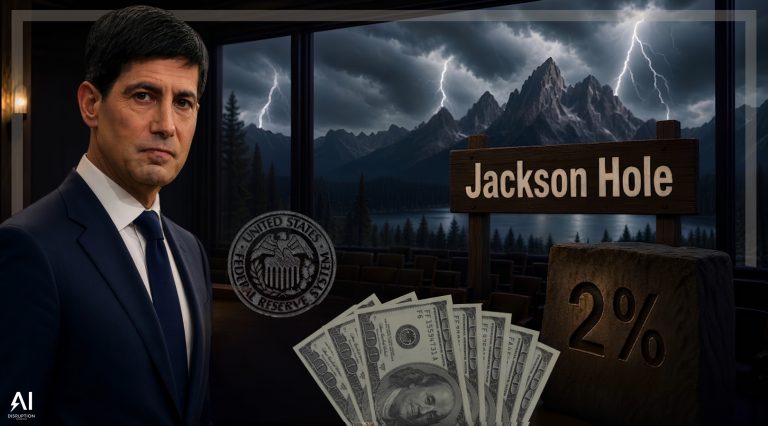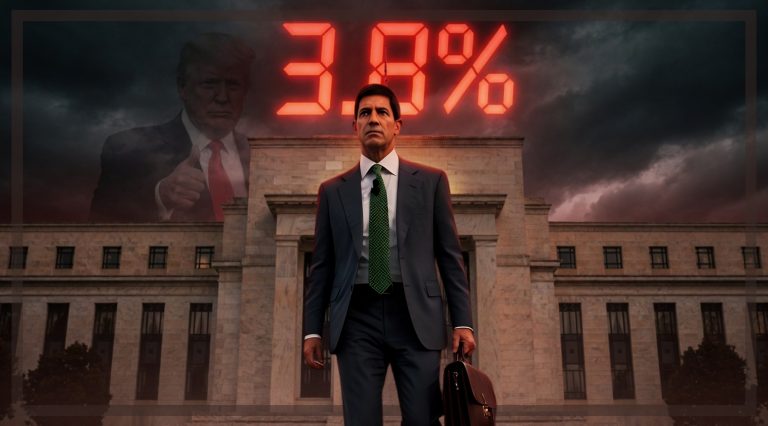

President Trump’s choice of Kevin Warsh as Fed Chair has spooked markets. Warsh, a former Fed governor (2006–2011) and Hoover Institution fellow, has long railed against the Fed’s “bloated” balance sheet. In a May 2025 speech, he warned that today’s ~$7 trillion Fed balance sheet is “trillions larger than it needs to be,” arguing a much smaller, “riskless” Fed would allow lower rates.
PIMCO analysts note that Warsh even advocates a new Fed–Treasury accord to gradually shrink that bloated sheet. In short, Warsh is seen as a monetary hawk favoring “monetary discipline, higher real rates, and a smaller Fed balance sheet.” His surprise nomination alone has jostled markets by signalling less easy money ahead.
“Trillions” Too Big: Warsh on the Fed’s $7T Balance Sheet
Warsh’s comments on the Fed’s “huge balance sheet” directly resonate today. He has described past QE and Fed asset expansion as fuelling “wealth effects” and inflation, even quitting in 2011 partly in protest. On the campaign trail, he has repeated that message: a gigantic Fed sheet invites inflation and market distortions.
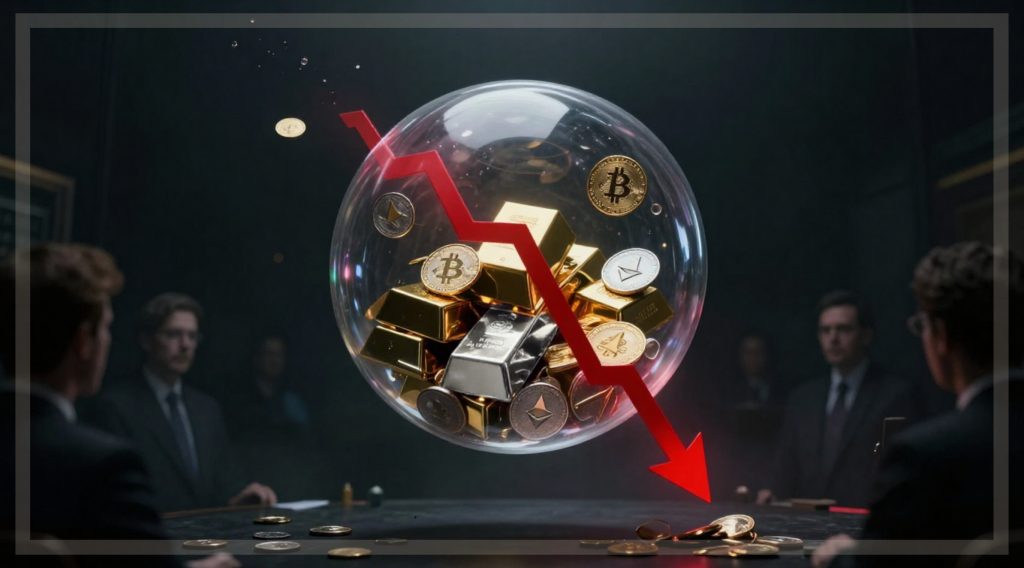
When news of his nomination broke on January 30, 2026, markets immediately reacted. The US dollar jumped, while gold and crypto plunged, as investors priced in an eventual liquidity squeeze.
As one strategist put it, Warsh and his backers agree that the Fed’s record balance sheet should be pared back. In effect, markets fear the era of Fed “money printing” may be ending.
Gold & Silver Market Crash: Trillions Wiped Out in Days
On that news, precious metals turned into a bloodbath. On January 30, gold futures dropped ~9% to ~$4,900/oz and silver tumbled ~27% to ~$83.35/oz, each marking their steepest one-day falls since 1980. Silver had just hit an all-time high of $121.78 earlier that week.
Analysts say these metals were grossly overbought after a year-long rally, so Warsh’s Fed-cuts-are-off cues merely triggered an inevitable fall. As Michael Antonelli, market strategist at Baird, quipped, “silver is just GameStop in 2026,” a meme-like frenzy that abruptly popped.
Either way, the precious metals meltdown underscores how sensitive the market is to Fed policy signals now.
Crypto Market Crash: $430B Vanishes as Bitcoin Plunges
Crypto markets felt the heat too. Bitcoin slid over 7% in a single day, trading around $78k by January 31 (from a ~$96k start to January), while ether sank ~12%. These losses took Bitcoin to roughly 30% below its October 2025 all-time high. Traders note that crypto had been buoyed by expectations of Trump’s pro-blockchain stance, but Warsh’s Fed message flipped that narrative.
Reuters reports that Warsh’s nomination is rallying the dollar and draining crypto liquidity, since Warsh openly calls for a “smaller Fed balance sheet” and regime change.
Annex Wealth’s Brian Jacobsen agrees: the Fed’s “bloated balance sheet” trapped liquidity on Wall Street, fuelling bubbles in crypto (and metals); slicing it back will likely pop those bubbles. In short, both gold/silver and crypto had ridden the Fed’s easy-money wave, and now both are offloading.
Whales Buy the Dip Amid Market Crash: 110K BTC Accumulated
Surprisingly, sharp crypto losses have lured big players back in. On-chain data show major Bitcoin holders (1000+ BTC wallets) redistributed roughly 110,000 BTC in the past month, their heaviest reshuffle since the 2022 crash. In other words, some “smart money” is scooping up coins at lower prices.
Whales have redistributed around 110,000 Bitcoin $BTC over the past two weeks. pic.twitter.com/9Lhv57EsXa
— Ali Charts (@alicharts) January 24, 2026
Santiment reports that while these large holders accumulate, smaller retail wallets are also aggressively buying, and larger whales are still reducing exposure. This retail–whale divergence often signals caution. It’s unclear yet which force will dominate.
It’s too early to say how far this rout will go, but one thing is clear: Fed liquidity will matter even more under Warsh.
History offers a parallel.
Quantitative Tightening Fears Trigger Massive Market Crash in Metals and Crypto
CoinBureau opines, in their analysis on their YouTube channel earlier today, that the violent cross-asset selloff reflects markets rapidly repricing the risk of renewed quantitative tightening under potential new Fed Chair Kevin Warsh. In just three days, trillions were erased from gold and silver, while crypto markets shed billions in four days. An unusually synchronized liquidation that signals macro, not idiosyncratic, stress.
According to CoinBureau, investors are discounting a more aggressive balance-sheet stance after years of accumulation, triggering de-risking across assets that had benefited most from liquidity abundance.
Their analysis highlights how the speed and breadth of the move point to positioning and correlation effects rather than a single catalyst. Parabolic advances in metals broke key technical levels, while crypto’s leverage unwind amplified downside momentum as funding flipped negative and ETFs slipped underwater.
The takeaway is not just near-term volatility, but a regime shift. That is, if Warsh follows through on tightening rhetoric, markets may need to reset valuations built on easy money assumptions, with rallies treated as tactical rather than structural until policy clarity emerges.
📉 WHAT'S CAUSING THE MARKET CRASH?!
— Coin Bureau (@coinbureau) February 2, 2026
Gold & silver lost $10T in 3 days.
Crypto wiped out $430B in 4 days.
There’s been no obvious catalyst, so what changed?
Markets are reacting to incoming Fed Chair Kevin Warsh’s message:
"The Fed should shrink its balance sheet."
He says… pic.twitter.com/FnxQryxrYq
Outlook: Taper Tantrum Déjà Vu – Warsh’s QT Rhetoric Ignites Market Crash
In 2013, Fed talk alone caused the “taper tantrum” when markets sold off hard on hints of balance-sheet tightening. Today, Warsh’s hard line on balance-sheet shrinkage is acting as that hint. If he implements the cuts he’s preaching, expect even tighter conditions: fewer dollars chasing assets means more downside pressure on stocks, commodities, and crypto alike.
In the meantime, traders will watch closely for any flip from Warsh or actual policy moves. As longtime Fed observers caution, the transition from a $7T Fed imprint back to “normal” won’t be smooth, and markets may already be bracing for a bumpy ride.
Author: Ayanfe Fakunle
The editorial team at #DisruptionBanking has taken all precautions to ensure that no persons or organizations have been adversely affected or offered any sort of financial advice in this article. This article is most definitely not financial advice.
See Also:
Who are the Disruptors Affecting Fed Decisions? | Disruption Banking
Will Trump’s Liberation Day Cause a Stock Market Crash? | Disruption Banking