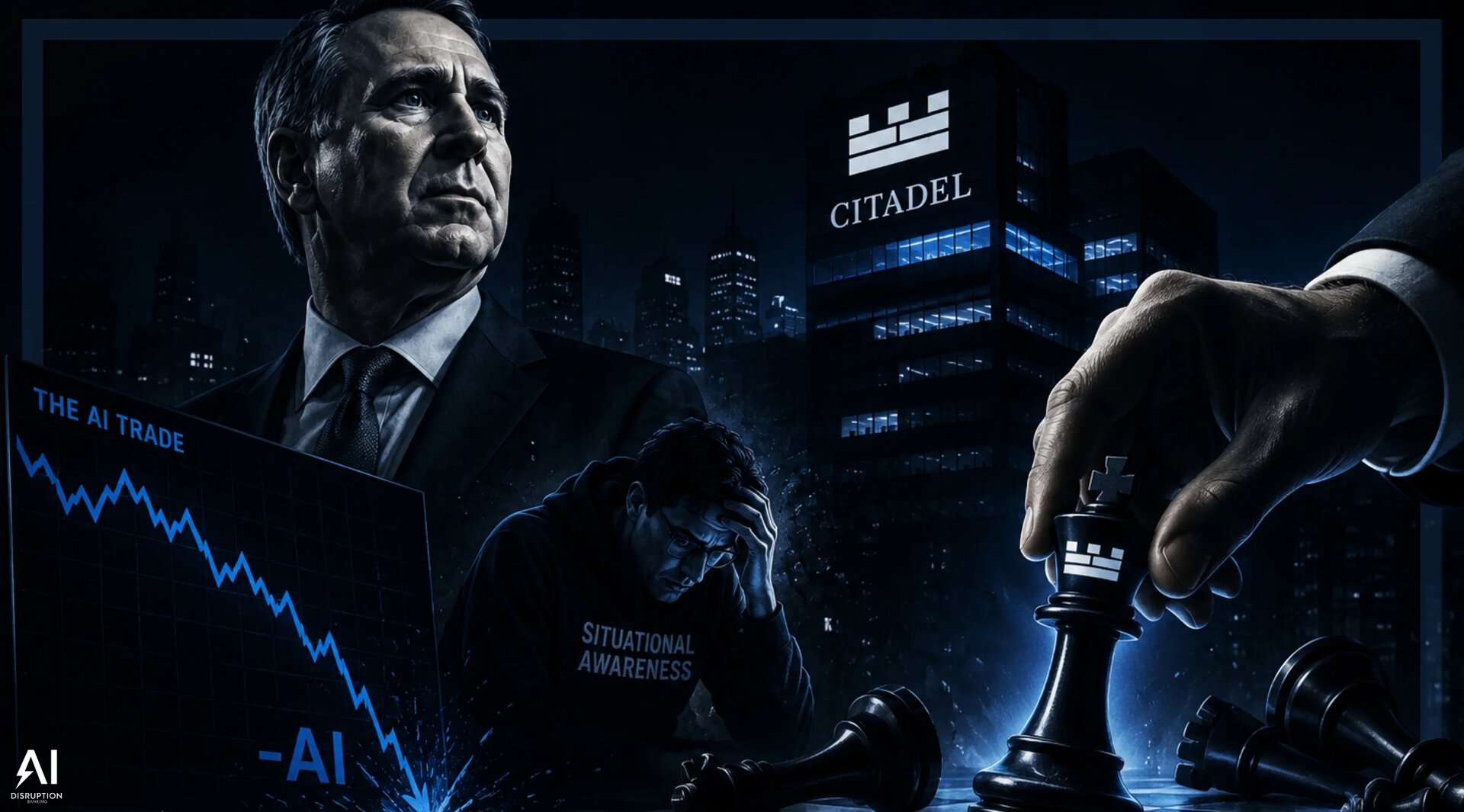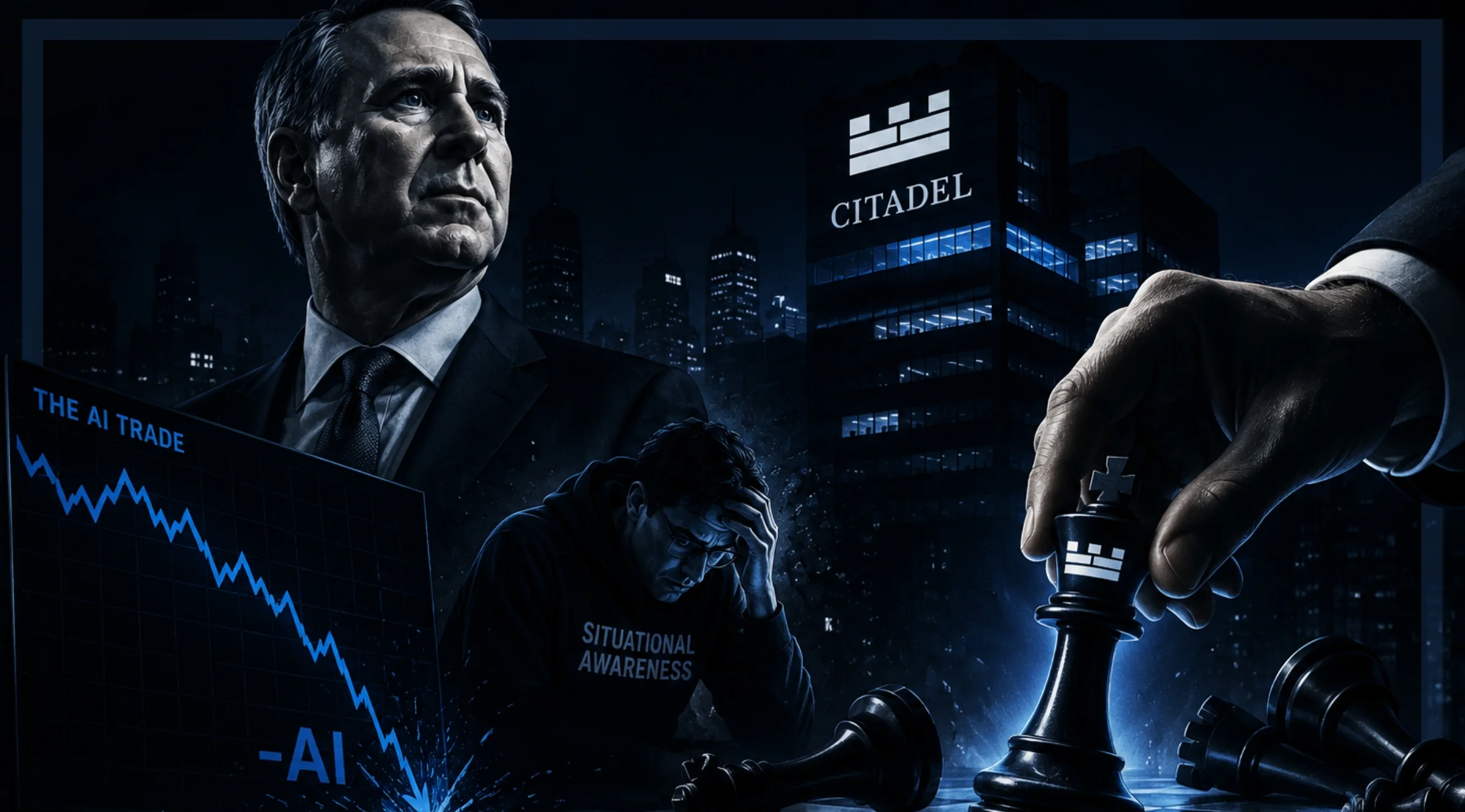
On 30 July, Disruption Banking asked whether Situational Awareness could raise fresh capital after its 439% first-half gain. The same day, new reports changed the story. Leopold Aschenbrenner’s fund had sold the bulk of its public-equity portfolio to Ken Griffin’s Citadel.
The sale followed steep losses across leveraged AI positions. It also produced an awkward reversal. In his 24 July investor letter, Aschenbrenner described the sell-off as creating some of the most attractive opportunities since early 2025. Less than a week later, Citadel was buying, and Situational Awareness was selling.
What Did Citadel Buy?
The Wall Street Journal first reported that Citadel had acquired the bulk of the fund’s stock portfolio. The Financial Times put Situational Awareness’s public-equity holdings at roughly $16 billion before the transaction. Reuters later reported that Citadel took a portion financed with borrowing from prime brokers.
Goldman Sachs, JPMorgan Chase, Bank of America and Citigroup helped arrange the transfer. Bloomberg reported that Millennium Management and Jane Street examined the portfolio and did not take part in the transaction. Jane Street is itself an investor in Situational Awareness, which our earlier piece noted is a rare step for the firm.
The deal was assembled within 24 hours after discussions with several potential buyers. Citadel did not buy Situational Awareness itself. Reuters said the fund would retain a book of roughly $10 billion, comprising stocks and private investments. Its stake in Anthropic was not sold. The fund has been sharply reduced, but it has not closed.
Why Did Situational Awareness Sell?
People familiar with the matter told the Wall Street Journal that the fund needed cash to meet margin-call demands from lenders. Reuters was more cautious, reporting that it was unclear whether lenders had issued margin calls before the deal. What is clear is that Situational Awareness faced a choice between raising fresh capital and offloading its leveraged book. It chose the portfolio sale.
The same leverage that helped produce a 439% net return through June worked against the fund when AI shares reversed. This was not an isolated sell-off. Goldman Sachs estimated that Asia-focused fundamental long-short funds lost an average of 18.6% in July through 28 July.
Did Citadel Push the Market Lower?
The timing has prompted speculation, especially on X, by the likes of Shay Boloor, chief market strategist at Futurum Equities. On 27 July, Frank Flight, head of macro strategy at Citadel Securities, argued that the Federal Reserve could deliver a surprise quarter-point rate rise. He said it could act as a “cleansing event” for market pricing. The Fed instead held its target range at 3.5% to 3.75% on 29 July, although three of the 12 voting members preferred an increase.
Boloor believes Citadel bought most of Situational Awareness’ “…assets at significantly lower prices knowing that if sentiment deteriorated enough the fund could be forced to sell which makes the entire sequence look…,” he says “absolutely ruthless.”
That sequence is striking, but it is not evidence of manipulation. Citadel Securities, the market maker that published the rate call, and Citadel, the hedge fund that bought the portfolio, are separate businesses, although Griffin founded both. None of the Wall Street Journal, Financial Times, or Reuters reports linked the note to the transaction or alleged that it was used to push AI stocks lower.
THIS HAS TO BE THE STORY OF 2026
— Shay Boloor (@StockSavvyShay) July 30, 2026
Ken Griffin’s Citadel was pushing surprise-rate-hike fears just days before the AI trade collapsed and forced 4x-levered Leopold Aschenbrenner's Situational Awareness to unload its book near the lows.
Citadel then reportedly bought most of those… https://t.co/g1htbNOdoY pic.twitter.com/1FL6KUzEAf
Did Citadel Buy the Dip?
Several stocks associated with Situational Awareness rebounded sharply on Thursday after the transaction. The deal also removed the threat of a disorderly sale into the open market. That makes Citadel’s purchase look well-timed.
However, the price and discount have not been disclosed, and Citadel’s hedges are not public. A one-day rebound cannot establish how much the firm made. Citadel bought risk from a leveraged seller with limited room to wait. Situational Awareness kept Anthropic and a smaller book. Whether Citadel caught the bottom will depend on whether the rebound lasts.
Citadel Has Done This Before
Griffin’s firm has taken this position before. In 2006, Citadel and JPMorgan absorbed the energy portfolio of Amaranth Advisors after its natural gas positions collapsed. In 2007, it took on the book of Sowood Capital. This is an example of when a single buyer removes a forced seller from the market rather than letting positions bleed out over weeks. That is the difference between this unwind and Archegos in 2021, when banks sold blocks in competition with one another, and several took heavy losses.
US indices rebounded on Thursday, although Microsoft‘s results did more of that work than any hedge fund unwind. Aschenbrenner argued in 2024 that the path to AGI (AGI means artificial general intelligence) would demand far more chips, memory and power than markets expected. Nothing this week has settled that argument. Whether the thesis survives is now a separate question from whether the fund that carried it does.
Author: Richardson Chinonyerem
The editorial team at #DisruptionBanking has taken all precautions to ensure that no persons or organisations have been adversely affected or offered any sort of financial advice in this article. This article is most definitely not financial advice.
See Also:
Ken Griffin’s Citadel Blasts Mamdani’s Viral Tax-the-Rich Stunt | Disruption Banking
Can the Situational Awareness Hedge Fund Raise Capital After its 439% H1 Gain? | Disruption Banking