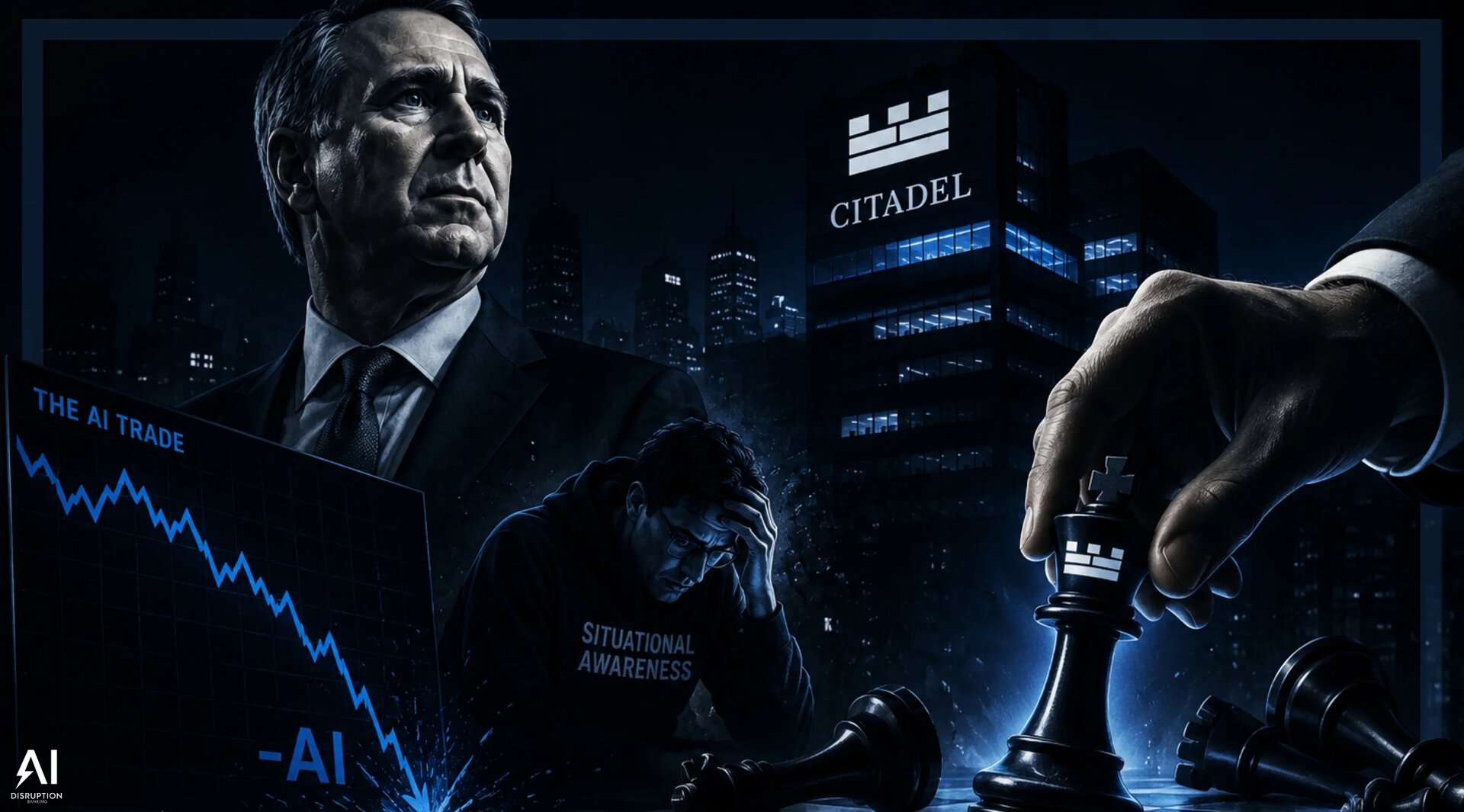
Three weeks after Ken Griffin’s Citadel absorbed the bulk of Leopold Aschenbrenner’s public-equity book, the multi-strategy giant has already distributed most of the risk.
In a Friday letter to clients obtained by CNBC, Griffin said Citadel has shed more than 80% of the aggregate risk from the original portfolio. The firm executed nearly 100 block trades totaling over $4 billion in market value. Those trades included the largest intraday blocks of the year in 10 different names. Griffin also noted that Citadel quickly exited the vast majority of the vega risk in the United States, “saving substantial capital in the process.”
According to a letter I obtained that Ken Griffin just sent to investors on the purchase of Situational Awareness’s portfolio, “to date, we have successfully shed more than 80% of the aggregate risk from the original portfolio. We have completed nearly 100 block trades totaling…
— Sara Eisen (@SaraEisen) August 21, 2026
What Griffin Told Clients
The letter marks Griffin’s first direct commentary on the late-July transaction. Discussions with Situational Awareness began on 29 July. One day later the AI-focused fund was forced to sell the majority of its public stock positions after heavy losses and margin pressure. Citadel emerged as the buyer of a portfolio that had stood at roughly $16 billion before the sale.
Griffin credited the banks that facilitated the transfer. “A transaction of this magnitude could not have been completed without the extraordinary cooperation of the trading and prime brokerage teams at the banks serving both firms,” he wrote. “I am grateful for the focused effort they brought to the rapid transfer of the portfolio.”
Wellington’s Strongest Month Since 2022
Citadel’s flagship Wellington fund finished July up 5.94%, its strongest month since 2022 and leaving the vehicle up more than 12% year-to-date (YTD).
How the July Transaction Unfolded
As Disruption Banking noted on 30 July, Situational Awareness sold the bulk of a roughly $16 billion public-equity book to Citadel after leveraged AI positions reversed sharply. The same day we had asked whether the fund could raise fresh capital following its 439% first-half return. The portfolio sale provided an alternative route.
Situational Awareness retained a smaller book, including its Anthropic stake, and continued operating with roughly $10 billion in remaining assets. The transaction removed the immediate threat of a disorderly forced sale into the open market.
A Pattern Citadel Has Followed Before
As we noted in our earlier report, Griffin’s firm has stepped into similar dislocations in the past, absorbing the energy book of Amaranth Advisors in 2006 and the positions of Sowood Capital in 2007. In each case a single large buyer removed a distressed seller rather than allowing positions to bleed out over weeks.
The latest de-risking has moved with comparable speed: more than $4 billion in block trades completed in roughly three weeks. The precise discount at which Citadel acquired the positions and the economics of the remaining exposure remain undisclosed in the Friday letter. What is already clear is the scale and pace of the distribution.
Situational Awareness’s original thesis, that the path to AGI would demand far more chips, memory and power than markets had priced, has not been resolved by the July drawdown or by Citadel’s subsequent sales. The concentrated, leveraged version of that thesis has been sharply reduced. The multi-strategy platform that absorbed the risk has already moved most of it on.
Author: Richardson Chinonyerem
The editorial team at #DisruptionBanking has taken all precautions to ensure that no persons or organisations have been adversely affected or offered any sort of financial advice in this article. This article is most definitely not financial advice.
See Also:
Did Citadel Buy the Dip in Situational Awareness’s Leveraged AI Unwind?
Can the Situational Awareness Hedge Fund Raise Capital After its 439% H1 Gain?
Ken Griffin’s Citadel Blasts Mamdani’s Viral Tax-the-Rich Stunt