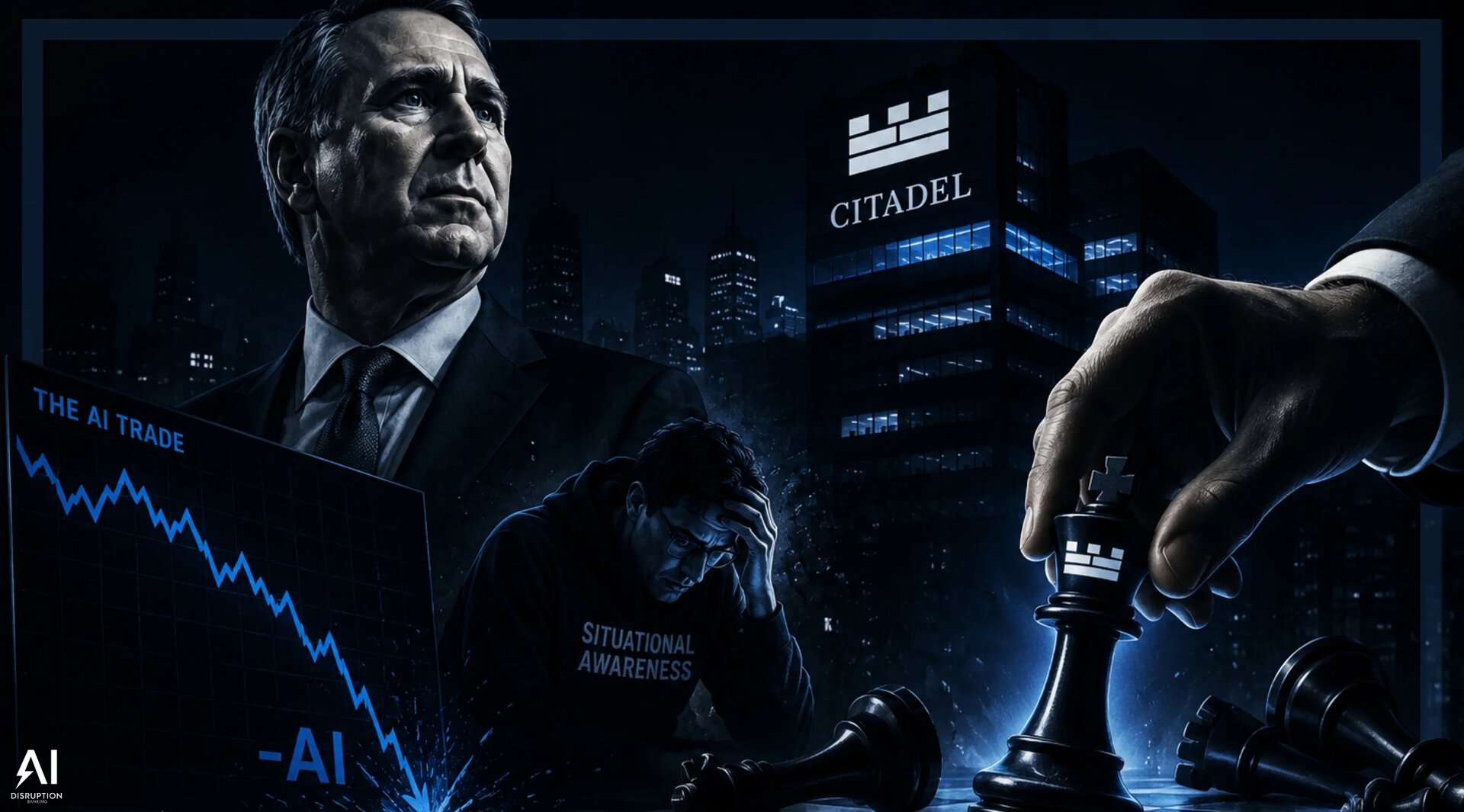
On 4 June 2024, a little-known former OpenAI researcher published Situational Awareness: The Decade Ahead. Today that same researcher and the hedge fund he built around the essay are drawing intense attention. The fund is called Situational Awareness LP.
In the essay, Leopold Aschenbrenner argues that continued scaling of compute, algorithmic efficiency and capabilities makes AGI by around 2027 strikingly plausible. AGI means artificial general intelligence, systems that can match or exceed human-level performance across many tasks. Automated AI research could then trigger a rapid intelligence explosion. This would quickly produce superintelligence, systems vastly smarter than humans. The shift would carry profound implications for national security, energy infrastructure and the geopolitical race between the US and China.
That thesis became the foundation of the hedge fund that bears the same name. According to the Financial Times, which reviewed an investor letter sent on 24 July, Situational Awareness delivered a 439% net return in the first half of 2026. The recent AI-stock sell-off has now interrupted that run, and the fund is seeking fresh capital from existing investors.
Who Invested in Situational Awareness so far?
Leopold Aschenbrenner was born in Berlin and graduated from Columbia University as valedictorian at 19. He joined OpenAI’s Superalignment team in 2023 and was fired in April 2024. By late that year he had launched Situational Awareness LP and taken the role of CIO and managing partner.
Early investors included Stripe co-founders Patrick and John Collison, former GitHub CEO Nat Friedman, and investor Daniel Gross. Jane Street later joined as an investor, a notable move given how rarely the firm backs external managers. Aschenbrenner has described the firm as an investment vehicle focused on the path to AGI.
Where Situational Awareness has Invested
The fund’s public holdings have included names such as Riot Platforms, Core Scientific, CleanSpark, Bloom Energy, AMD and Oracle. Several of these positions contributed to the strong first-half performance. More recently, some of the same stocks have come under pressure during the AI sell-off.
Beyond the listed equities, Situational Awareness has also been linked to private investments and venture deals, including Anthropic, Fluidstack, MatX, T1 Energy and Sharon AI. According to Dealroom and other reports, these exposures form part of the broader portfolio that Aschenbrenner has built around the AGI infrastructure thesis.
Some of these positions helped with the 439% that the hedge fund made in the first half of 2026. However, today, some of them are the reason why Situational Awareness is seeking to raise new capital.
The Letter and the Capital Raise
On 24 July, Aschenbrenner sent an investor letter presenting the fund’s half-year results. The Financial Times, which reviewed the letter, reported that Situational Awareness had delivered a 439% net return in the first half of 2026. In the same letter, Aschenbrenner acknowledged that the fund had “not been immune” to the market swings, particularly in Asia.
The FT also reported that Situational Awareness had used borrowing to magnify its returns, a strategy that can amplify losses when markets reverse. Aschenbrenner framed the recent sell-off as creating some of the most attractive opportunities since early 2025 and invited investors to commit additional capital from 1 August. One potential catalyst he highlighted was a possible IPO of Anthropic.
How Unusual Is Aschenbrenner’s Rise?
Aschenbrenner’s rise invites comparison with other young managers who have broken through in specialised strategies. Nikita Fadeev, for example, began building quant strategies for digital assets while still at university and later took the lead at Fasanara Digital, the crypto arm of London-based Fasanara Capital. Like Aschenbrenner, he combined technical conviction with an ability to attract institutional capital at a relatively young age.
The parallel only goes so far. Fadeev operates inside a larger established platform with assets in the hundreds of millions. Aschenbrenner, by contrast, has scaled an independent, thesis-driven fund to roughly $20 billion in under two years, with almost no prior professional investing experience. Few managers in their mid-twenties have done anything comparable.
Whether he can navigate the current drawdown and raise the additional capital he is seeking will be an early test of how durable that model proves to be.
Author: Andy Samu
The editorial team at #DisruptionBanking has taken all precautions to ensure that no persons or organizations have been adversely affected or offered any sort of financial advice in this article. This article is most definitely not financial advice.
See Also:
The AI5: The New Powerhouse Redefining the AI Era | Disruption Banking
How Hudson River Trading is Breaking Records in 2025 | Disruption Banking