The Rise in Popularity of Cryptocurrency in the Philippines
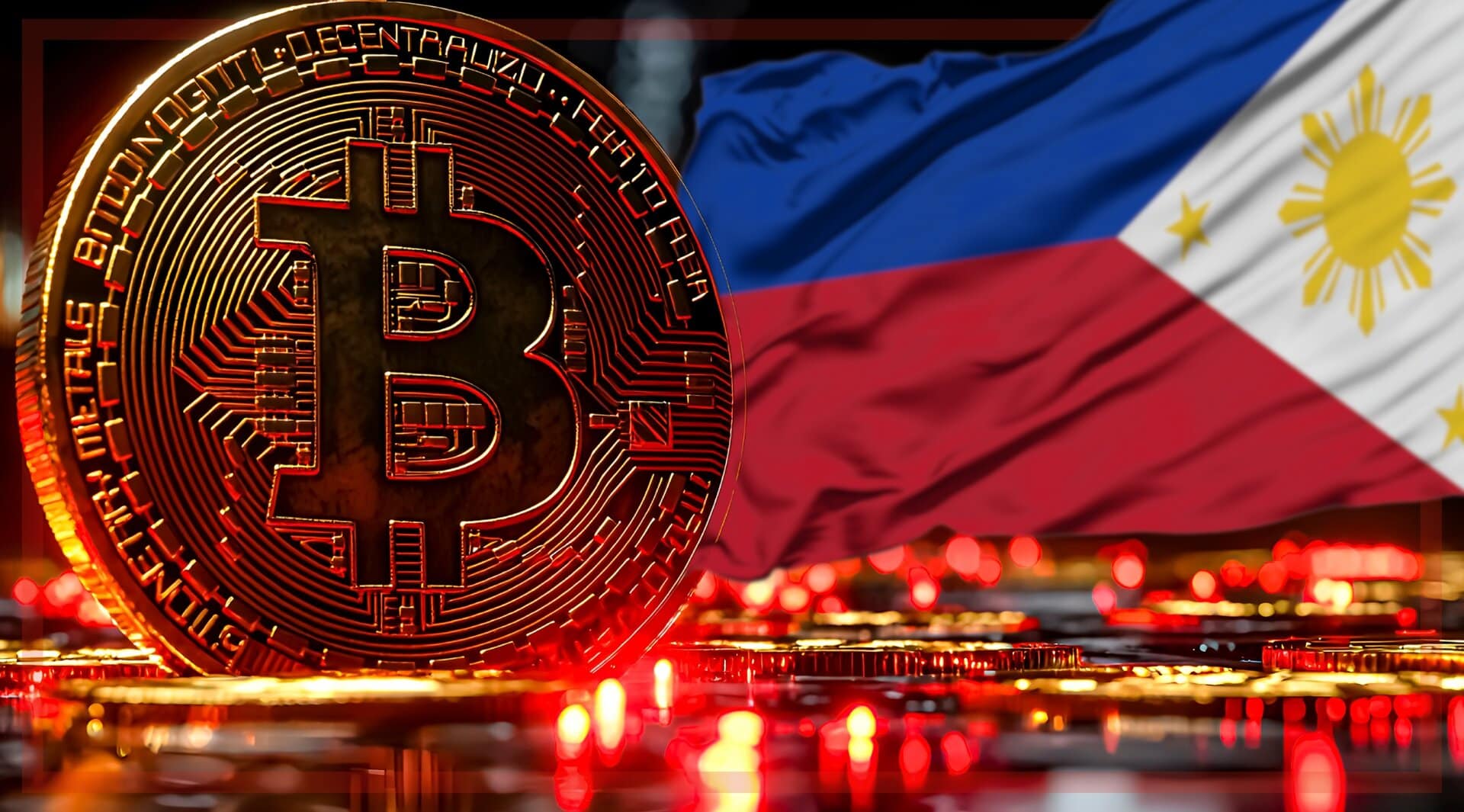
Over the years, there is no doubt that the Philippines has emerged as a major crypto market. Chainalysis’s 2025 Global Crypto Adoption Index ranks the Philippines 9th worldwide, ahead of Russia and behind Ukraine, making it one of Asia’s highest adopters. To highlight the scale of growth, blockchain analytics firm TRM Labs ranks the Philippines 4th globally in crypto adoption in 2025.
Crypto use is widespread in the Philippines. Analysts estimate that roughly 10% of Filipinos, or over 12 million people, engage with cryptocurrency, a figure projected to reach approximately 12.8 million by 2026.
This data suggests crypto has penetrated far beyond niche circles, with Filipinos now a major part of the global digital-asset community.
Young Filipinos & Overseas Filipino Workers Fuel Crypto Adoption Boom
Crypto use in the Philippines is largely retail-driven, shaped by tech-savvy young people and demand for low-cost remittances. A 2022 survey showed that roughly 46% of crypto owners were aged 18-34, while 35% were aged 35-54. These findings align with the general trend that younger generations are leading in crypto adoption.
TRM Labs notes that Filipino adoption “aligns with the increasing use of crypto for cross-border transactions and financial inclusion” in underserved areas.
Overseas Filipino Workers (OFWs) remit about $38.3 billion yearly, and stablecoins have become a faster, cheaper option for many of them. In 2025, Coins.ph partnered with BCRemit to create a stablecoin rail converting overseas transfers into USDC/USDT, moving them on-chain and cashing out to local pesos within minutes, and cutting fees by roughly 80%.
At home, many Filipinos use crypto to hedge against inflation or currency swings. The 2021 Axie Infinity wave (a Web3 gaming revolution), where Filipinos made up nearly 40% of global players, helped build early awareness, later expanding into payments and savings.
Philippines Crypto Exchanges: Local vs Global Giants
The Philippine crypto landscape blends licensed local firms with widely used foreign platforms. Local virtual Asset Service Providers (VASPs) operate under Bangko Sentral ng Pilipinas (BSP) and the Securities and Exchange Commission (SEC)’s oversight, with the BSP listing about a dozen active players, such as Coins.ph, Bloom Solutions (BloomX), Moneybees, Maya (formerly PayMaya), and PDAX.
These exchanges anchor fiat-to-crypto flows in pesos and link directly with e-wallets. PDAX, for example, powers GCash’s “GCrypto,” giving its users in-app access to digital assets.
Alongside this regulated market, many Filipinos still trade on global platforms via peer-to-peer channels. Major exchanges like Binance, Bybit, and OKX support peso payments. Binance P2P has added GCash and Western Union. But the local SEC maintains that any foreign exchange serving Filipinos without registration is acting illegally.
In mid-2025, the SEC flagged 10 offshore platforms, including OKX, Bybit, and Kraken, for violating Philippine rules. The regulator stresses that crypto itself is not banned, just “unlicensed activity.”
🌍 Bitcoin ownership in 2025:
— MultiBank.io (@multibank_io) November 5, 2025
🇦🇪 UAE 27%
🇺🇸 U.S. 22%
🇻🇳 Vietnam 21%
🇵🇭 Philippines 13%
🇪🇺 Europe avg 8.9%
🇨🇳 China <4%
💬 Which country will grow the most by 2030? Reply below!
Source: https://t.co/uaRbIcT37f#Bitcoin #BTC #CryptoAdoption pic.twitter.com/v4EIkwGBp6
Banks & GCash Enter Philippines Crypto Market in 2025
Mainstream financial players are tentatively moving into crypto. UnionBank, one of the country’s largest banks, became the first to secure BSP approval as a VASP and, in 2025, quietly launched a “Buy/Sell Crypto” feature in its mobile app.
Other groups are following. GoTyme Bank earned its license in October 2024, while Maya (formerly PayMaya) offers crypto trading since receiving its license in 2021 under BSP oversight.
E-wallets are also integrating digital assets. GCash enabled USDC support in September 2025, letting users hold dollar-pegged stablecoins in-app. Even non-financial sectors are testing similar ideas. In 2025, House Bill 421 proposed a national “Bitcoin reserve” of 2,000 BTC per year as a volatility hedge.
These moves signal rising institutional interest, though broad adoption remains early.
HUGE BREAKING: THE PHILIPPINES JUST INTRODUCED A BILL TO ESTABLISH A STRATEGIC #BITCOIN RESERVE
— The Bitcoin Historian (@pete_rizzo_) August 22, 2025
COUNTRIES BUYING BTC. IT'S COMING 🔥 pic.twitter.com/snKbuBq4Eg
Philippines Crypto Regulation: Licensed, Not Banned
Philippine authorities have adopted a cautious, rule-based approach. Since 2021, crypto trading has been legal but regulated. All providers must be registered. Those marketing crypto assets to the public fall under SEC rules, while exchanges and custodians must be BSP-licensed VASPs.
The BSP has kept a moratorium on new VASP licenses since 2022 to study systemic risks. As a result, the approved VASPs remain limited in number (only 13 as of early 2025). Both regulators enforce strict AML/KYC requirements. The SEC has even coordinated app-store takedowns of unlicensed crypto apps and repeatedly reminded the public that unregistered exchanges are illegal.
At the same time, the government is laying down a new tax framework. In mid-2025, the Department of Finance committed to implementing the OECD’s Crypto-Asset Reporting Framework (CARF) by 2028 to monitor cross-border crypto flows and prevent tax evasion.
In short, the Philippines treats crypto as a permitted financial asset, not legal tender, tightly controlled through licensing, reporting rules, and AML oversight.
Stablecoins & Remittances: Philippines Crypto Future 2026
The Philippine crypto market has expanded quietly but steadily, pushed by a tech-savvy population and the economics of remittances. Millions now incorporate crypto into their daily finances, and local institutions are building the infrastructure to support it.
Stablecoins are entering payment networks, with licensed platforms enabling instant PHP conversions and Coins.ph’s peso-pegged stablecoin (PHPC) has progressed beyond pilot. With digital payments already making up roughly 57% of retail transactions, the groundwork for wider crypto use is in place.
🚨 HUGE: Philippines Stabecoin Launched on $HBAR Coverage:
— Mark (@markchadwickx) August 12, 2025
Fintechnewsph Reports:
“The Philippines is stepping boldly into the future of finance with the launch of PHPC, a Philippine Peso-backed stablecoin supported by the Bangko Sentral ng Pilipinas (BSP).”
“Developed on the… pic.twitter.com/NHFNgtWT9O
By 2025–2026, analysts expect digital assets to further integrate into the financial mainstream, with applications including remittances, payroll funding, and investment hedging, supported by the country’s maturing fintech infrastructure and regulated frameworks.
#Crypto #Blockchain #DigitalAssets #DeFi #Philippines
Author: Ayanfe Fakunle
The editorial team at #DisruptionBanking has taken all precautions to ensure that no persons or organizations have been adversely affected or offered any sort of financial advice in this article. This article is most definitely not financial advice.
See Also:
The Rise in Popularity of Cryptocurrency in Vietnam | Disruption Banking
The Rise in Popularity of Cryptocurrency in Indonesia | Disruption Banking