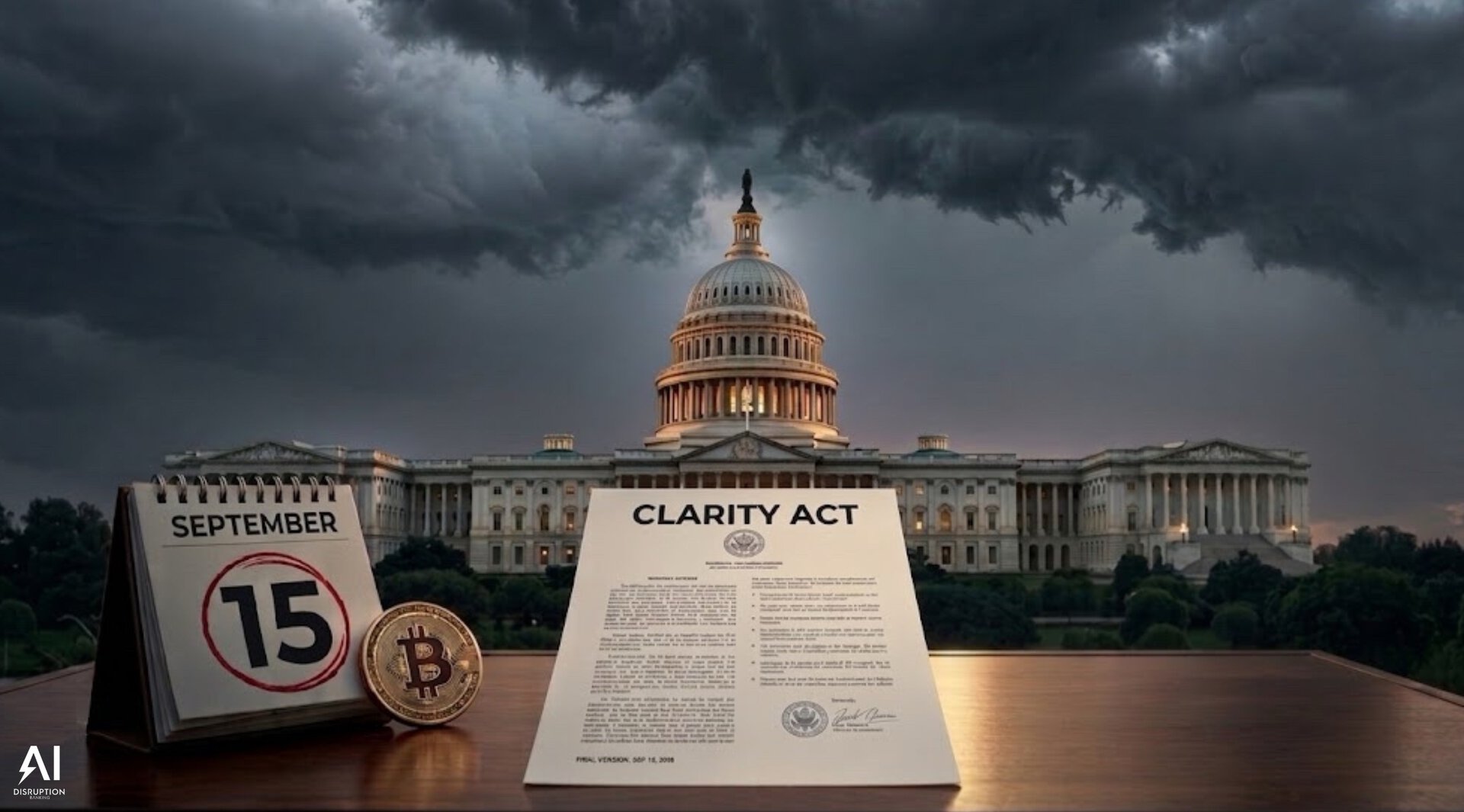
The Digital Asset Market Clarity Act (CLARITY Act) missed its best shot at becoming law this year. On August 8, 2026, Senate Majority Leader John Thune filed cloture on the motion to proceed just before the chamber left for its summer recess. That sets up the first procedural vote for Tuesday, September 15, the day after senators return. It’s a lifeline, not a win. Without it the bill was all but dead for 2026.
Why the August 7 Deadline Came and Went
Negotiators had circled August 7 as the last realistic workday to get the CLARITY Act moving before recess. It didn’t happen. Thune told reporters that Democrats insisted on no vote, adding that Senator Cynthia Lummis “was great, and we’re getting that queued up first thing when we come back.”
The holdups are specific. Lawmakers still haven’t settled on the ethics language aimed at preventing senior officials, including President Trump, from profiting from crypto. Disputes over illicit finance rules, stablecoin rewards, and how the Senate Agriculture Committee’s text folds in remain open. Republican Josh Hawley also came out against the bill over community banks’ concerns about the bill’s stablecoin-yield provisions.
Cloture needs 60 votes. Republicans can’t clear that on their own, so at least seven non-Republicans have to sign on.
Warren Draws Her Line: “Written by the Crypto Industry”
Senator Elizabeth Warren put the Democratic objection plainly. Bitcoin Magazine posted her comments on X: “We need crypto legislation. I’ve been saying this for a long time.” Her problem with this version of the legislation, she says, is that it was “written by the crypto industry to protect and advance the crypto industry.”
She’s held that position for months. At the May committee markup, Warren said the job “is not to advance a pro-industry crypto bill” that puts consumers and national security at risk. Her staff’s review of the July 22 ethics text called it riddled with loopholes that wouldn’t stop Trump, who pulled in more than $1.4 billion from crypto ventures in 2025, from doing it again.
Not everyone reads her that way. One X user replied that Warren “wants to ban all Cryptocurrencies and Blockchain technology.” That’s the industry-side framing, and it clashes with what Warren keeps saying out loud: she wants rules, just not these ones. Warren was a long term friend of Gary Gensler, the former SEC Chair, which doesn’t help.
The Odds, by the Numbers
Prediction markets have soured. Galaxy Research cut its odds that the CLARITY Act will become law in 2026 from 50% to 30%. Polymarket traders priced the chance near 17% earlier this month, down 48% over the stretch.
The math after recess gets tighter. Senators return September 14 with limited floor days before midterm campaigning pulls attention away. Meanwhile, SEC Commissioner Hester Peirce said the agency will continue to regulate crypto regardless of the bill’s fate.
For more on how this fits the wider regulatory push, see Disruption Banking’s earlier coverage of US crypto policy.
September 15 is the next real test. Watch whether seven Democrats break the way the industry needs.
Author: Ayanfe Fakunle
The editorial team at #DisruptionBanking has taken all precautions to ensure that no persons or organizations have been adversely affected or offered any sort of financial advice in this article. This article is most definitely not financial advice.
See Also:
CLARITY Act Update: Where the Crypto Market Structure Bill Stands Right Now | Disruption Banking