The numbers stopped looking like crypto numbers a while ago. USDC’s onchain transaction volume hit $21.5 trillion in the first quarter of 2026, a 263% jump year-over-year. Circulation sits near $73 billion as of July 2, after the token grew 73% in 2025, outpacing its larger rival for the second consecutive year. That growth is not coming from traders parking cash between trades but from institutions that have decided stablecoins are a settlement infrastructure.
A 77% Revenue Jump and a $64 Billion Minting Spree
Circle’s February earnings tell a big story. Fourth-quarter revenue rose 77% year over year, sending shares up 23% in morning trading, while USDC circulation rose roughly 72%, according to Fortune. Visa and Polymarket are adopting Circle’s infrastructure, and the company is partnering with the government of Bermuda to build the world’s first fully onchain national economy.
The minting pace backs this up. Circle has issued $64.25 billion in gross USDC on Solana alone in 2026, with the latest $1 billion mint pushing weekly issuance on the network to $3.5 billion. Every token is redeemable 1:1 for dollars and is backed by cash and short-dated Treasuries in a BlackRock-managed fund.
Tokenized Treasuries Top $15 Billion, and Citi Sees $5.5 Trillion
Here is where the digital dollar meets capital markets. Tokenized US Treasuries reached a record $15.35 billion in May 2026, up tenfold from under $1 billion in early 2024. Citi’s June report projects that tokenized real-world assets could reach $5.5 trillion by 2030, with stablecoins growing into a $1.9 trillion market and generating roughly $1 trillion in fresh demand for US government bonds. DTCC begins limited production trades of tokenized securities in July, with a broader platform launch set for October.
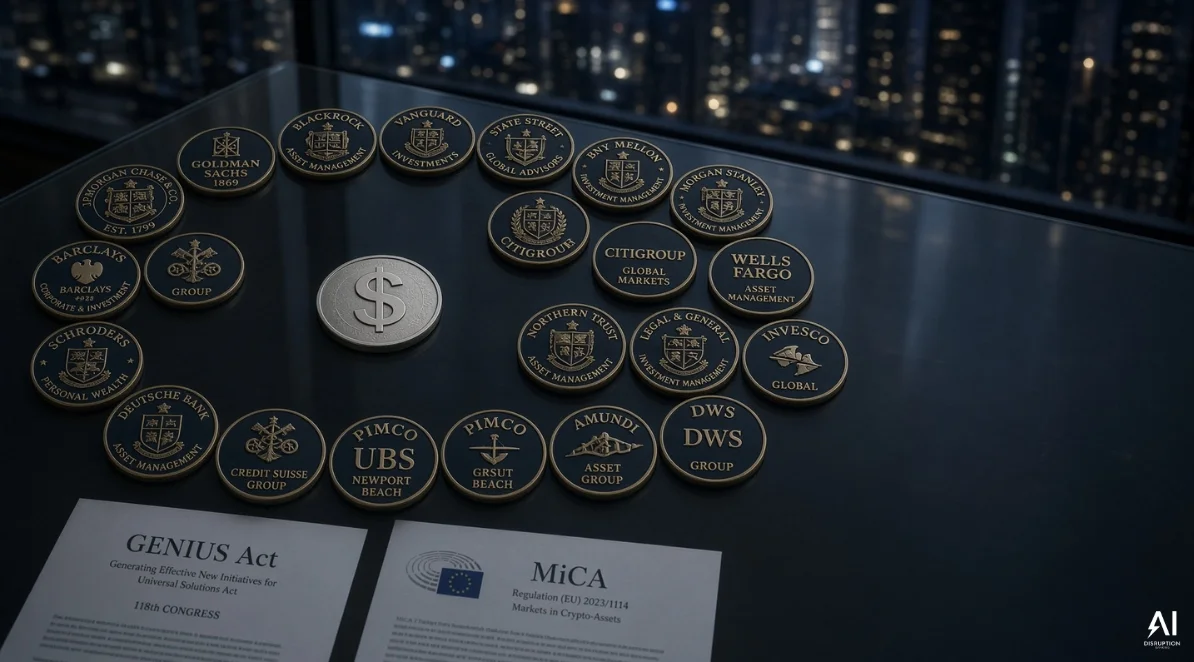
Asset managers are racing in. As we reported this week, Invesco filed with the SEC on June 24 to launch a tokenized stablecoin reserve fund, joining BlackRock’s $2 billion BUIDL, State Street, Franklin Templeton, and JPMorgan onchain. Tokenized assets need a cash leg that settles at the same speed. USDC is currently that leg.
MiCA Delistings and a 140-Firm Rival Reshape the Race
Regulation handed Circle a win in Europe this week. As MiCA rules forced USDT delistings across the EU on July 1, USDC and EURC kept their listings. The GENIUS Act framework in the US has had a similar effect, pulling institutional demand toward regulated issuers.
The surge has drawn fire, though. On June 30, a consortium of over 140 firms, including Visa, Mastercard, Stripe, and BlackRock, announced Open USD, a rival stablecoin that shares reserve earnings with partners. Circle’s stock fell 15% on the news. CEO Jeremy Allaire argues that the challenger still faces USDC’s liquidity and regulatory integration challenges.
He may be right for now. But the fight itself confirms the thesis that the cash layer of tokenized capital markets is worth owning, and everyone on Wall Street knows it.
Author: Ayanfe Fakunle
The editorial team at #DisruptionBanking has taken all precautions to ensure that no persons or organizations have been adversely affected or offered any sort of financial advice in this article. This article is most definitely not financial advice.