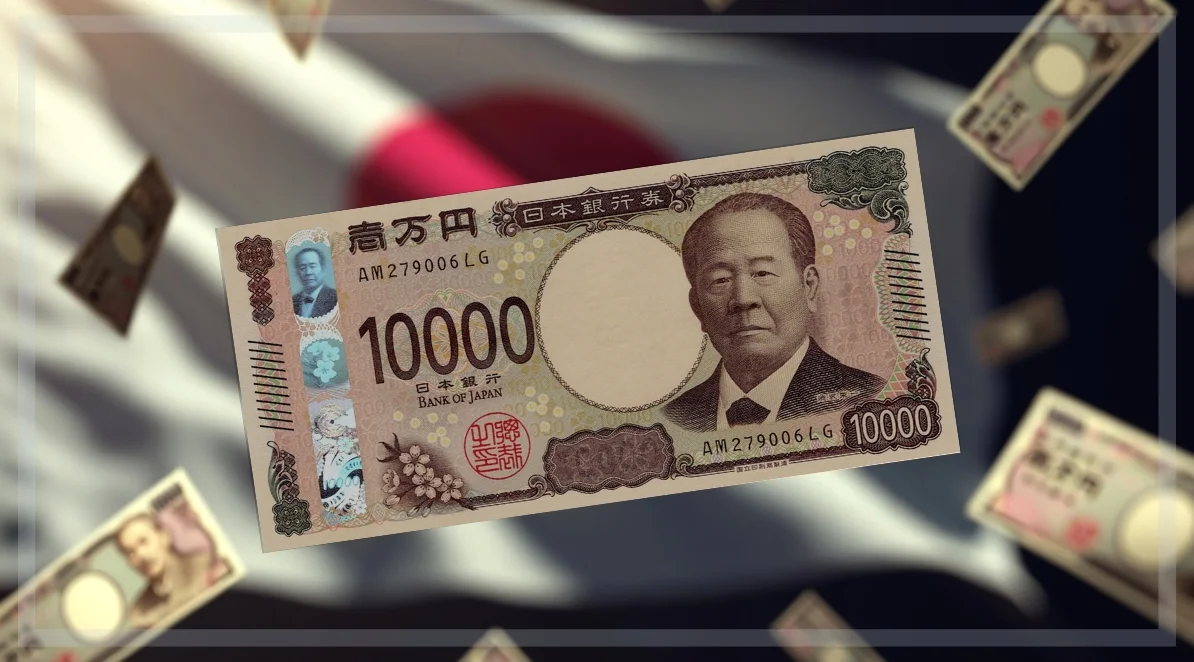
On July 31st, Treasury Secretary Scott Bessent spent billions to buy Japanese yen and prop up the struggling currency, the first such intervention since the Asian financial contagion of 1998. The yen, having reached its lowest level against the U.S. dollar in nearly four decades, was also buoyed by Japan, which shelled out roughly $53 billion on its own currency.
While the exchange rate temporarily improved, the yen is now teetering just below 160 JPY against 1 USD. Despite President Trump and U.S. officials’ altruistic claims of just wanting to help an ally, the U.S. purchase of yen is clearly meant to serve American interests.
Japan collectively owns roughly $1.1 trillion of American debt. It is the biggest foreign holder of U.S. debt, though domestic holders, led by the Federal Reserve, own far more. Much of the debt is controlled by the Japanese Ministry of Finance.
If Japan sold U.S. bonds en masse to buy yen, it would spike the U.S. bond market. This, in turn, would require the Treasury to offer a higher yield on new bonds to compete with the rising yield on preexisting bonds.
The effect would then spill over into the broader U.S. economy, raising rates particularly in the mortgage market. Moreover, the U.S. government would have to pay higher interest on its already ballooning debt obligations. It was a perfect Catch-22, captured well in a meme making the rounds on the interwebs (below).

Tokyo’s Impossible Trade
In a fashion, U.S. bond market concerns are equally Japan’s concerns. If the Japanese Ministry of Finance was to sell off U.S. treasuries to buy yen, it might raise the price of yen temporarily, but would also raise the bond yield of U.S. treasuries.
This, in turn, would make U.S. bonds a more attractive investment to traders, banks and foreign governments. The influx of capital would then inflate the U.S. dollar against the yen, canceling out the yen’s gains.
Considering the broader economy, Japan is trying to thread an impossibly narrow needle. It relies heavily on imports for energy, oil, and food. Having a stronger yen would give the country more purchasing power. But having a stronger yen would also make exports, from companies like Toyota and Sony, more expensive.
Every country deals with this same conundrum to some extent. Japan’s situation is just especially challenging. Its interest rate sits at around 1%, well below the U.S. rate. Its public debt exceeds 200% of GDP, due to rampant fiscal spending.
Decades of economic stagnation following the early 1990s collapse of the asset price bubble left Japan desperate to jumpstart its economy, while accumulating a huge debt load. Meanwhile, the U.S. is increasingly worried about its own debt burden and pursuing, at times, contradictory solutions.
Washington Cannot Decide Either
Whether the U.S. wants a stronger dollar, or a weaker dollar, depends on who you’re talking to and on what particular day. There are obvious advantages to each scenario, which explain the Fed and the Treasury’s Goldilocks approach to monetary policy.
The Foreign and International Monetary Authorities (FIMA) Repo Facility was created during Covid to supply approved foreign central banks with U.S. dollars, using U.S. Treasury securities held by those foreign banks as collateral. It wasn’t used very much, but is now being touted by Treasury Secretary Bessent as a cure-all for Japan’s currency woes.
Instead of Japan selling its massive holdings of U.S. treasuries, it can instead exchange them for U.S. dollars to buy yen. Functioning as a short-term loan, once the money is paid back to the Fed, Japan retains ownership of the U.S. treasuries and their full yield. For the U.S.’s purposes, there is no bond market spike because no treasuries were actually sold.
Currently, there is a $60 billion cap on the FIMA Repo Facility, although Bessent is actively lobbying for the Fed’s FOMC to expand to raise that cap. The Fed declined to comment, in keeping with Warsh’s habit of saying nothing about the Treasury’s requests until he has to.
Analysts, however, are skeptical of the overall effectiveness of this approach, citing fundamentals as the overall issue affecting the yen. While Japan’s interest rates sit at 1%, investors will continue to utilize the yen carry trade: borrowing yen to then invest in a higher-yield currency overseas, like the U.S. dollar.
Other analysts see Bessent’s very public embrace of the FIMA Repo Facility as nothing more than a signal of the Treasury’s commitment to stabilizing bond prices, and a signal that Japan has access to significant U.S. dollar liquidity, part of $1 trillion in reserves.
Friendly Fire
Not all of the headwinds Japan faces are self-created, but brought on by the very country trying to prop up its currency.
Japan is heavily dependent on energy imports out of the Middle East. The U.S.’s War in Iran has caused damaging supply challenges and price increases. While President Trump recently spoke glowingly of Japan, saying, “Japan’s been very good to us,” the Trump Administration has simultaneously placed significant tariffs on Japanese goods.
Meanwhile, much to the chagrin of the U.S., China remains Japan’s largest trading partner. If the U.S. wants Japan to actively weaken its relationship with China, it’s got a funny way of showing it by placing tariffs on its ally. Japan’s $1.14 trillion of U.S. debt could serve as a bargaining chip in trade negotiations.
The Detail Everyone Missed
Lost in the news of the U.S. propping up the yen is one tiny detail: the Treasury sold billions of euros to do it. The sale wasn’t telegraphed ahead of time and took the European Central Bank (ECB) by complete surprise.
While the currency switch was small in monetary terms, it didn’t exactly send a positive signal to Europe regarding future negotiations. But then again, mixed signals seem to be the order of the day.
Two weeks after the most dramatic currency operation since 1998, the yen sits roughly where it did before anyone spent a dollar. Through this bumbling, Sisyphean improvisation, all Washington has actually purchased is a delay.
Author: Tim Tolka, Senior Reporter
The editorial team at #DisruptionBanking has taken all precautions to ensure that no persons or organizations have been adversely affected or offered any sort of financial advice in this article. This article is most definitely not financial advice.
See Also:
Has the Japanese Yen Lost Its Safe-Haven Crown in 2026? | Disruption Banking
Japanese Yen (JPY) Hits Lowest Level Since 1986 | Disruption Banking
Japan Yen Carry Trade Unwind: Could It Trigger the Next Market Crash? | Disruption Banking