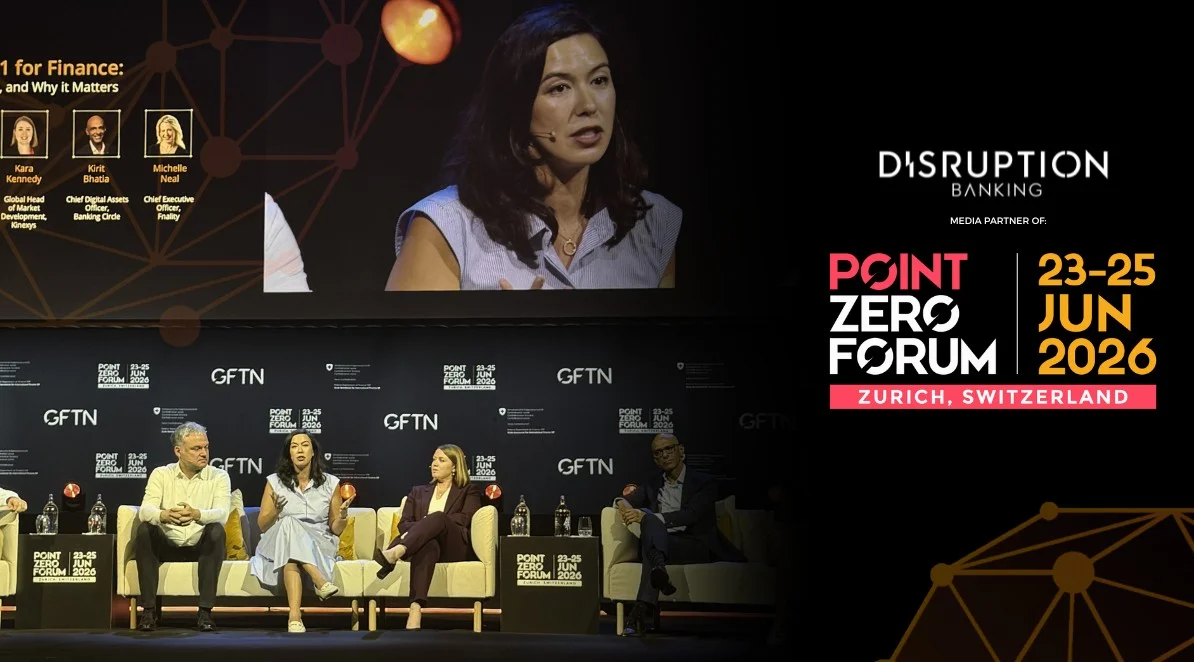
Over the years leading blockchain companies like Ripple and Chainlink have been ever present at the Point Zero Forum in Zurich. Alongside the leading digital assets firms has been JP Morgan which has its own blockchain protocol called Kinexys, previously known as Onyx.
On the afternoon of the first day, representatives from Ripple, Kinexys, and Chainlink took the stage for a panel titled Tokenization 101 for Finance. They discussed what is being built, how it works, and why it matters.
Fiona Murray of Ripple on Trusted Names Driving Real Adoption
Fiona Murray, Vice President and Managing Director for Asia Pacific at Ripple, delivered a clear message. Tokenization is moving beyond experiments. Household names from traditional finance are now driving real adoption.
Murray highlighted Franklin Templeton as a prime example. Ripple is working with the asset manager on a tokenization marketplace. The focus is money market funds. These tokenized funds serve a dual purpose. They act as collateral and support repo transactions.
This setup delivers major capital efficiency gains. Institutions can pledge tokenized money market funds and access cash or equivalents in real time. Traditional processes often require a two-day wait. The new approach removes that delay.
Murray explained the broader impact during the panel. Tokenization gives organizations two key advantages: reach and capital efficiency.
On the reach side, suppliers in East Asia can now connect to markets in Nigeria, Brazil, and beyond in real time using USD. On capital markets, firms in places like Korea are exploring tokenized T-bills to expand distribution offshore.
Capital efficiency stands out in payments and collateral use. Tokenized cash eliminates trapped pre-funding for cross-border transfers. For retail and institutional use, tokenized money market funds create new flexibility. Users pledge assets without selling them first.
Ripple’s Tokenization Marketplace
Ripple focuses on infrastructure. The company operates a regulated global payments network. It handles stablecoin acceptance, fiat conversion, and payouts. It also provides custody solutions for major banks such as HSBC and BBVA. The tokenization marketplace with DBS and Franklin Templeton represents another practical step forward.
Murray stressed the importance of trusted players. Franklin Templeton’s involvement brings credibility. Traditional asset managers carry significant market share in conventional finance. When they enter tokenization, they bring existing clients and open doors for broader participation.
She said this trend stands out as the strongest indicator of progress. Over the next 12 months, trusted venues will help move the industry from pilots to scale. These organizations take the digital assets space seriously. They bring their client bases and push the entire sector forward.
Murray encouraged professionals in the room to prepare. The organizations they represent will soon gain access to these tools. The time to engage is now.
Watch the moment on X here:
Fiona Murray shares how tokenized money market funds are a huge innovation at the @pointzeroforum #Ripple #PZF2026 pic.twitter.com/IwE1QSlwsu
— Digital Startup (@digitalstartup5) June 23, 2026
Ripple’s behind-the-scenes work enables institutions to interact safely with digital assets. The goal is simple. Help them generate more value and deliver better services to clients. Partnerships with established names like Franklin Templeton show the path ahead. Tokenized money market funds are not just a technical upgrade. They create new utility and open fresh opportunities across capital markets.
This focus on practical use cases with trusted partners suggests tokenization has reached an important turning point. The next 12 months will likely show accelerated adoption as more traditional leaders follow the same route.
Kara Kennedy of Kinexys on Production-Grade Scale and Real-Time Payments at Kinexys
Kara Kennedy, Global Head of Market Development at Kinexys by J.P. Morgan, provided concrete evidence of momentum. She noted a clear shift over the last 12 to 18 months. Institutional appetite has grown. Signals now point to production deployment rather than proofs of concept.
Recent BCG data shows real world assets on chain approaching $30 billion. Stablecoins sit near $300 billion. The real world asset sector recorded roughly 300 percent year-on-year growth. While still small compared to traditional markets, the trajectory is significant.
Kennedy highlighted active work across the ecosystem. This includes tokenized commercial bank money, initiatives at central securities depositories like DTCC, and activity from exchanges such as NYSE and Nasdaq. Global asset managers continue to launch new tokenized products. Tokenized money market funds form a major part of this activity.
Kinexys has operated in this space for ten years. The platform has processed over $3 trillion through its Connexus system since launch. Daily averages reach about $7 million, Kennedy explained to delegates. These volumes come mainly from on-chain payments and intraday financing products.
Kinexys Payment Products in Action
The payments offerings enable 24/7/365 programmable cross-border transfers with integrated foreign exchange. This helps corporate treasurers optimize liquidity and balance sheets. Clients integrate these tools into existing workflows while maintaining traditional controls and scale.
Watch the moment on X here:
Kara Kennedy of JP Morgan's #Kinexys explains how payment products are enabling clients by delivering 24/7 365 day programmable money cross border.#PZF2026 #PointZeroForum pic.twitter.com/McTbdrFMV6
— Digital Startup (@digitalstartup5) June 23, 2026
Kinexys also supports asset managers with tokenization on public Ethereum, including J.P. Morgan Asset Management’s money market funds. Kennedy pointed to underserved areas such as alternative funds. Tokenization solves operational pain points in lifecycle events, capital calls, and distributions. These improvements happen behind the scenes. End investors often see little change in the final product.
She expects on-chain cash usage to become standard within the next 12 to 18 months. Trusted real world assets from established issuers are pulling more traditional players into the ecosystem.
Kennedy advised the audience to shift focus. Move away from technical details. Instead, consider the possibilities when assets and cash exist on chain with programmable rails. This mindset opens new opportunities to redesign financial market infrastructure.
Fernando Vazquez of Chainlink on Why Blockchain Alone Is Not Enough
Fernando Vazquez, President of Capital Markets at Chainlink, delivered an important reality check. Blockchain by itself is only a distributed ledger. It cannot deliver institutional scale without additional foundational services.
He explained that transactions require more than simple transfer. Compliance checks, tax residency rules, regulatory reporting, market data for pricing, and privacy protections are essential. For example, buying a security across borders may involve eligibility verification for a Japan-based investor or reporting obligations in multiple jurisdictions.
Chainlink supplies these critical oracles and services. This allows platforms like Kinexys to operate securely on public chains. The “boring stuff,” as Vazquez called it, enables real utility and mobility.
Building for True Scale
Vazquez stressed the need for clear capital creation models and incentive structures across the full value chain. Asset managers, brokers, venues, and DeFi protocols must align for tokenized assets to flourish. Reference architectures are now emerging to lower costs and guide participants.
Together with the insights from Fiona Murray and Kara Kennedy, Vazquez’s comments complete the picture. Tokenization is advancing from pilots to production, but success depends on robust infrastructure layers beyond the base blockchain.
Author: Andy Samu
See Also:
What happened to Onyx by JP Morgan? | Disruption Banking
How is Franklin Templeton Supporting the Wyoming Stable Token? | Disruption Banking