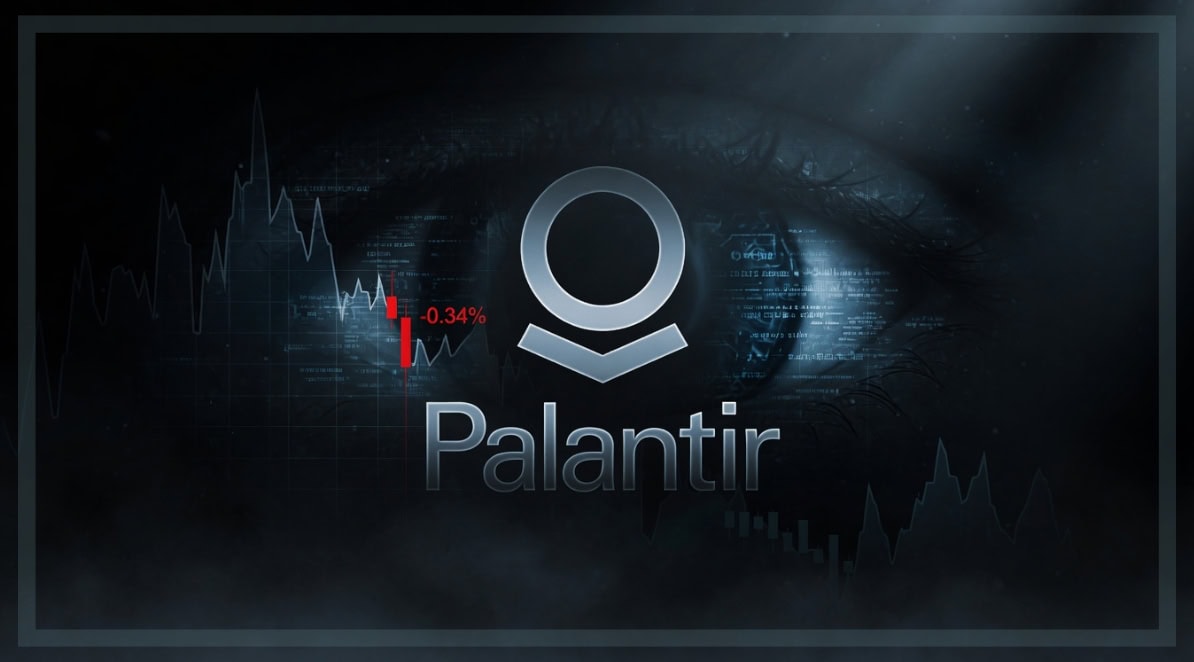
Palantir Technologies (NASDAQ: PLTR) shares barely blinked this week, dipping only 0.34% despite intense backlash over a 22-point manifesto posted on X which drew widespread criticism for denouncing certain cultures as “dysfunctional and regressive” and rejecting what it called “hollow pluralism.”
On April 18, 2026, US tech and defence contractor Palantir Technologies shared a concise manifesto on X, drawing directly from CEO Alex Karp and and Head of Corporate Affairs Nicholas Zamiska’s new book The Technological Republic: Hard Power, Soft Belief, and the Future of the West.
The post rapidly accumulated over 33 million views, igniting angered responses across tech, defense, and political circles from phrases such as “some cultures and subcultures have produced wonders” while others remain “middling and worse, regressive and harmful.”
The book ventures far beyond the usual remit of a technology company. Among its central arguments are calls for the introduction of national service, the moral obligation of technology firms to support national defence, the critical importance of hard power if free and democratic societies are to prevail, and a bold case for re-embracing religion in public life.
It also questioned the value of inclusion without clear purpose and criticised Silicon Valley’s emphasis on consumer apps over national security contributions.
Because we get asked a lot.
— Palantir (@PalantirTech) April 18, 2026
The Technological Republic, in brief.
1. Silicon Valley owes a moral debt to the country that made its rise possible. The engineering elite of Silicon Valley has an affirmative obligation to participate in the defense of the nation.
2. We must rebel…
Palantir Stock: Minor Dip Followed by Quick Stabilisation
Following the manifesto’s publication, Palantir stock experienced limited downward pressure. On Monday, April 20, 2026, PLTR closed at approximately 145.89 dollars, down 0.34 percent for the session. As of April 22, 2026, Palantir is trading at $145.97 (+0.05%) per Trading Economics.
Although the movement reflected negative sentiment driven by reputational concerns and potential political scrutiny, the overall reaction remained muted rather than a sharp sell-off. This outcome aligns with earlier observations that Palantir’s core investor base often prioritises business fundamentals over ideological debates.
The episode adds to existing volatility in the name. Palantir stock continues to trade significantly below its 52-week high of around 207 dollars from late 2025 and sits lower year-to-date in 2026 amid a broader correction across technology and AI stocks.
Questions previously explored by Disruption Banking, including whether Palantir is becoming “too big to fail” due to its extensive government ties and whether AI hype has run ahead of sustainable growth, have resurfaced with fresh intensity.
“Moral Obligation” to Participate in National Defence
Beyond arguing that “soaring rhetoric” alone is no longer enough to defend free and democratic societies, The Technological Republic calls for a return to hard power, underpinned by software and advanced technology, as the foundation of Western strength in the 21st century.
The book sharply criticises what it terms the “psychologization of modern politics,” suggesting that excessive emotional investment in political figures and identity-driven causes has distorted public discourse and weakened collective purpose.
Critics argue that the book’s call for citizens to disengage from hyper-emotional politics conveniently deflects attention from Palantir’s own high-profile government contracts and its willingness to support policies that prioritise security over certain individual liberties.
Particularly controversial is the book’s insistence on the technology sector’s “moral obligation” to participate in national defence, coupled with its view that the development of AI-powered weapons is not a question of if, but of who builds them first, and for what purpose. The authors contend that adversaries will not hesitate, and the West cannot afford to.
Palantir’s post on X concludes by rejecting what it calls “the shallow temptation of a vacant and hollow pluralism.” It argues that an uncritical commitment to inclusivity glosses over a harsher reality: certain cultures and subcultures have driven extraordinary progress and produced civilisational “wonders,” while others have proven middling, regressive, or actively harmful.
Palantir backs return of US military draft, slams 'regressive' cultures in 22-point manifesto https://t.co/vb8jQ6djLj pic.twitter.com/oUppzhVYlR
— New York Post (@nypost) April 20, 2026
What’s Next for PLNTR?
Palantir continues its mission-driven image and willingness to platform controversial positions. The mini manifesto appears to double down on a vision of technological hard power that prioritises Western dominance, cultural judgment, and military expansion.
Yet the limited share price reaction sends a clear message: even overt ideological provocations and accusations of technofascism may carry little financial consequence when a company is deeply embedded in lucrative government and defence contracts.
As Disruption Banking previously reported, Grand View Research projects the AI platform market to grow 38% annually, reaching $251 billion by 2033.
In an era of rising militarised tech, the manifesto may have generated headlines, but the market’s indifference suggests that challenging such corporate power will require more than outrage alone.
Author: Ruben McCarthy
See Also:
Palantir: Is The AI Hype Outpacing Reality? | Disruption Banking