
On the morning of the first day of the North American Blockchain Summit, the conversation turned to prediction markets. Kalshi, a recent member of the Digital Infrastructure Network that organizes the summit, drew particular interest from attendees who wanted to understand how the company fits into the larger debate over who can regulate event contracts.
On November 17, a federal appeals court upheld a decision denying a preliminary injunction against Maryland’s regulators in a case involving event contracts. The ruling adds to a split among federal appeals courts over who can regulate those contracts. In September, New Jersey asked the US Supreme Court to take up the question after a different appeals court protected sports contracts from state enforcement in that state. Courts are divided on whether the contracts can trade nationally or must follow different state rules.
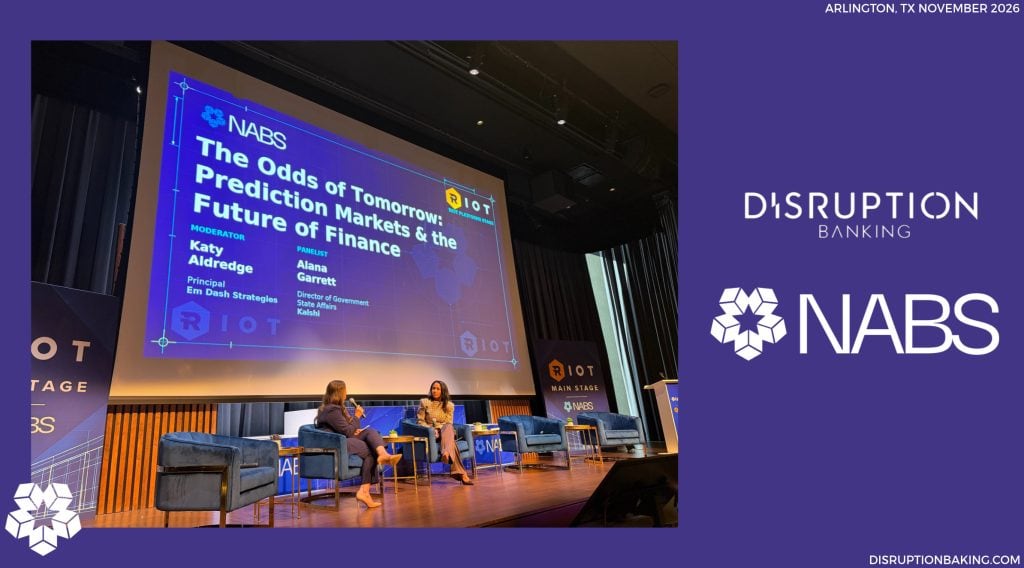
Speaking at the North American Blockchain Summit in Arlington, Texas, Alana Garrett, Kalshi’s director of government state affairs told moderator Katy Aldredge of Em Dash Strategies what a fragmented market would mean. It would be like asking New York stock exchange participants to trade only with other New Yorkers. The comparison framed the discussion on the panel “The Odds of Tomorrow: Prediction Markets & the Future of Finance.”
How Kalshi Earns Revenue
On Kalshi, users take opposite sides of an event and the company matches them. It collects transaction fees rather than taking the other side of the trade. Garrett said the company has no stake in the outcome of its contracts. Its published fee schedule shows that charges vary by market and trade.
Whether that structure places the contracts outside state licensing rules is still contested. On the panel, Garrett said the products belong in the derivatives market because participants are trading on information about future events. The Commodity Futures Trading Commission (CFTC) designated Kalshi as a contract market in November 2020, which put the platform inside the federal derivatives framework.
Contracts on whether a public figure will say a particular word, known as ‘mention markets’, have drawn separate scrutiny. In November the CFTC confirmed it had stayed certification of certain Kalshi mention markets while it reviews how easily they can be manipulated. On the panel Garrett said that analyzing a sporting event, election, or weather pattern requires information and judgement. She added that the value of that information depends on traders trusting the market. “If there’s doubt in the information, then the concept itself is lost,” she said.
A Regulatory Conflict Heading Towards the Supreme Court
Garrett said the reasoning behind the court decisions could become important if the Supreme Court takes up the question. She noted that courts supporting federal jurisdiction had reached similar conclusions, while those siding with states had relied on different legal interpretations. “We want to have the guidance from the Supreme Court on how we are regulated because we want to do this the right way,” she said.
She recalled that Kalshi spent its first four years securing regulatory approval before launching its product. That federal designation has not ended the disagreement over which rules apply to particular contracts.
Texas Tests the Boundaries of State Oversight
Texas state Representative Salman Bhojani, a Democrat, filed House Bill 598 in November 2026. The bill would set a minimum age of 21 for trading event contracts in Texas and restrict contracts tied to criminal proceedings, violence, and certain personal events. It leaves sports contracts outside the prohibited list and preserves existing Texas law on the subject. It also includes requirements on identity verification, geolocation, and advertising.
Garrett called the proposal well thought out. She noted the difference between the proposed Texas minimum age of 21 and Kalshi’s minimum age of 18. “Now, if it’s a decision by the courts and by the federal regulators and the state to go up to 21, by all means, and we’ll do that,” she said. She said states have a role in setting advertising standards and keeping minors off platforms.
Contracts on elections, sporting events, or government decisions can create opportunities for people with privileged information to trade on outcomes they may influence. Garrett said Kalshi runs continuous market surveillance from New York and monitors unusual trading activity. She described trading restrictions for elected officials and campaign staff on political contracts, and for coaches and other sports personnel on sports contracts.
Prediction Markets as Hedging Tools
“We see a lot of small businesses now using Kalshi to mitigate risk and limit their financial exposure,” Garrett said. She described a food truck operator in Houston using precipitation contracts to hedge against the loss of customers during rainy weather. Garrett also cited an Idaho farmer seeking protection against snowfall and drought, and a California goat herder who reportedly used a prediction market to offset the financial consequences of legislation affecting his business. In each example, a payout could offset a loss the trader faced away from the exchange.
The examples also show the limits of these contracts as hedges. A precipitation contract tied to rainfall at a weather station can pay out even if the food truck’s location stays dry, or fail to pay after rain at the truck itself. The payout only helps if it lines up with the actual loss.
At the summit, Garrett called the contracts “a broader economic tool.” A court ruling can clarify which authorities oversee the platform and its contracts. The examples Garrett gave in Arlington show where the practical questions start.
Author: Klaudia Archimowicz
See Also: