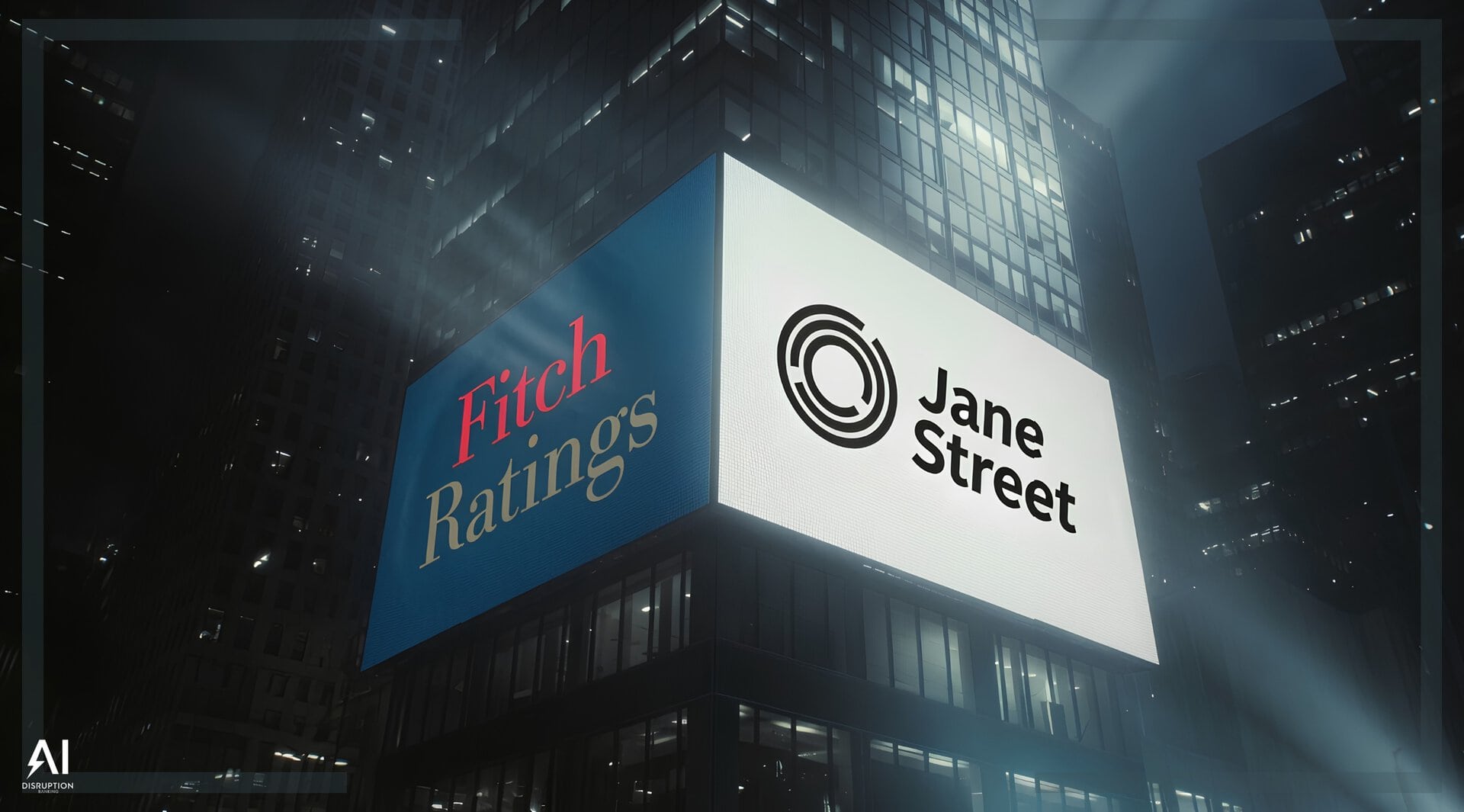
Fitch Ratings upgraded Jane Street Group to BBB− on 24 July. That is the lowest investment-grade notch. Moody’s moved its outlook to positive two days earlier. S&P did the same on 25 June.
Yet the firm still faces SEBI market-manipulation allegations, an Indian tax challenge, and a federal lawsuit from Terraform’s plan administrator.
NEWS: Fitch upgraded Jane Street to investment grade
— Exec Sum (@exec_sum) July 28, 2026
Jane Street now has a BBB- rating pic.twitter.com/gu4cA1dmlJ
Three Agencies, Three Different Lines
Fitch is now at BBB− on both the parent and the senior secured debt. Moody’s keeps the parent company at Ba1, though four of its main operating companies are rated Baa3. S&P stays at BB, two notches below the investment-grade line.
Debt issued by the parent company ranks below the debts of its operating companies. Someone buying Jane Street debt therefore needs to check which part of the business is responsible for repayment.
S&P said it could upgrade Jane Street within 12–24 months if growth and diversification prove durable. Fitch pointed to “strong through-the-cycle growth in net operating income” that has produced superior scale, and judged that this was already sufficient for an upgrade.
In other words, Fitch believes Jane Street has already done enough. S&P and Moody’s still want more proof.
What Convinced Fitch?
Jane Street generated $39.6 billion of trading revenue in 2025. In the first quarter of 2026 it posted $16.1 billion of trading revenue and $10.3 billion of net income. S&P put members’ equity at about $55 billion as of March 2026. Fitch pointed to cash, liquid Level 1 assets and a $1.2 billion committed revolving facility.
Those figures make the current legal exposures look manageable.
SEBI ordered the firm to place ₹4,843.57 crore (about $567 million at the time) in escrow as alleged unlawful gains. That deposit is not a final penalty. Separately, Indian tax authorities have challenged treaty treatment on roughly ₹20,000 crore of derivatives gains. Tax experts put a potential liability at up to ₹7,000 crore, though no final assessment has been issued.
Against recent profits and capital, both sums look absorbable. However, investors should be careful about treating the first quarter as a normal run rate. Jane Street’s results were helped by private investments, including Anthropic, and by medium-frequency strategies. Not every dollar of that profit will necessarily recur.
The Bigger Risk is Lost Confidence
Fitch said a formal exit from India “would not materially impact” Jane Street’s financial performance. India was profitable for the company, but not large enough to threaten the wider business if Jane Street were forced to leave.
A legal bill can be calculated and paid. A loss of confidence is harder to contain.
Regulatory action can cause banks, lenders, clients and trading partners to reassess the relationship. Prime brokers may reduce financing. Counterparties may lower trading limits. Investment managers may decide the reputational risk is no longer worth taking.
Those reactions can damage a trading business before any visible decline appears in the capital numbers.
The same issue applies to the Terraform lawsuit.
Terraform’s plan administrator, Todd R. Snyder, alleges that Jane Street used material non-public information to trade before the collapse of TerraUSD and Luna. Jane Street denies the claims and has moved to dismiss the case.
Even if any eventual damages are manageable, a finding that the firm misused confidential information would raise questions about information barriers, internal controls and supervision. That, in turn, could trigger the same kind of counterparty reviews already visible in the India dispute.
What the Ratings Do Not Answer
SEBI’s allegations continue to raise questions about Jane Street’s internal controls. Jane Street disputes the regulator’s findings and denies wrongdoing.
As of 6 August 2026, Disruption Banking could not locate a substantive order from the scheduled 31 July hearing in the Securities Appellate Tribunal’s (SAT) public database.
The Terraform lawsuit is also unresolved. None of the three rating actions addressed it directly, so it cannot be described as already priced into the ratings.
For investors, the main downside is not one settlement cheque. It is an adverse finding that leads to more investigations, raises doubts about Jane Street’s controls or causes prime brokers and counterparties to reduce their exposure.
S&P has already pointed to Jane Street’s reliance on short-term wholesale funding. That makes confidence part of the company’s liquidity position.
A firm can have billions in capital and still face pressure if the institutions funding its trading activity begin to step away.
What Could Break the Ratings Case for Jane Street?
Jane Street’s rapid growth is already putting pressure on its capital ratios. S&P estimated that the company’s risk-adjusted capital ratio fell from 12.1% in the second quarter of 2025 to 10.7% in the first quarter of 2026. The decline largely reflected higher market-risk and operational-risk charges.
Jane Street has also taken a $1 billion equity stake in CoreWeave and entered a $6 billion cloud agreement. Those commitments give the company more exposure to a single fast-growing area of the market. Moody’s has identified several warning levels. These include a liquidity buffer that remains materially below 20% of trading capital, long-term debt rising above 30% of tangible equity, or a significant failure in risk management.
Any of those developments would carry more significant implications than the currently visible legal bills.
Fitch’s position is that Jane Street can absorb the financial cost of the India dispute without serious damage. It has not made the same public judgment about Terraform. The real test is whether either case remains contained. A settlement alone is unlikely to break the ratings case. A loss of confidence among lenders, prime brokers and trading partners might.
Author: Richardson Chinonyerem
The editorial team at #DisruptionBanking has taken all precautions to ensure that no persons or organisations have been adversely affected or offered any sort of financial advice in this article. This article is most definitely not financial advice.