
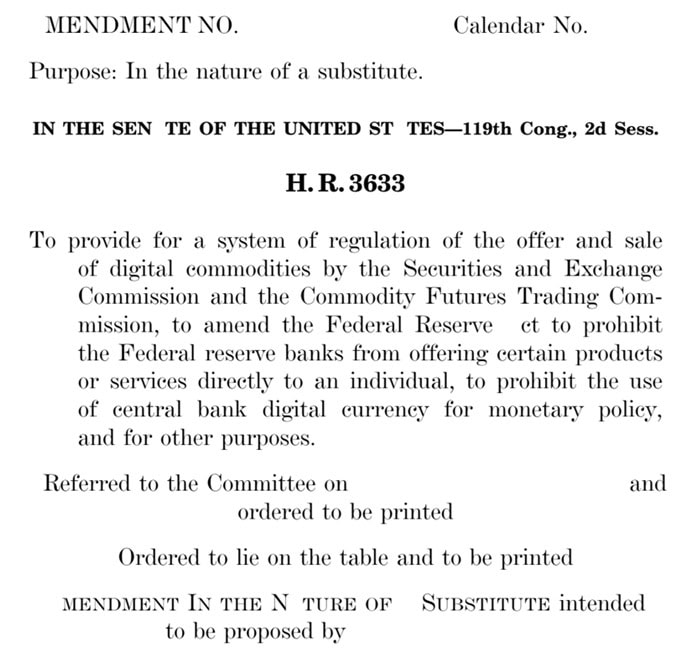
Senate Republicans released fresh text for the Digital Asset Market CLARITY Act on Wednesday, and for the first time, it draws a hard line on who in government can profit from digital assets. The lead sponsor, Wyoming Senator Cynthia Lummis, handed the new language to CNBC, which reported that it carries the first limits on how presidents may profit from crypto. The bill still doesn’t have the Democratic votes it needs, and the fight is now about who gets to police the rules.
What the New Ethics Rules Actually Say
The revised draft bars the President, Vice President, members of Congress, federal judges, and their spouses from issuing or sponsoring digital assets for pay while they hold office. This restriction includes a sunset date of January 20, 2029. In plain terms, the ban expires at the end of the current presidential term rather than remaining on the books.
Covered officials would be required to either sell their crypto holdings and investments in crypto-related companies or place them in a blind trust they do not control, or both. A blind trust means someone else manages the assets, and the official can’t steer the decisions.
The backdrop here is impossible to ignore. Federal disclosures showed that President Trump earned well over $1 billion from crypto ventures in 2025, with about $580 million tied to World Liberty Financial, the company co-founded by members of Trump’s family that issues the WLFI governance token and the USD1 stablecoin.
The DOJ Fight Democrats Won’t Drop
The GOP text hands the Justice Department sole authority over ethics violations and lets it pursue exchanges that knowingly list banned tokens. Democrats want State Attorneys General in that seat, too, and they’re not bending. Maryland Senator Angela Alsobrooks called the DOJ-only setup an “unserious offer,” and put it bluntly to reporters: “Look at this Department of Justice. They’re completely unserious.”
That objection matters for the math. Republicans hold 53 seats and need at least seven Democrats to reach 60. Without them, the bill stops.
Law Enforcement, Stablecoins, and a New Cyber Center
Beyond ethics, the draft expands federal funding for blockchain investigations and law enforcement training, and establishes a cyber center to address threats from countries like North Korea and Iran. Stablecoin issuers would also have to obey lawful orders to freeze, seize, burn, and reissue tokens. That last point highlights a real gap in current law: compliance teams have hesitated to freeze suspicious transfers for fear of lawsuits, as one state attorney general recently argued.
Disruption Banking has tracked the stablecoin yield fight and the CLARITY-GENIUS relationship in detail, including Dante Disparte‘s breakdown of why the bill matters for banking and the earlier March 1 red line on stablecoin yield.
The Clock Is the Real Deadline
The Senate has until early August before recess. Journalist Eleanor Terrett flagged the release on X, noting the ethics package came out of White House talks with Republican senators but still lacks Democratic backing. Negotiations are expected to heat up over the coming days, though history offers a warning: the ethics ban is temporary, the DOJ fight is unresolved, and even a Senate win sends the bill back to a fractured House.
Author: Ayanfe Fakunle
The editorial team at #DisruptionBanking has taken all precautions to ensure that no persons or organizations have been adversely affected or offered any sort of financial advice in this article. This article is most definitely not financial advice.
See Also:
CLARITY Act Text Drops Today: No Democrats on Board and 60 Votes to Find | Disruption Banking