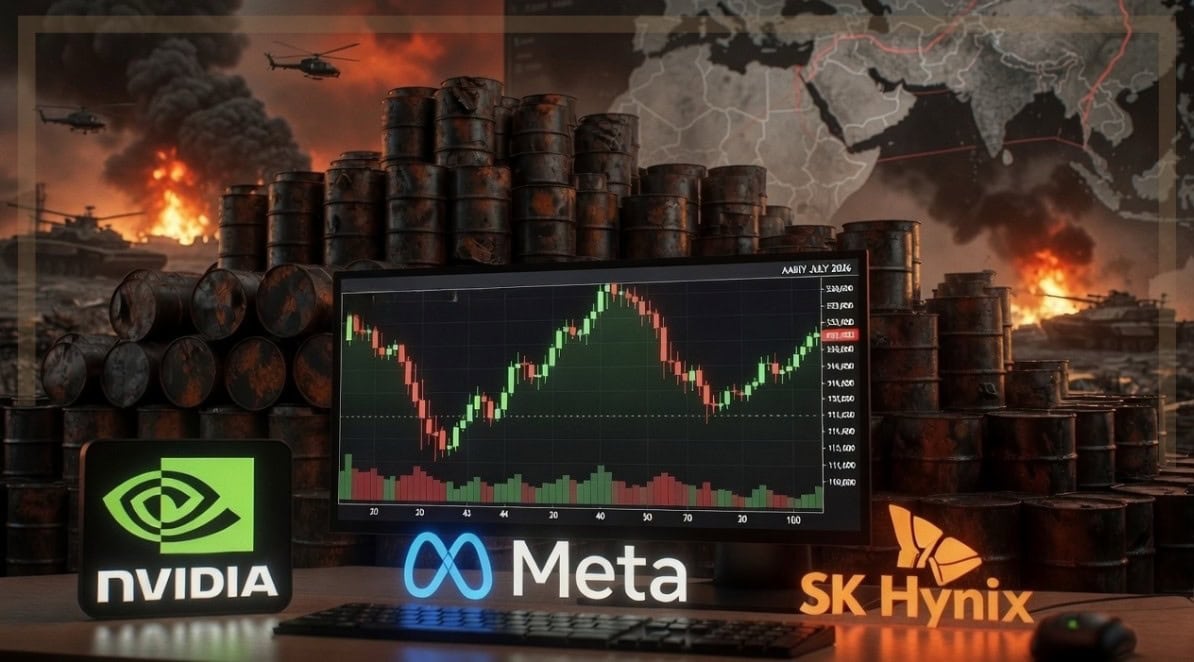
The Dow Jones Industrial Average (DJIA) marked a major milestone in early July 2026, crossing and closing above the 53,000 level for the first time. Only to face a sharp mid-week pullback driven by surging oil prices and renewed U.S.-Iran geopolitical tensions. The blue-chip index ultimately snapped its four-week winning streak with a modest weekly decline, even as the broader market posted gains due to strength in the AI and chip sectors.
The Dow’s Record 53,000 Run and the Mid-Week Reality Check
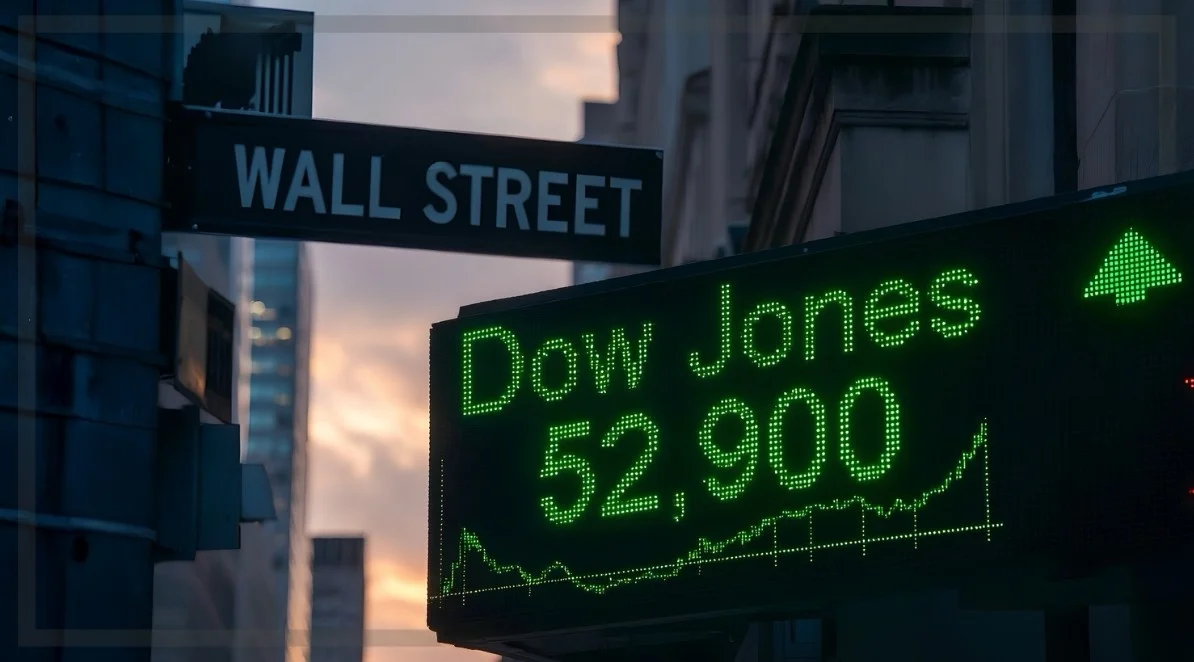
The Dow Jones opened the period at 52,305.24 on July 1. DisruptionBanking reported that the index surged 1.14% on July 2 to close at a then-record 52,900.07, fueled by softer-than-expected June jobs data that eased concerns about aggressive Federal Reserve rate hikes.
Momentum continued into the following Monday (July 6), when the index climbed to a fresh all-time closing high of 53,055.91. Its first close above the psychologically significant 53,000 threshold, supported by a rebound in AI-tied stocks. Intraday highs reached 53,289.30 the next day.
The Dow Jones just hit 53,000 for the first time in history. pic.twitter.com/uuuppzrpDs
— Brew Markets (@brewmarkets) July 6, 2026
The Sharp 700+ Points Reversal and Late-Week Recovery
The early-week surge suggested the Dow had finally joined the broader market’s momentum. Mid-week delivered a sharp reversal instead. On July 7–8 (two sessions later), the Dow surrendered more than 700 points from the intraday high, closing July 8 at 52,348.39, down over 1% that day. This was as oil prices spiked amid escalating Middle East risks, including renewed U.S. actions and rhetoric around Iran, threats to the Strait of Hormuz, and potential supply disruptions. The move was sharp enough to drag cyclicals lower and reintroduce the inflation concerns that had only just started to fade.
Ryan Sweet, chief global economist at Oxford Economics, captured the broader risk when he noted that if tensions escalate further, “it won’t just raise oil prices; it would also increase pressure on AI supply chains in Asia, force central banks to be hawkish, tighten financial conditions, and could shift the outcome of the U.S. midterms… The cascade runs fast.”
The same market that had cheered the employment data was suddenly repricing energy and supply-chain risks.
SK Hynix, Nvidia and Meta Sparked the Dow’s Late-Week Rebound
The week finished on a firmer note. The Dow recovered modestly on July 9 (+0.27% to 52,487.41) and July 10 (+0.29% to 52,637.01), supported by renewed strength in semiconductor and AI-related stocks. SK Hynix‘s U.S. trading debut sent its ADRs up about 13% (priced $149, closed ~$168), while gains in Nvidia and Meta, following fresh announcements around in-house AI chips and expanded cloud infrastructure, helped lift broader market sentiment. Oil prices also eased by Friday, taking some pressure off inflation expectations.
The rebound reinforced that the AI trade remains Wall Street’s dominant driver when geopolitical fears begin to fade. But the speed of the earlier sell-off also showed how quickly old-economy risks, particularly oil-price shocks and supply-chain concerns, can interrupt that narrative. The Dow remains more exposed to those swings than the S&P 500 or Nasdaq because of its heavier weighting toward traditional industrial, financial and energy-sensitive companies, even as investors continue rewarding AI-led growth elsewhere in the market.
Q2 Earnings Face a 23.6% Growth Bar Plus America’s Biggest Banks Report First
Q2 earnings season begins in earnest this week, and the setup looks constructive on paper. FactSet projects S&P 500 earnings growing roughly 23.6% year over year, with room to reach 29.4% once typical beats are factored in. Margins are expected to stay elevated, and most companies that have already guided have done so positively.
The first real test comes from the banks. JPMorgan, Bank of America, Citigroup, Wells Fargo, and Goldman Sachs report before the open on July 14. Investors will focus less on whether they beat estimates and more on:
- net interest income guidance for the second half,
- trends in investment banking and trading,
- loan demand,
- any early commentary on credit quality or the broader economic outlook under the new Fed chair Kevin Warsh.
Delta’s $1.56 EPS Highlights Cyclical Pressure
Delta Air Lines offered an early glimpse into how higher fuel costs are affecting cyclicals. The carrier beat estimates with adjusted EPS of $1.56 and even reinstated full-year guidance despite flagging elevated fuel expenses linked to Middle East tensions. Strong premium cabin demand helped cushion the blow. Still, the muted share reaction showed how sensitive the market remains to any sign of sustained cost pressure.
For the Dow Jones, where financials and industrials carry significant weight, next week’s bank earnings will be telling. Investors will look beyond headline beats to gauge net interest income guidance, loan demand, credit trends, and any early signals on the economic outlook under new Fed Chair Kevin Warsh.
Earnings Beats Are Priced In: AI, Oil and Credit Guidance Will Move the Market
The bigger question is whether management teams can speak convincingly about the durability of AI-related spending while acknowledging the new geopolitical and energy realities. Beats are largely priced in. Guidance and tone will move the market more than the numbers themselves.
The interplay between those prints, the June Consumer Price Index (CPI) and Producer Price Index (PPI) releases, and Chair Warsh’s upcoming testimony will decide whether last week’s record was a one-off spike or the beginning of something more durable.
Author: Richardson Chinonyerem
The editorial team at #DisruptionBanking has taken all precautions to ensure that no persons or organizations have been adversely affected or offered any sort of financial advice in this article. This article is most definitely not financial advice.
See Also:
Why Did Kevin Warsh Shock Markets on Rate Cuts? | Disruption Banking