On June 11, 2026, Japan’s House of Representatives passed a bill that moves crypto-asset rules out of the Payment Services Act and into the Financial Instruments and Exchange Act (FIEA), the statute that governs equities and bonds, which means Japan now treats XRP like a stock.
The bill still needs the Upper House, government promulgation, and follow-on rulemaking by the Financial Services Agency (FSA) before it takes full effect. The FSA’s own Diet page still lists the measure as submitted, not enacted. Passage in the Upper House is widely expected given the ruling coalition’s majority, but “expected” and “done” are different words.
🇯🇵 JAPAN GOES ALL IN ON XRP 🇯🇵
— Commentary Barron Trump (@barontrump47) June 16, 2026
The rumors are becoming reality. Japan’s top exchange CEO just signaled that crypto ETFs are officially on the horizon, and $XRP is leading the charge. 🌊
This isn't just retail hype—this is institutional adoption at the nation-state level. 🏛️
The… pic.twitter.com/FVnjUtUsx6
What the FIEA Bill Changes for XRP
Reclassification pulls crypto under securities-style rules, like issuer disclosure, a new insider-trading regime, tougher penalties, and stricter exchange licensing. The maximum prison sentence for operating an unlicensed crypto exchange would increase from 3 years to 10 years. It also opens a legal route for spot crypto ETFs, with Tokyo Stock Exchange operators signaling trading could begin as early as 2027.
The tax piece travels alongside it, but in a separate proposal. The plan would replace Japan’s top miscellaneous-income rate of up to 55% with a flat 20% rate, matched by equities, effective January 1, 2028. For a country where high earners have been taxed brutally on crypto gains, that reset matters more to behavior than the reclassification itself.
XRP is not a bystander here. It ranks as the third most adopted asset in Japan’s regulated market (behind Bitcoin and Ethereum). SBI Holdings has already filed for a spot Bitcoin–XRP ETF on the Tokyo Stock Exchange, targeting ¥5 trillion ($32 billion) in assets under management within three years of approval. As Disruption Banking reported from XRP Tokyo 2026, SBI’s ties to Ripple stretch back to 2016, a plumbing that has been installed for a decade.
Why the Price Barely Moved
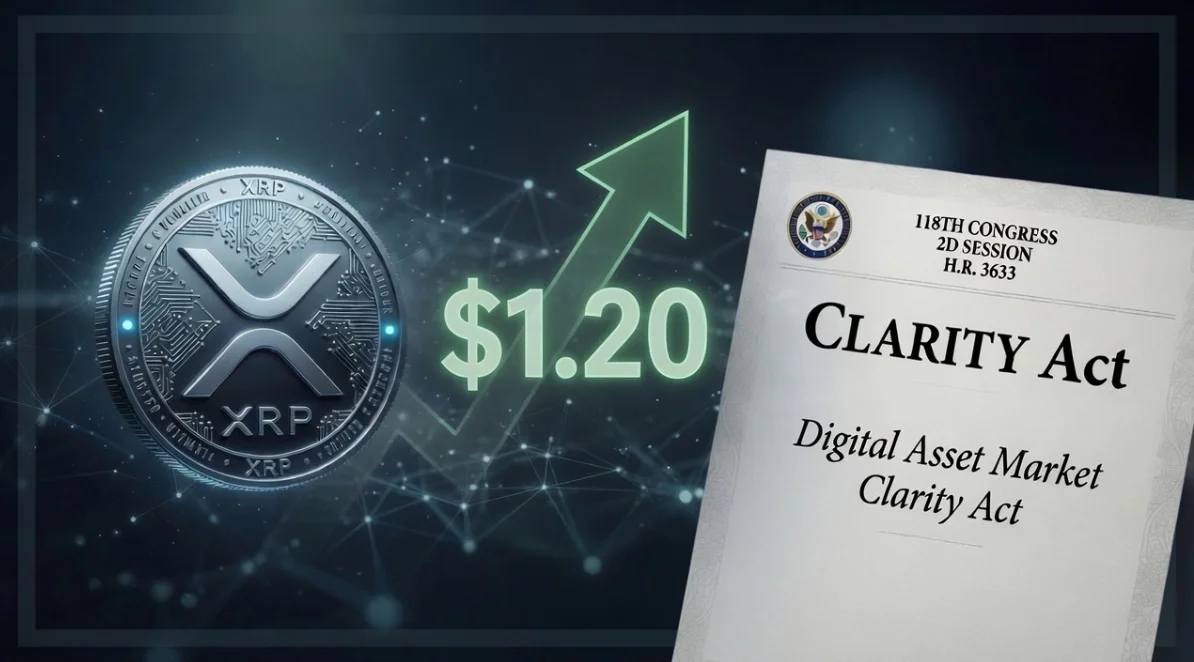
XRP trades near $1.16 as of June 18, 2026, roughly 35% down on the year and about 68% below its July 2025 high of $3.65. The news gave it a brief lift. XRP climbed nearly 8% to around $1.24 on June 15, helped along by a U.S–Iran peace deal that sparked a broad risk-on rally, then drifted back.
The bounce looked more like a short squeeze than fresh conviction. So why did the landmark regulation barely register? Because most of it was already known. The Cabinet approved the underlying measure back on April 10. The market has had the SBI relationship, the FSA’s friendly stance, and the ETF filings in front of it for months. One Coinspeaker analysis stated, “this is old information presented as new price discovery.”
There is also a timing problem. The tax cut lands in 2028. ETF trading might start in 2027. Traders chasing this catalyst at today’s price are paying now for a payoff that may take a year or two to arrive.
The Bull Case and the Honest Counterweight
Forecasts vary widely. A Monte Carlo model run across 10,000 paths sees XRP trading between $1.26 and $1.46 through the month in its base case, holding in roughly 60% of scenarios, with the upside tail reaching $2.20 only if the CLARITY Act clears the Senate and ETF inflows stay strong. Standard Chartered, meanwhile, cut its 2026 target from $8 to $2.80 earlier this year, citing institutional capital that never showed up in size.
Institutional demand is real but modest. XRP exchange-traded products have posted net inflows for five straight weeks, with roughly $11 million added in the latest period and over $1.4 billion accumulated since the U.S. launch in November 2025, even as Bitcoin and Ethereum funds bled capital.
Stablecoins, not XRP, still dominate global settlement flows because they are deeper and more liquid. As we outlined in March, Ripple’s own RLUSD competes directly with XRP’s bridge-asset role. When a bank can settle in a dollar-pegged token, it has little reason to ride XRP’s volatility.
The Bottom Line on Japan and XRP
The framework is favorable, the institutions are positioned, and the legal path to ETFs is opening. But the catalysts are dated 2027 and 2028, the headline news was mostly priced in, and stablecoins keep eating into the utility story. Watch three things independently: the Upper House calendar, the separate tax bill, and whether ETF inflows hold. Each can move, stall, or shrink on its own, and the chart will tell you which one the market actually believes.
Author: Ayanfe Fakunle
The editorial team at #DisruptionBanking has taken all precautions to ensure that no persons or organisations have been adversely affected or offered any sort of financial advice in this article. This article is most definitely not financial advice.
See Also:
Why XRP Above $1.42 Could Trigger Another 66% Rally | Disruption Banking
Why Putin Is Turning to XRP as Russia’s Gold Reserves Hit a Four-Year Low | Disruption Banking