
Jane Street supplied about $1.2 billion of swap notional to roughly 75 US-listed leveraged and inverse single-stock exchange-traded funds (ETFs) in the second quarter of 2026. That figure comes from a compilation of filings by Asym Research, reported by Bloomberg. It measures reference exposure, not cash out the door, revenue earned or capital at risk. Jane Street held an estimated 2 percent of the single-stock segment. Clear Street, the independent non-bank prime broker that built its position by courting newer ETF issuers the big banks largely ignored, still held about 21 percent. Marex Group, a UK-headquartered financial services firm active in derivatives, sat near 11 percent.
Jane Street is pushing its long-standing ETF market-making franchise one step further. It is now writing the over-the-counter (OTC) swaps that deliver the daily leverage these funds promise. The firm began doing so earlier this year, well before its separately reported July loss. The firm’s reported arrangements include funds from Defiance, Leverage Shares and T-Rex tied to stocks such as Strategy Inc. (formerly MicroStrategy), Rocket Lab Corp. and IonQ Inc. The filings show contract terms. They do not show net profit or the internal decision to expand; Bloomberg said Jane Street declined to comment.
Clear Street Still Leads
Bloomberg Intelligence ETF analyst Eric Balchunas, on X, described Jane Street’s move into the 2x single-stock swap market as entry into a business Clear Street still “utterly dominates,” while Jane Street is “making inroads.” That remains the accurate picture. Bloomberg’s Asym numbers put Citigroup, Goldman Sachs and Barclays each above 13 percent on the index-swap side. On single-stock swaps only, Goldman and Nomura among the banks reached 10 percent.
An extra deep-pocketed non-bank dealer like Jane Street gives issuers more capacity and a second serious price to negotiate against. It does not yet prove that financing spreads have tightened or that any individual issuer has meaningfully diversified away from Clear Street.
Which Jane Street entities? What the fund filings actually show
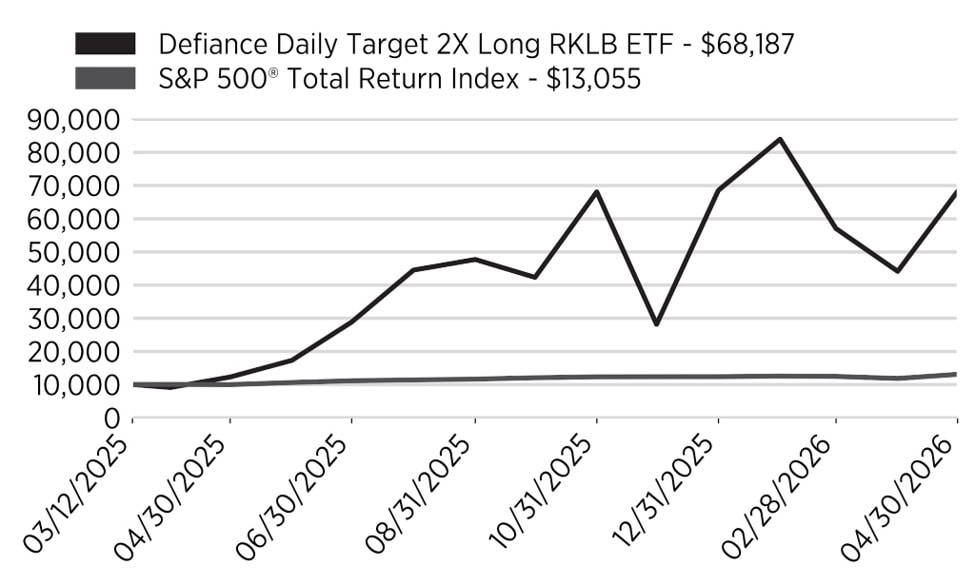
The fund schedules use different counterparty names. Defiance’s 30 April swap schedule, filed on 24 August, names Jane Street Execution Services, LLC as counterparty to a $140.267 million swap in its Defiance Daily Target 2X Long RKLB ETF. The fund received Rocket Lab’s return and paid the Overnight Bank Funding Rate (OBFR), +13 percentage points. With OBFR at 3.64 percent on 30 April, the indicated annualised financing rate was 16.64 percent. That contractual rate is not Jane Street’s net margin. The fund recorded $33.294 million of unrealised appreciation on the swap; that is neither Jane Street’s profit nor its credit exposure after collateral and netting. The schedule lists a March 2033 maturity, monthly financing resets and possible interim equity resets.
A T-Rex 30 June report, filed on 9 September, names Jane Street Capital the counterparty to a $9.087 million Redwire swap for the T-REX 2X Long RDW Daily Target ETF. The fund received Redwire’s equity return and paid OBFR +12 percentage points; it recorded $1.049 million of unrealised appreciation. That later filing does not establish a fresh position to add to Asym’s earlier aggregate. A Leverage Shares 30 April schedule, filed on 8 July, names Jane Street Group, LLC on a swap.
Separately, the U.S. Securities and Exchange Commission’s (SEC) list, last updated on 18 May, records Jane Street Derivatives Dealer, LLC as conditionally registered as a security-based swap dealer on that date. Neither the Defiance nor the T-Rex example above names that entity as counterparty. The schedules do not establish guarantees among affiliates or show that registration prompted the ETF trades.
At the Defiance fund on 30 April, Jane Street’s $140.267 million position represented about 31 percent of its $455.964 million in disclosed swap notional. Bloomberg’s Asym-based estimate puts Jane Street at roughly 2 percent of the single-stock ETF swap segment overall. Those are measures of notional concentration at different levels; neither measures capital at risk or credit exposure after collateral.
Single-stock risk is different
Single-stock leveraged products do not behave like broad-index versions. A sharp move in one name, Strategy, Rocket Lab or IonQ, forces larger daily rebalancing and larger hedge adjustments on the same day. Index swaps benefit from diversification. Single-stock swaps do not. The provider must warehouse more idiosyncratic risk and manage credit exposure between resets. Longer-dated contracts add collateral and mark-to-market risk that pure market-making does not carry.
That is the balance-sheet step Jane Street is taking. It already sits deep inside creation and redemption. Writing the swaps puts the firm on the other side of the leverage retail and tactical accounts buy every day.
Jane Street’s July loss and the bank scrutiny
Reuters reported in August that Jane Street took a roughly $15 billion July hit linked to Situational Awareness and other technology positions. The firm did not publicly confirm the figure. Disruption Banking previously covered the fund’s sale of most of its public-equity book to Ken Griffin’s Citadel. The July loss and the second-quarter ETF swap notional measure different activities. The timing alone establishes no causal link.
The Federal Reserve and Bank of England later asked banks about exposures to large trading firms, according to Financial Times reporting relayed by Reuters. The questions covered risk appetite, changes in intraday exposures and how controls operated. Reuters could not independently verify the FT account. Both central banks declined comment. The reported inquiry focused on trading-firm exposure in general. It did not single out ETF swaps.
On 2 February 2026, the Bank of England’s Rebecca Jackson said of principal trading firms: “So, whilst they are competitors, they are also clients.” They depend on banks for “financial leverage, clearing, treasury and payments facilities, and market access”. She warned that banks’ counterparty risks from intraday trading “have risen in lockstep” with the growth of these firms’ activities.
What actually matters for capital
For issuers, the practical questions are straightforward: financing spreads over OBFR, dealer concentration, mark-to-market after collateral and netting, hedge liquidity on rebalance days, and replacement cost if a dealer steps back. For the banks that finance or clear the prop firms, the question is intraday limits and how quickly exposure can build when a single name jumps. Fund schedules disclose neither Jane Street’s aggregate hedges nor its banks’ internal limits.
An additional non-bank dealer with real scale improves capacity and negotiating leverage for the funds that use these products. It also moves structured leverage risk further outside the traditional banking perimeter at the precise moment regulators are asking banks to describe their risk appetite toward large trading firms.
Next filings will tell
Jane Street’s 2 percent share remains small next to Clear Street’s lead. A comparable compilation of third-quarter fund filings will show whether that share has grown, whether spreads on similar swaps have moved, and whether issuers have begun to shift disclosed positions away from the existing dominant providers. That is the next measurable data point.
Author: Richardson Chinonyerem
The editorial team at #DisruptionBanking has taken all precautions to ensure that no persons or organisations have been adversely affected or offered any sort of financial advice in this article. This article is most definitely not financial advice.
See Also:
Did Citadel Buy the Dip in Situational Awareness’s Leveraged AI Unwind?
Why Has Fitch Broken Ranks on Jane Street Despite Its India and Terraform Risks?
Why Did Jane Street Sign a $13 Billion Cloud Contract If the Hall Can Wait?