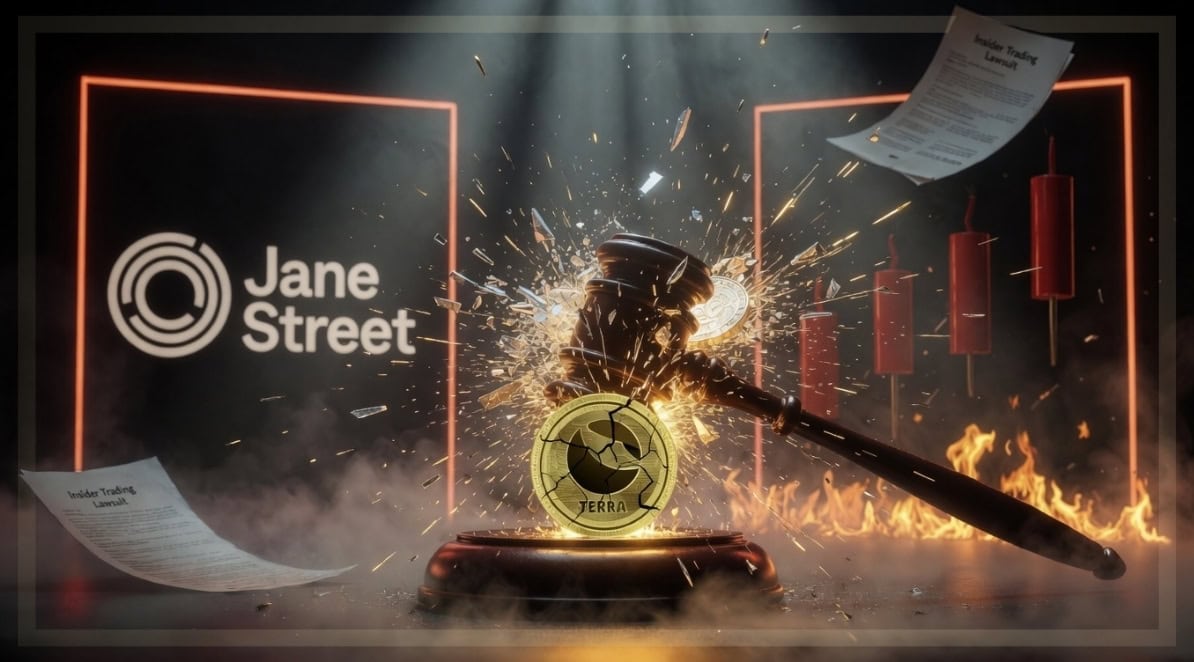
Crypto’s most infamous collapse refuses to fade into history. Nearly four years after the Terra-Luna meltdown erased roughly $40 billion in market value, the fallout continues to ensnare Wall Street’s sharpest trading desks. On April 23, 2026, Jane Street Group LLC filed a motion to dismiss a high-stakes lawsuit in Manhattan federal court, raising fresh questions about whether the firm is about to walk free from the Terra collapse scandal.
The suit, brought by Todd R. Snyder (the court-appointed administrator winding down Terraform Labs), claims Jane Street used non-public information to front-run key trades. Jane Street profited, the complaint alleges, while retail investors and the broader ecosystem suffered catastrophic losses.
In its filing, Jane Street calls the action “an attempt by the estate of Terraform Labs Pte Ltd. to extract cash from Jane Street to foot the bill for a fraud that Terraform itself perpetrated.”
Jane Street had previously stated through a spokesman:
“This desperate suit is a transparent attempt to extract money when it is well-established that the losses suffered by Terra and Luna holders were the result of a multi-billion dollar fraud perpetrated by the management of Terraform Labs. We will defend ourselves vigorously against these baseless, opportunistic claims.”
The Original Allegations: A 10-Minute Window and a Back-Channel
The underlying complaint, filed in February 2026, centers on events in May 2022.
On May 7, Terraform Labs withdrew 150 million TerraUSD (UST) from the Curve 3pool liquidity pool. According to the administrator, within minutes a wallet linked to Jane Street executed an additional 85 million UST withdrawal (one of the firm’s largest single swaps ever).
That rapid move, the suit alleges, shattered market confidence, triggered the de-pegging of UST, and set off the death spiral that wiped out Luna and Terra’s entire ecosystem.
The lawsuit highlights Jane Street’s ties to Terraform dating back to 2018 as a liquidity and market-making partner. It points to Bryce Pratt (a former Terraform intern turned Jane Street employee) and alleged back-channel communications. The complaint names Jane Street co-founder Robert Granieri and employee Michael Huang as defendants. It invokes the Commodity Exchange Act, Securities Exchange Act, fraud, and unjust enrichment. Snyder seeks damages, disgorgement, and a jury trial in the Southern District of New York.
Terraform administrator sues Jane Street for alleged insider trading that accelerated the $40B Terra collapse. Non-public info enabled front-running of key withdrawals in May 2022.
— #DisruptionBanking (@DisruptionBank) February 24, 2026
Full analysis: https://t.co/0VsxavhCkP #Terra #CryptoLitigation pic.twitter.com/Q2FtUzsIiW
Jane Street’s Defense: Timing, Public Signals, and Terraform’s Own Fraud
In its 39-page memorandum, Jane Street argues the complaint fails to plead facts showing it possessed or acted on inside information. For the May 7 sales, Jane Street notes the single largest UST sale occurred ten minutes after Terraform’s transfer (an event publicly announced weeks earlier with no market reaction).
The firm contends its trades responded to observable public signals: a falling LUNA price, reduced Anchor yields, and over $2 billion in UST withdrawals on May 7 alone.
For the May 8-13 short positions, Jane Street emphasizes it began accumulating shorts before any alleged information from Jump Trading about a potential rescue package. The motion argues Terraform’s own fraud bars its estate from recovering from third parties. Jane Street also challenges loss causation, materiality, breach of duty, and reliance. It notes the claims on behalf of Terraform and Luna Foundation Guard independently fail because those entities already possessed the information.
The filing further contends the market manipulation claims lack any allegation of artificial prices or manipulative intent. Jane Street took steps to minimize market impact, the opposite of manipulation. Finally, it argues the Exchange Act and CEA claims are impermissibly extraterritorial, as Plaintiff fails to allege domestic transactions.
Echoes of the Do Kwon Saga: Built on Lies
This legal battle cannot be separated from Terraform Labs’ original misconduct. Do Kwon built the company on deception. Terraform pitched UST as a revolutionary algorithmic stablecoin.
In reality, the structure relied on misleading claims about real-world adoption, most notably through the Chai payments app. Court testimony and SEC evidence revealed off-chain processing misrepresented as seamless blockchain activity. Jump Trading received discounted Luna tokens and early access.
Kwon pleaded guilty and received a 15-year federal prison sentence in December 2025. Terraform Labs agreed to a $4.47 billion civil penalty and entered wind-down. Snyder’s lawsuits against Jane Street and Jump Trading suggest Wall Street firms may have helped hasten the crash with privileged information. Jane Street maintains losses stemmed from Terraform’s multibillion-dollar fraud, not its trading.
What’s Next for the Case and Crypto Markets
Legal experts note crypto insider-trading cases test whether tokens qualify as securities or commodities. Courts must determine what constitutes material non-public information in decentralized markets and the extraterritorial reach of U.S. laws. Jane Street’s motion will test whether the administrator’s complaint meets pleading standards.
A decision to dismiss (with or without prejudice) could reshape recovery efforts for Terraform creditors. It would signal accountability issues in crypto’s early era. If the case proceeds, discovery could prove explosive, surfacing trading logs and internal communications.
The $40 billion Terra implosion exposed flaws in algorithmic stablecoins. It also revealed how tightly intertwined sophisticated trading firms had become with experimental protocols. Jane Street, celebrated for quantitative edge and risk discipline, now defends claims it turned advance knowledge of a failing system into profit.
Whether the judge agrees Terraform’s estate is shifting blame or Jane Street must answer in open court remains to be seen. One thing is certain: the Terra saga, built on lies and ending in billions lost, is far from over. For retail holders who believed the hype, creditors seeking restitution, and trading houses that operated in the ecosystem’s shadows, the final chapter continues in a New York courtroom.
Author: Ruben McCarthy
The editorial team at #DisruptionBanking has taken all precautions to ensure that no persons or organisations have been adversely affected or offered any sort of financial advice in this article. This article is most definitely not financial advice.
See Also:
Jane Street Hit with Terra $40B Insider Trading Suit | Disruption Banking
Jane Street’s ’10am Bitcoin Dumps’: Manipulation Myth or TradFi Reality? | Disruption Banking