Despite rosy assessments by President Donald Trump and the U.S. military, the American war with Iran, now in its seventh month, has not been a quick excursion. Iran has shown surprising resistance, aided partially by geography, a growing conflict in Yemen, and economic lifelines that the U.S. has strained to control.
Responding to these challenges, the U.S. Department of the Treasury launched a maximum-pressure economic campaign on August 24. Dubbed “Operation Economic Outcast” and billed by Treasury Secretary Scott Bessent as an “Economic D-Day,” the campaign aims to fully isolate Iran’s finances by targeting illicit revenue and forcing third parties, such as foreign governments, international financial institutions, and trading partners, to cut their contact with Iran.
The operation widened the reach of U.S. secondary sanctions across five sectors: digital assets, technology, gold, aviation and shipping. The Office of Foreign Assets Control (OFAC), the arm of the Treasury that administers and enforces sanctions, has since targeted shadow banking networks, shadow fleet vessels and digital asset infrastructure.
Hormuz Tolls, Paid in Bitcoin
Among these sectors, digital assets are arguably the most difficult to contain. On September 17, the Treasury announced sanctions on the Iranian cryptocurrency exchange BitBank.
Not to be confused with the Japanese cryptocurrency exchange bitbank, BitBank is controlled by Iranian financier Babak Zanjani, according to the Treasury. Zanjani was sentenced to death in Iran in 2016 for embezzling from the National Iranian Oil Company and walked free after his sentence was commuted in 2024, the same year he promoted BitBank on his social media accounts. The Treasury says he used the exchange in June and July to move hundreds of millions of dollars’ worth of Bitcoin to the Islamic Revolutionary Guard Corps (IRGC), and that Iran’s Hormuz Safe Marine Services Authority has used it since June to pass along payments from ships seeking safe passage through the Strait of Hormuz.
The $850 Million Account
Zanjani was already making headlines. In May, the Wall Street Journal reported that a network run by Zanjani made roughly $850 million in transactions on the cryptocurrency exchange Binance over two years, and that about half of that money may have gone to fund Iran’s military. Binance co-CEO Richard Teng called the reporting “fundamentally inaccurate.”
Binance was also used by two companies, Blessed Trust and Hexa Whale, which the New York Times and the Journal described as Hong Kong firms. Federal prosecutors say the pair used Binance accounts as part of a network that laundered more than $1.5 billion in proceeds from black-market Iranian oil.
Binance denies wrongdoing in both cases and says it removed the two companies from its platform. But the Journal reported that Zanjani’s main account kept operating for as long as 15 months, and was still open in January, even though Binance’s own compliance team had flagged the activity. Fortune reported that Binance investigators who traced more than $1 billion in Tether toward Iran-linked wallets were later fired. Binance denies firing anyone for raising compliance concerns.
Binance, Again
In 2023, Binance was ordered to pay $4.3 billion after pleading guilty to violating U.S. anti-money laundering and sanctions laws, including by processing nearly $900 million in trades between users in the U.S. and Iran. Its founder, Changpeng Zhao, pleaded guilty to violating anti-money laundering law and was sentenced in April 2024 to four months in prison. Then, in October 2025, President Trump pardoned Zhao. Asked about it on 60 Minutes, Trump said he didn’t know Zhao, but he had heard the case brought under former President Joe Biden was a “witch-hunt.”
Concurrent with these developments, the Trump family’s crypto ventures became heavily entangled with Binance, as Disruption Banking reported here and here. World Liberty Financial, the crypto company co-founded by Trump’s sons and backed by the Trump family, released a stablecoin, USD1, which a Binance team in Hong Kong helped develop and billions of which are held on Binance.
Given Binance’s prior guilty plea, the continued flow of Iranian money across the platform has frustrated Democratic lawmakers, including Senators Richard Blumenthal and Adam Schiff, who see Trump’s proximity to the exchange as a major hindrance.
No charges have been filed against Binance, and last week’s civil forfeiture complaint over the Hong Kong accounts did not name the exchange. But on September 22, Bloomberg reported that federal prosecutors in Manhattan and at Justice Department headquarters are investigating whether Binance knowingly allowed Iran-linked trading on its platform. In both the Zanjani and Hong Kong cases, evidence suggests that Binance could have responded to suspicious activity on the associated accounts sooner.
China Buys the Barrels
Beyond the Trump administration’s complicated relationship with crypto, the efficacy of U.S. sanctions on Iranian interests is also being throttled by China.
China purchases between 80% and 90% of Iranian oil. While smaller countries are more beholden to U.S. sanctions, China has leverage over the U.S. through its vast holdings of rare earth minerals, its rapidly advancing AI sector, its military and its control of important supply chains.
Four Cents on the Dollar
On September 14, federal prosecutors in the Southern District of New York filed a civil forfeiture complaint to seize about $61 million in Tether tied to the network that moved more than $1.5 billion in Iranian oil money through Blessed Trust and Hexa Whale. Deputy U.S. Attorney Sean Buckley said his office was seizing “the Government of Iran’s money.” The haul amounts to roughly 4% of what the network moved.
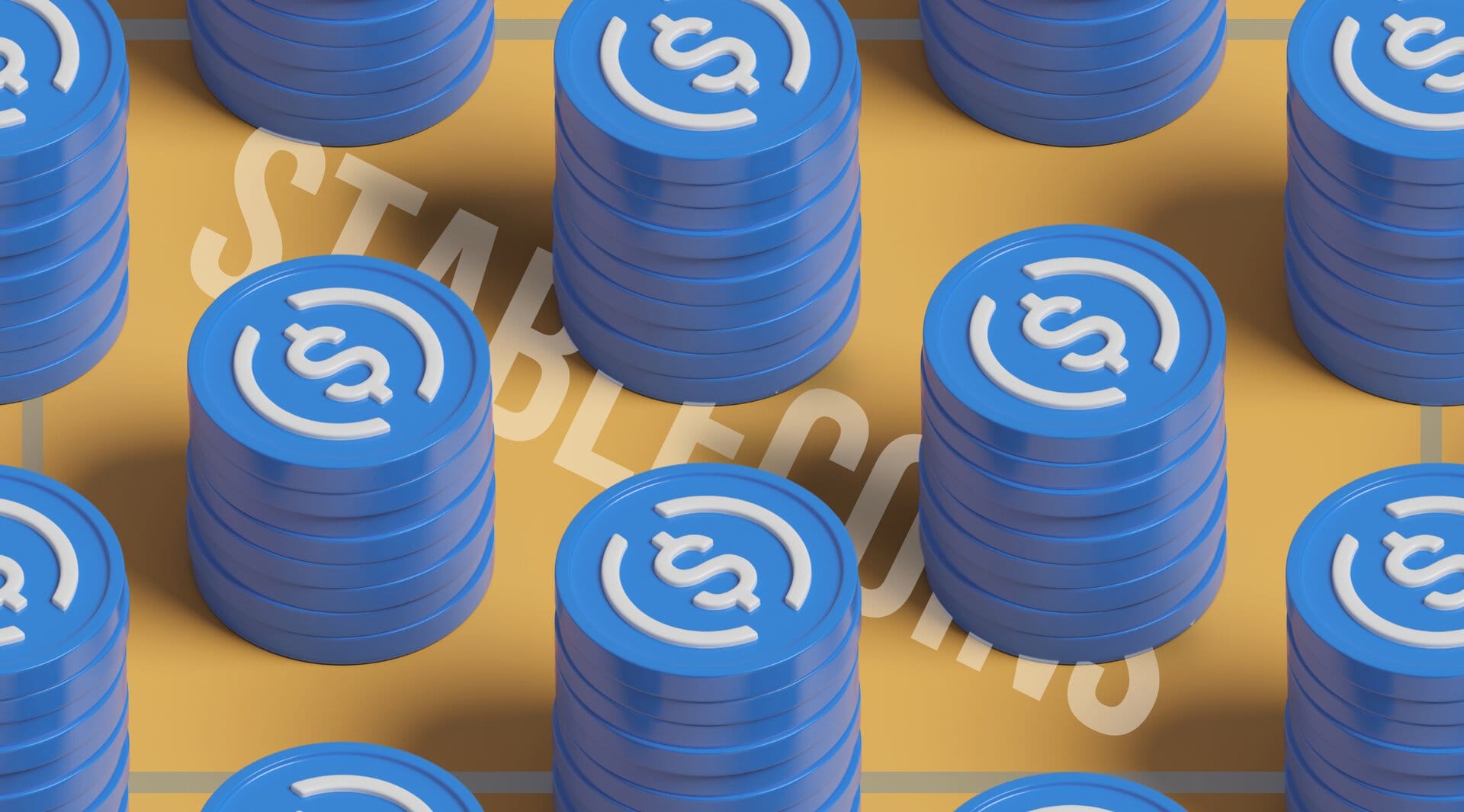
While the Treasury is tightening controls on Iran’s digital assets, the porous nature of cryptocurrency makes it a hard target to fully lock down. In light of this reality, the Trump administration has imposed or threatened secondary sanctions on banks and exchanges that help Iran move money, crypto included. On September 14, OFAC designated the Russian lender VTB Bank for keeping correspondent relationships with sanctioned Iranian banks.
In regard to China, President Trump is scheduled to host Chinese President Xi Jinping this week for a state visit, with meetings at the White House on September 24. While the war in Iran will surely be addressed, many other topics may take precedence: tariffs, AI, rare earth minerals and Taiwan among them.
The Houthis Make Their Move
In Yemen, the Iran-backed Houthis have recently made major military advances. After seizing nearly all of Yemen’s Red Sea coast, including Perim Island in the middle of the Bab al-Mandab Strait, Houthi forces have moved to restrict Saudi Arabia’s oil exports through the strait, declaring navigation safe for everyone except Saudi vessels. Government forces say they have retaken some ground near the strait.
Despite pleas from Saudi Arabia, the U.S. has so far declined to join the fighting, although it has stepped up intelligence and targeted support for the Saudi campaign. On September 13, U.S. officials met with Houthi representatives in Oman, at the American embassy in Muscat. The Houthis pledged not to attack American vessels and to honor their 2025 ceasefire with the U.S., which appears to be the primary reason the U.S. has stayed out of Yemen’s civil war.
Mining for a War Chest
Amid an ongoing humanitarian crisis in which hundreds of thousands have died, the Houthis have partially funded their war effort through crypto. Exploiting public telecommunications infrastructure, the Houthis mine digital assets, while using weakly regulated exchanges and Tether to move funds around.
In addition to their military gains on the Red Sea, the Houthis are looking to the oil-rich Marib province to the east. If they can wrest it from the Saudi-backed government forces that hold it, crypto could play an even larger role in funding the Houthi war effort.
Much like the way Iran has sold oil on the black market and funneled payments back home via crypto, the Houthis could do the same. While the U.S. has chosen not to join the conflict, that could quickly change, especially after the November midterm elections.
Polls taken in the war’s opening weeks showed most Americans opposed U.S. military action in Iran, and there is little sign of appetite for further foreign military adventures. However, once the current election cycle has passed, the Trump administration might become more active militarily regardless.
Warships Can’t Freeze a Wallet
The U.S. has more tools against Iran’s crypto economy than it did a year ago. The Treasury can blacklist an exchange like BitBank with a single designation. Tether can freeze tokens and reissue them into government custody on a court order. Prosecutors in Manhattan are now reportedly asking what Binance knew. Every one of those tools kicks in after the money has already moved.
The tally so far: $61 million in frozen Tether, still working its way through forfeiture court, from a network that moved more than $1.5 billion; an exchange whose founder the president pardoned; and a Chinese buyer taking most of Iran’s oil while Xi sits down at the White House. If the Houthis take Marib’s oil fields, they will have their own barrels to sell and a crypto playbook already written for them by Iran.
American warships can escort a tanker through the Bab al-Mandab. They can’t escort a Tether transfer.
Author: Tim Tolka, Senior Reporter
#Crypto #Blockchain #DigitalAssets #DeFi
The editorial team at #DisruptionBanking has taken all precautions to ensure that no persons or organizations have been adversely affected or offered any sort of financial advice in this article. This article is most definitely not financial advice.