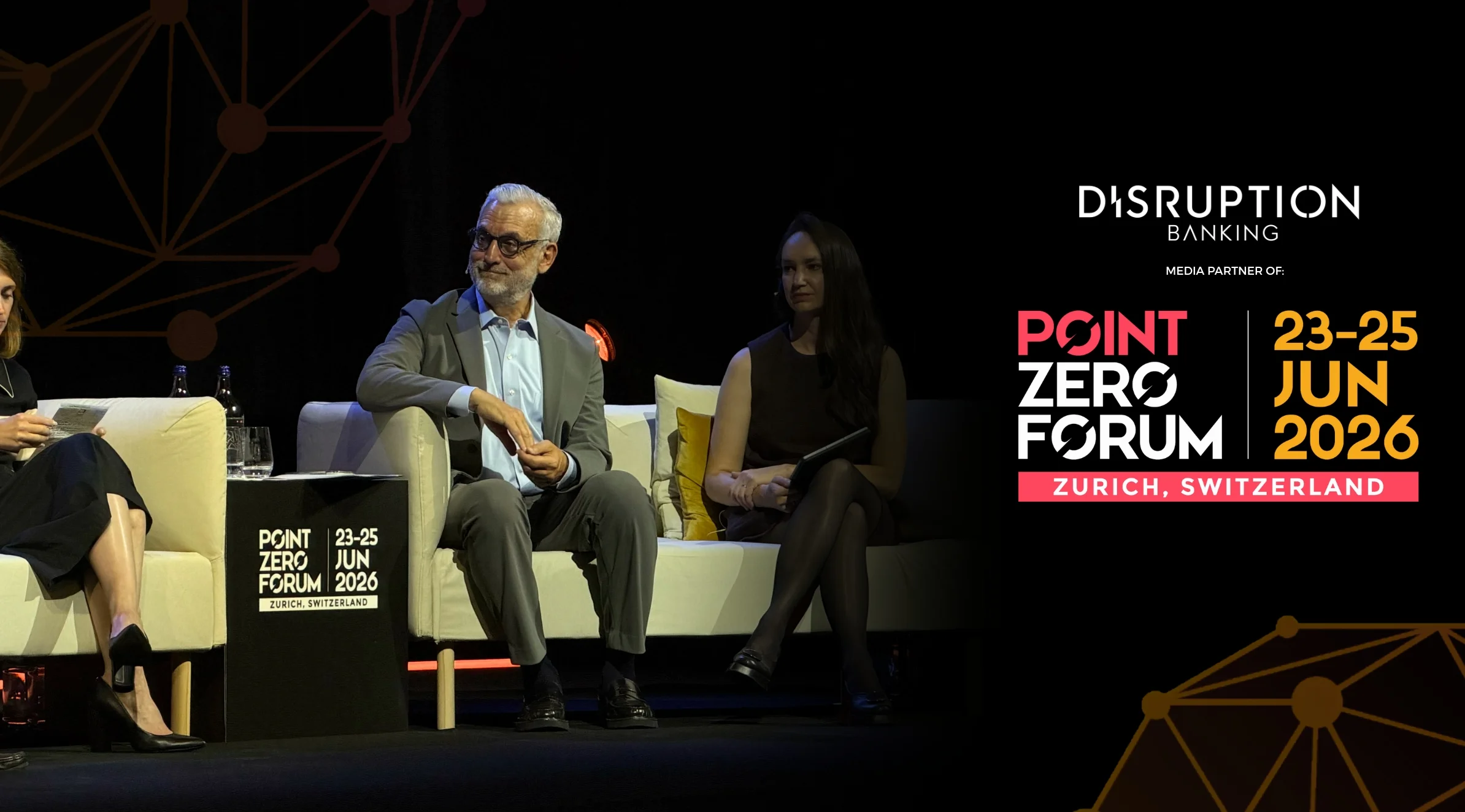
It’s the final day of the Point Zero Forum in Zurich and the topics refocus on regulation on the Forum stage. MiCA, GENIUS, CLARITY and the Global Race to write the rules for digital assets is the name of one of the first panels today.
The congress hall is full. American policy has dominated crypto for over a year now, and delegates are keen to hear more. Especially about the CLARITY Act.
Stu Alderoty, Chief Legal Officer at Ripple, joined the panel and shared his thoughts about regulation. Ripple is a company that has its own stablecoin and is rightfully at the table at these discussions. We covered some of the most important points that Alderoty raised.
Watch a clip of Alderoty’s remarks on the panel:
On the topic of #MiCA, @Ripple Chief Legal Officer calls for more Clarity at the @pointzeroforum today in Zurich.#RLUSD #Ripple #PZF2026 pic.twitter.com/OczISnBktG
— Digital Startup (@digitalstartup5) June 25, 2026
Here are the key points he raised.
Regulation is local, but products, services and customers are global
Alderoty opened by drawing a clear line between genuine customer protection and protectionism:
“Regulation is local, but products, services, customers, they’re global. At Ripple we operate in over 60 markets around the world and [hold] 75 licenses and commissions, including we just announced yesterday in the EU through Luxembourg. We got our provisional approval for our crypto asset service provider license, which I think completes the full circle of permissions that we need.”
He noted that institutional customers don’t want to think about regulatory borders when moving value from London to Singapore to New York. They expect seamlessness: “just like when I arrived in Zurich yesterday and swiped my ATM card, it worked the same as on Tuesday in New York.”
Alderoty distinguished between rules that protect customers (disclosures, reserve standards, AML/KYC: “table stakes”) and rules designed to keep foreign competitors out or shield incumbents:
“When regulation is designed to keep foreign competitors down or to protect incumbents, that’s protectionism. And in a global economy, and by definition crypto and blockchain are global and seamless, protectionism is going to fail across the board.”
He added that Ripple makes major investments (including a $1.25 billion acquisition last year of a non-crypto-native prime broker and trading firm) only in jurisdictions that foster innovation and “build broad rails, not walls.”
MiCA was ahead, but implementation clarity is now lagging
Alderoty praised MiCA’s original ambition but said practical guidance has fallen behind:
“MiCA, I think, was light years ahead of where the US was, but I think now the guidance that we’re getting from [Brussels] is falling behind, or at least it’s not clear.”
Local EU regulators “get it,” he said, but they are waiting for clearer direction from the EU level before they can give definitive answers to firms.
Stablecoin issuance under MiCA remains unclear, while GENIUS offers a model
On stablecoins, Alderoty highlighted a concrete pain point for Ripple:
“Take a company like Ripple. We launched a stablecoin in the last two years: RLUSD. In that short time we’ve got a market cap of about $1.6 billion. But we can’t issue that stablecoin in the EU under MiCA. Simply put: can we set up an EU entity where we can issue your USD [stablecoin]? We’re willing to do that. And then we’re told ‘not so fast’ because MiCA is not clear on that point. And to make matters worse, you have a couple of incumbents with grandfathered [status] who seem to be doing just that.”
He contrasted this with the GENIUS Act (Guiding and Establishing National Innovation for U.S. Stablecoins Act), noting that another panelist had explained its approach well:
“What the GENIUS Act does is: if you’re a foreign issuer and you come in and meet our minimum standards or floor, you can issue your stablecoin and [have it] trade in the US.”
Alderoty urged the EU to provide similar clarity, possibly with interim steps, rather than defaulting to localisation models.
Dollar reality and the bigger picture
He also touched on the macroeconomic reality that technology merely reflects: US-dollar-pegged stablecoins dominate the global market, and the dollar remains the primary currency for a huge share of cross-border transactions. “Let’s respect what the reality is,” he said.
Ripple, he emphasised, is ready to meet whatever standards are required: “We’re going to apply with those standards that allow us to [operate].”
The bottom line
Alderoty’s message was consistent: protect customers and consumers rigorously, but do not let protectionism or regulatory fragmentation become the enemy of the global, seamless nature of crypto and blockchain. Jurisdictions that build open rails will attract investment; those that build walls will not.
The panel underscored that the global race to write the rules for digital assets is very much live.
Author: Andy Samu
The editorial team at #DisruptionBanking has taken all precautions to ensure that no persons or organisations have been adversely affected or offered any sort of financial advice in this article. This article is most definitely not financial advice.
See Also:
Why the United States Needs the Clarity Act | Disruption Banking