
Walmart (NASDAQ: WMT) shares crashed over 7% on May 21, 2026, even after the retailer reported strong first-quarter results. The stock closed around $121.34 (TradingView), down 7.3%, despite Walmart announcing Q1 Financial Year 2027 (FY27) revenue of $177.8 billion (up 7.3% year-over-year) and adjusted earnings of $0.66 per share. In other words, sales were robust and roughly in line with forecasts, but the share price sank to Walmart’s worst single-day decline since 2023, even as the S&P 500 edged up 0.18%.
The contradiction reflects how equity markets behave when a premium stock delivers solid results but with cautious forward guidance.
Walmart WMT Closing Price, May 21. Source: TradingView
Walmart’s Q1 Was Not the Problem. The Valuation Was
On the surface, Walmart’s quarter looked solid. Total revenue of $177.8 billion was 7.3% higher than a year earlier. U.S. comp-store sales (excluding fuel) grew in the mid-single digits, reflecting steady demand for groceries and essentials. Global e-commerce again surged, up about 26%, driven by pickup, delivery, and its expanding marketplace.
Higher-margin businesses also kept growing: Walmart’s advertising revenue jumped roughly 37% worldwide, and membership fee income rose about 17%. Operating income climbed about 5% to roughly $7.5 billion, and adjusted EPS of $0.66 beat the $0.61 from a year ago.
In short, Walmart continued to gain market share among value-conscious shoppers, including higher-income households using its delivery and membership services.
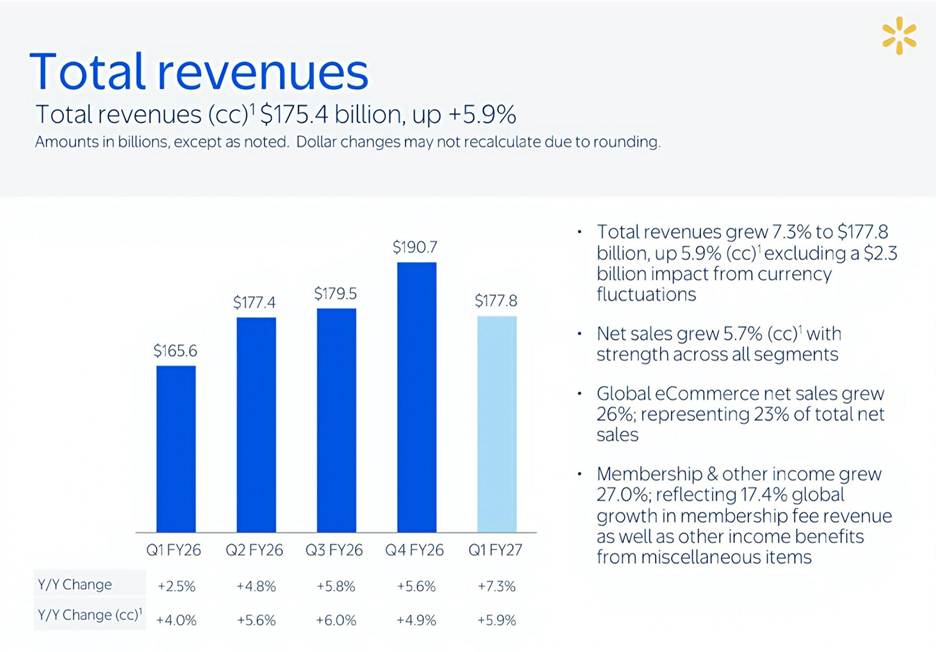
Walmart’s WMT Q1 FY27 Total Revenues. Source: Walmart
Guidance, Not Growth, Spooked Walmart Investors: Why Walmart Stock Fell 7%+ Despite $177.8 Billion in Revenue?
The stock drop was not driven by weak headline results, but by a forward-looking hangover. Investors were focused on guidance and cost pressures. Walmart reiterated its full-year 2026 targets (net sales +3.5–4.5%, EPS $2.75–2.85), but the key was the Q2 outlook. Management guided sales up only 4–5% and EPS of $0.72–$0.74, slightly below Street estimates (~$0.75 EPS). The conservative tone stood out in a retailer trading at a premium valuation (around 43 times forward earnings).
As Bryan Hayes, stock strategist at Zacks Investment Research noted, Walmart had “been one of the few megacap retail names trading near multi-year highs, and an affirmed outlook for the full year simply was not enough to push shares higher.”
Walmart Is Winning Customers. But Is It Winning Enough Profit?
Fuel costs were another worry. Walmart absorbed roughly $175 million of higher fuel and logistics expense in the quarter. Rising gasoline prices (near $4/gal) eat into shoppers’ wallets and Walmart’s thin margins. CFO John David Rainey warned that if elevated costs persist, it could lead to higher retail price inflation in the coming quarters. In other words, rising costs could force either more price hikes (risking sales) or margin compression.
Finally, the selloff was amplified by Walmart’s Dow Jones weight. Walmart is a price-weighted Dow component, so its 7%+ slide had an outsized impact on the index.
In sum, a “buy the rumor, sell the news” dynamic seems at play: strong Q1 numbers satisfied the bulls, but anyone hoping for brighter guidance or margin relief was left disappointed.
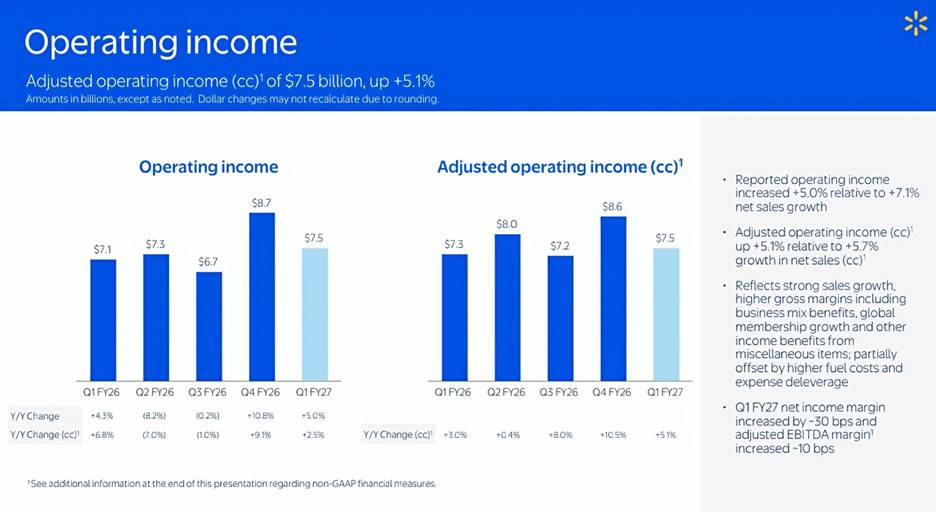
Walmart’s WMT Operating Income Q1 FY27. Source: Walmart
Did Walmart Just Expose the Limits of the U.S. Consumer?
Walmart’s results give clues about American shoppers. The retailer saw continued demand for low-cost essentials. Walmart President and CEO John Furner noted, “The consumer…they’re feeling some pressure and they’re looking to Walmart for value.” Sales trends support that: average transactions rose about 3% this quarter, though the amount spent per trip grew only ~1%, implying customers bought more items but paid tighter attention to price.
Furthermore, Walmart’s consumer data carries weight: the company reaches roughly 90% of U.S. households. CFO Rainey noted that average gallons purchased at Walmart fuel stations fell below 10 per visit for the first time since 2022, what he called an “indication of stress.” He said high-income customers are spending confidently across many categories, while lower-income shoppers are becoming more selective and “perhaps navigating financial distress.”
At the same time, Walmart is capturing a broader customer base. The company says it’s attracting higher-income shoppers seeking convenience (e.g. delivery). Its digital services, advertising, and loyalty programs all grew rapidly. In short, the quarter suggests U.S. consumers remain cautious on spending and value-driven, but they continue to turn to Walmart’s low prices and omnichannel offerings for groceries and everyday goods.
What Investors Should Watch Next: What Could Make Walmart Stock Recover?
Looking ahead, the key issues are margins and demand. Investors will track Walmart’s cost outlook (especially fuel, labor, and freight) to see if it can preserve profitability. Another focus is guidance execution: will Walmart hit that modest Q2 growth target and reassure on full-year profit targets? Grocery price trends and consumer sentiment will matter; if food inflation eases or wages pick up, Walmart’s traffic and ticket growth could improve.
Walmart’s fast-growing businesses could help offset risks. Its advertising and marketplace fees are higher-margin; they surged in Q1 (global ads +37%). Investors should also watch membership growth (up 17%) and e-commerce profitability.
Finally, any change in Federal Reserve policy or gas prices will indirectly affect Walmart’s outlook. In an environment of tight consumer wallets, Walmart’s ability to maintain traffic without bleeding too much profit will be under scrutiny.
The Real Reason Walmart Shares Fell After Q1 FY27 Earnings
Walmart’s Q1 showed a still-resilient business, but the stock’s 7.3% fall highlights how lofty expectations were. The quarter’s revenue and profit were solid by historical standards, yet the market fixated on cautious guidance and rising costs. This episode underscores that even a stable, defensive retailer can see its stock stumble if prospects don’t match its premium valuation.
Walmart remains a market leader in winning value-seeking consumers, but investors now want confirmation that growth and margins will justify the high bar set by its share price.
Author: Richardson Chinonyerem
See Also:
Why Did Goldman Sachs Dump $154M in XRP ETFs? | Disruption Banking
#equity #retail #U.S.consumer #federalreserve

Richardson Chinonyerem
Contributing author at Disruption Banking, covering capital markets.