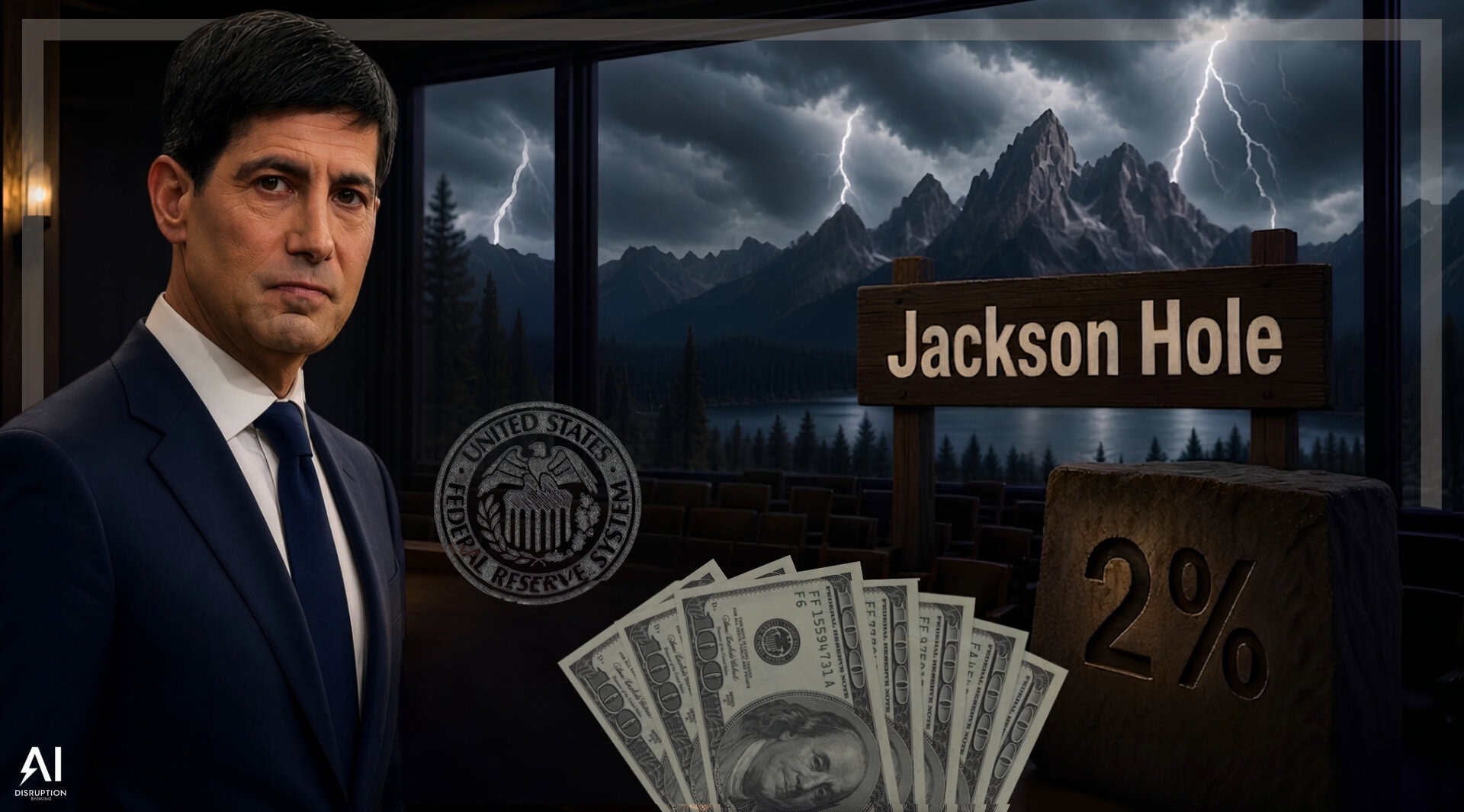
What happens in Jackson Hole does not stay in Jackson Hole. That is why desks in London, New York and Tokyo were waiting on a short slot in Wyoming.
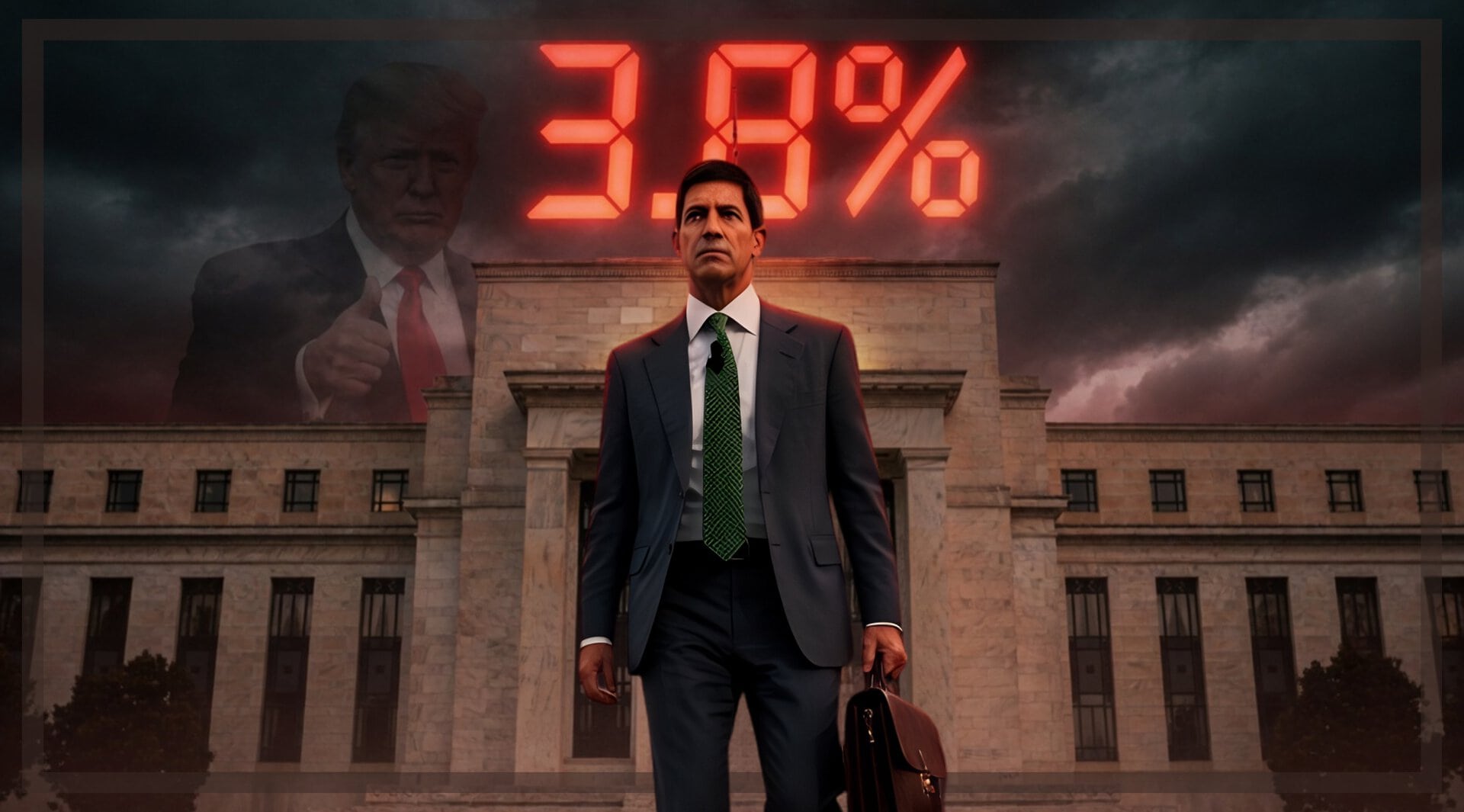
Federal Reserve Chair Kevin Warsh delivered his first keynote at the Kansas City Fed’s Jackson Hole Economic Policy Symposium this afternoon from Jackson Lake Lodge. The official theme of the three-day meeting is “Financial Innovation: Implications for Payments and Policy.” The unofficial theme is 2%.
He already communicated what he would prefer to do. After the July FOMC meeting he said that if he could use “the high mountain air in Jackson, Wyoming,” he would “frame the big questions,” not get “caught up in the myopic” of a quarter-point move. Markets, his own committee and the US Treasury have spent the past fortnight making that preference harder to keep.
The committee arrived first
Warsh has been in the chair since 22 May. In three months he has shortened the post-meeting statement, stripped out forward guidance and parked the hard questions in five task forces. He has also held the policy rate at 3.50–3.75%.
The July FOMC vote was 9–3 to stand still. Three regional presidents wanted an immediate hike. That is the widest policy split in years.
On Thursday, from the sidelines of the symposium, Kansas City Fed President Jeffrey Schmid told CNBC inflation was “still stubborn and it’s still sticky.” Cleveland Fed President Beth Hammack, one of the three July dissenters, told CNBC: “I don’t want to prejudge anything, but I believe now is the time to act.”
July consumer prices were still running at about 3.4%. The Fed’s preferred PCE gauge was 3.7%. Inflation has now missed the 2% target for more than five years. The White House can blame the war for petrol. It cannot blame the war for rents.
The Treasury moved first
The long end did not wait for Wyoming.
The 10-year closed Thursday at 4.67%. The 30-year closed at 5.19%, after 5.32% earlier this month.
What Bessent has not done, yet, is buy the bonds. On 19 August the Treasury said it would at least double long-end buybacks to $4 billion per operation, starting 9 September. Bessent called it a “Treasury Twist.” On 24 August he said, on camera, “we haven’t bought a single bond yet.” Warsh spoke in that gap.
Trump wants cheaper money. Bessent is leaning on the curve. The committee voted 9–3 to stand still. That was the room.
What Kevin Warsh said
Warsh came on stage promptly. He said the Fed should be “humble and never naïve,” then laid out seven principles.
Yesterday’s news, he said, “has a way of getting mistaken for what’s happening right now.” The job is to know the difference. Policy exists to keep aggregate demand broadly in line with supply, even though supply can only be inferred. Two per cent on the PCE index is “a firm fixed target.” Price stability is “not self-executing.” “No excuses.” Maximum employment is not a rival goal. Short-term rates are the main tool. Unconventional policy belongs in crises, “sparingly, if at all.” Money matters, however unfashionable that sounds. And “a quieter Fed, a more purposeful Fed in its communications, is better able to meet its objectives.”
Then he read the economy. Output has strengthened. Business investment in equipment and intangibles is up about 9% over four quarters, more than half of it AI. S&P profits are up more than 20%. Credit spreads are tight. Bank lending standards are easy. Financial conditions, on his reading, are not restrictive. The jobless rate is 4.1%. Claims sit near multi-decade lows. Labor markets, he said, are “broadly consistent with full employment.”
Prices are not. Twelve-month PCE inflation is 3.7%; the six-month pace is a little above 4%. Over the past year, 54% of the PCE basket rose more than 3%, against about 32% before the pandemic. Medium-term inflation expectations remain anchored. His test: the Fed must be confident that underlying inflation is moving toward 2% “clearly and at sufficient speed. Otherwise, we have work to do.”
He closed on discipline, not a decision. “At the moment of truth,” he said, quoting Chuck Yeager, “there are either reasons or results.”
The path for September is still unwritten. The standard he set is not.
Author: Andy Samu
See Also:
Bond Vigilantes vs Scott Bessent | Disruption Banking
Why Did Kevin Warsh Shock Markets on Rate Cuts? | Disruption Banking