





The Aurum Foundation advertises an AI trading bot that brought in ~30% profits every month during testing. Never mind that Renaissance Technologies’ Medallion fund, the top trading fund in history, averaged 66% returns per year before fees; this trading bot can bring home 1900%, no questions asked.
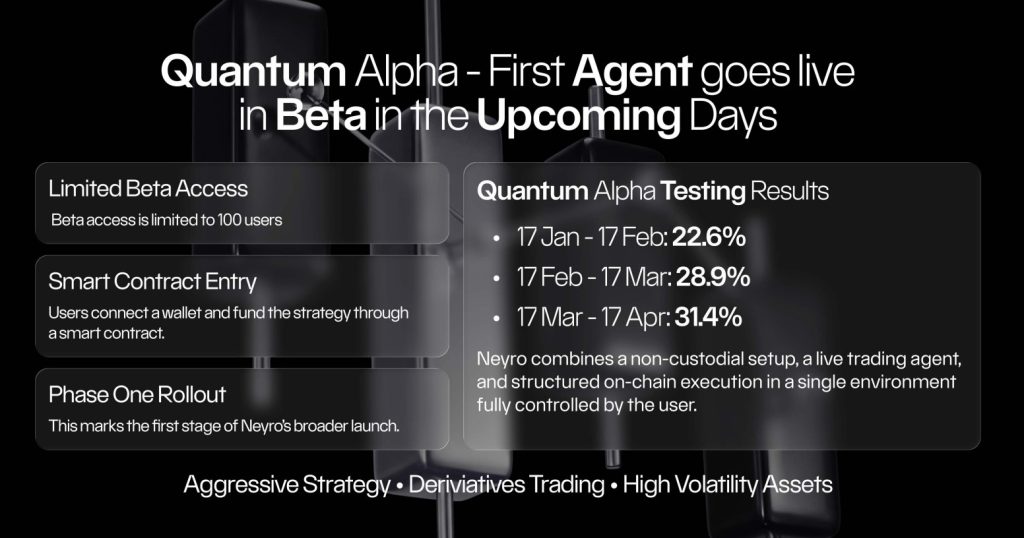
The pitch that gets people in the door is simple: an AI trading bot that turns crypto volatility into monthly returns no hedge fund, quant desk, or trading algorithm has ever sustained at scale.
Scroll far enough down Aurum Foundation’s Trustpilot page, and the same three words show up over and over: pending, pending, pending. Investors describe watching a balance climb for months on a dashboard, then locking the moment they try to take it out.
Disruption Banking reached out to CoinMLS, a blockchain consultant, who responded in an email, “Aurum appears to be a new generation of High Yield Investment Program (HYIP), which is a form of Ponzi scheme. This is generally a re-boot of a project like USI Tech and Bitconnect.“
CoinMLS noted a further problem with the premise: trading bots generally lose efficiency at scale, as they exhaust available liquidity across exchanges. A bot generating 30% monthly returns would be worth more kept private than shared with 170,000 retail depositors.
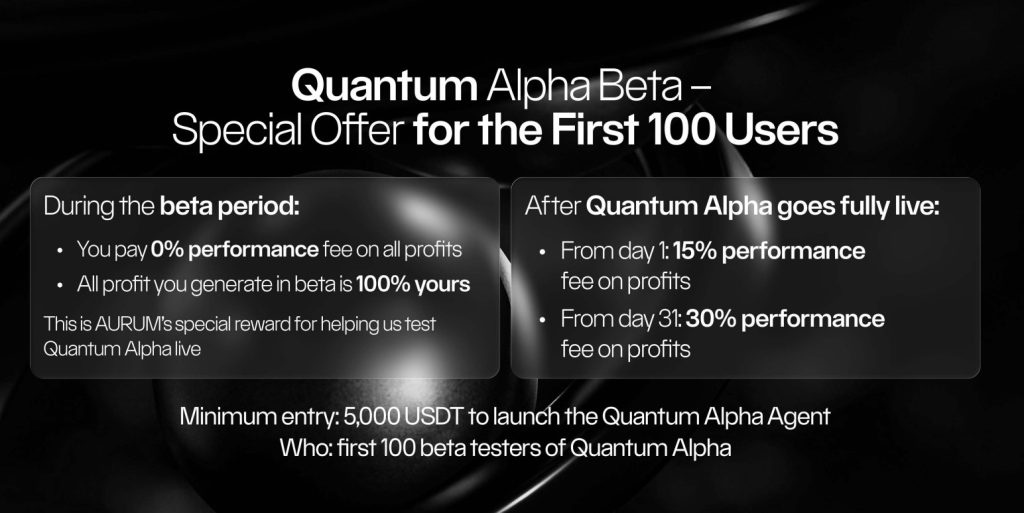
Industry benchmarks for AI trading bots, according to CoinMLS, run 5–25% annually. Aurum is promising that monthly. You might ask, “How much do I pay in fees?” It’s a logical question; you can’t get something for nothing, oh, but wait, the first 100 users will pay no fees during beta!
The Check Is in the Mail
It’s surprising, then, that Aurum Foundation may be experiencing liquidity stress. Users complain of days waiting for withdrawals to process, one of the first visible signs of a Ponzi scheme entering distress.
YouTuber “Don’t Mind Me Mining” said his withdrawals take 72 hours. The rationale he said, was security, in case someone’s account was hacked. In legitimate financial platforms, fraud protection mechanisms do not universally delay all withdrawals for all users. Instead, Ponzi schemes progressively tighten withdrawal terms as outflows increase.
CoinMLS wrote that the HYIP is characterized by “delays in payouts (until the day they stop completely) under the guise of being a security measure or platform upgrades or maintenance.“
Aurum’s EXAI bot locks deposits for a year with a 35% early withdrawal penalty, a classic Ponzi trap. The “Neyro” bot is being marketed as solving that problem, and that’s the one offering patently impossible profits. In practice, “self-custody” bots that interact with smart contracts can still be designed so that withdrawal is technically possible, but the displayed “balance” is fabricated.
Jurisdictional Wack-A-Mole
Bryan Benson, CEO of Aurum Foundation, said in an interview with Up Next Crypto on YouTube, “We’re licensed in both Dubai and Hong Kong, so those are our two jurisdictions where we have our entities.”

The Hong Kong Securities and Futures Commission (SFC) doesn’t agree. On June 23, 2026, the SFC announced that the claims on its website were false and added Aurum to a list of platforms that may pose risks to investors. Aurum Foundation lists an address in Hong Kong, which was flagged by a researcher as “a well-documented virtual office hub used by thousands of shell companies with no physical staff.”
The Bank of Russia, and the Nigerian Securities and Exchange Commission (SEC) have flagged Aurum Foundation as a scam/pyramid scheme. Italy’s CONSOB blocked related domains, and the New Zealand FMA issued a warning about it, citing both the Bank of Russia and the Nigerian SEC. Nevertheless, people are still falling prey to it because of the marketing. It sounds enticing, and it’s an AI-bot, luring users with easy money courtesy of AI.
The Quiet Part, Said Out Loud
Disruption Banking attended a Mastery Presentation on Zoom, where everything Aurum is hiding was revealed. First of all, in the meeting, it became obvious that Aurum is a multilevel marketing scheme.
The speaker in the meeting was Shane Morand, identified as Aurum’s Chief Network Development Officer, pictured below.

At one point, Morand said, “They’ll have a mastery in this beautiful industry that we call referral marketing, direct sales.”
This undermines the messaging of Aurum, which always and everywhere insists it is an AI fintech platform.
“Because the sector of AI finance is new, your goal is really to reduce their fear of the unknown, because it is all unknown to me, it’s unknown to you, it’s unknown.“
So, in public Bryan Benson says: “We have institutional-grade AI infrastructure and a proven track record.“
Internal recruitment call: “We don’t know, and it doesn’t matter.”
“There’s no need to get into all the different algorithms and what they’ve put together, and all the different bots, because it’s going to overwhelm them.“
Recruiters are trained to steer marks away from the one question that would determine whether the product is real.
“Your goal is to remove the fear… You can keep on reminding them, it’s simple, it’s simple. That’s what we do, that’s how we’re growing. It’s simple.“
“The goal and your focus is to make it easy for them to what? To say yes.”
This reporter asked the YouTuber promoting Aurum if he was paid for his promotion. He answered, “I don’t get paid by the Aurum Foundation to show my results. However, I do receive some profit share from partner trading through my referral links.”
He did not respond to a follow-up asking if Aurum is an MLM.
Congratulations, You’ve Been Incorporated
Aurum’s Neyro presentation announces that the company has secured “a full Canadian license, marking a major legal milestone” via a newly incorporated entity called Aurum Neyro AI Technologies Corp., Company No. BC1571382, registered in North Vancouver, British Columbia.
It is a milestone in the sense that doing paperwork to register a company is a pain in the neck. You have to pay a fee, often by check, and banks don’t offer those for free anymore.
Registering a company in British Columbia is a routine administrative act. Any individual or entity can complete the process online, with no demonstration of financial expertise, trading capability, or regulatory compliance required.
The registration is issued by BC Registries and Online Services, not the British Columbia Securities Commission (BCSC), not FINTRAC, and not any body that oversees investment dealers, portfolio managers, or money service businesses.
A BC incorporation is, in short, the legal equivalent of a mailing address: it proves you exist; it says nothing about what you’re allowed to do.
The presentation does not make this distinction. It frames the incorporation as “a stronger legal foundation for structured growth, expansion, and long-term international positioning” — language that implies regulatory approval Aurum does not have, from an authority that was never involved.
The Code Was Written in Cyrillic
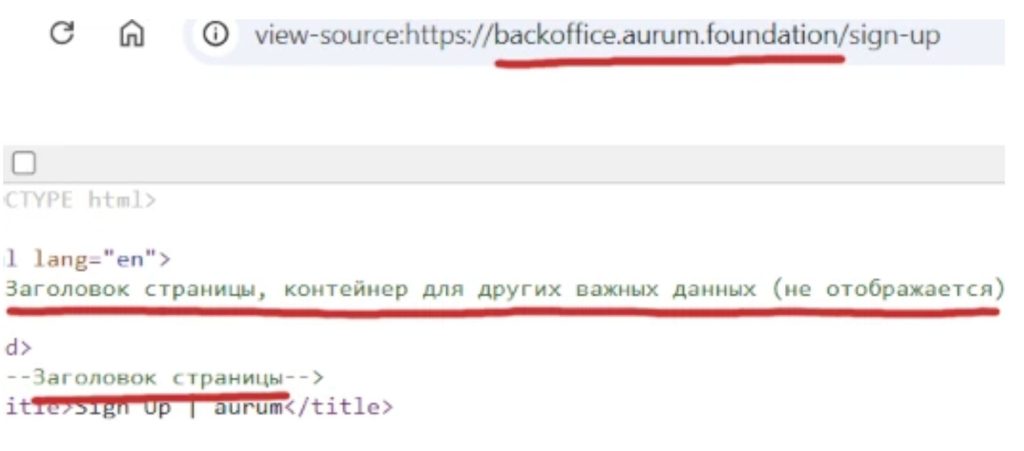
Interestingly, though based in Dubai and boasting an American CEO, Aurum’s technical team is or was composed of Russian-speakers. The Aurum Foundation website presents the brand as an English-language product built for a global audience, but the people who actually wrote the code were working in Russian. The raw HTML source of the Aurum platform’s sign-up page (view-source: https://backoffice.aurum.foundation/sign-up) is written in ciryllic.
The website BehindMLM noted, “While Benson front’s Aurum Foundation as CEO, the scam is believed to be run by Russian scammers also hiding in Dubai,” adding, “Top sources of Aurum Foundation website traffic over the same period were the US (29%), Greece (22%), Turkey (9%), Norway (8%) and France (6%). Aurum Foundation is not registered to offer securities in any of these jurisdictions.”
Borrowing Credibility
People who have credibility don’t have to talk about it. Aurum Foundation seems preoccupied with the credility of its leadership. A well-documented Ponzi tactic is to associate with a legitimate brand to borrow its credibility.
On one of Aurum’s websites, there are several short videos that claim to “capture the essence of what makes The Aurum Foundation truly distinctive.” In one, the CEO is pictured with his arm around Changpeng Zhao, CEO of Binance. The channel, Keith Lacy – Aurum Foundation Network, has 24 subscribers, and the video has less than 100 views.
Aurum recently touted a partnership with the government of Sierra Leone, but the claim doesn’t hold up under closer examination. The partnership is actually between Aurum Foundation and Clinq.Gold, where one employee used to work for the Ministry of Finance of Sierra Leone. At best, Clinq.Gold anticipates servicing state clients, but nowhere on its website does it claim to have the government of Sierra Leone as a client.
That didn’t stop Aurum from exaggerating the deal. It’s a completely common thing for start-ups to do. Every entrepreneur does this, or should do it, at least, but Aurum is supposed to be more than that.
A video posted by the same YouTuber with 24 subscribers says, “…The government of Sierra Leone. Hello, the government of Sierra Leone, all right, that’s called credibility.” We’re not so sure.
The Mailroom and the Myth
Benson told CryptoWendy, a YouTuber, “We’ve already created five or six millionaires before our official launch.” When someone says this, watch out because he’s about to rob you. These kinds of claims are classic in Ponzi schemes and multilevel marketing (MLM) because they create FOMO.
In one of the videos, a member of the Aurum team says, “If it wasn’t really for Brian and Akmed I wouldn’t be here uh because it was the credibility of Brian with his background with Morgan Stanley and being a pioneer in Binance…”
This would seem to be an enormous inflation of credentials because Morgan Stanley doesn’t appear in Benson’s bio here, nor does it appear in the description of Benson’s experience in Aurum’s announcement when Benson became CEO.
Benson is not on LinkedIn, which is odd for an executive officer, but Disruption Banking did find a reference to Benson’s tenure at Morgan Stanley on his Instagram, where he wrote, “I did not start my career on a trading desk. I started in the mailroom at Morgan Stanley.” This contradicts how Patex Ecosystem represented Benson’s role in an announcement that he had joined their company, saying he “started his career at Morgan Stanley in derivatives trading.” In a post on X, Aurum said Benson “started at Morgan Stanley as a futures trader…”
Built Binance, Apparently
There’s also a question about Benson’s tenure at Binance. In the Cryptoslate bio, it says Benson was at Binance from August 2020 to March 2022, so 1 year and 7 months, not “nearly three years” as he claimed in the Wendy O interview.
On the same webpage, this statement appears:

So, on top of the exaggeration of Benson’s tenure and experience, Aurum also claims that Benson “built” Binance and Morgan Stanley.
In another of the six video excerpts, it is claimed, “with Brian on the Forbes Crypto Advisory… the Entrepreneur Magazine top 10 crypto companies to invest in 2026.” This is untrue. Benson joined the Forbes Executive Council, a pay-to-participate membership program, but it sure sounds impressive, and that’s the goal.
Other people associated with Aurum have failed crypto projects in their past. Even Insight, a scam research website, wrote, “Sal Khan promoted TLC Trading, which collapsed, and Ahmad Zen was linked to Earn World, which also failed in 2024.”

That’s not a dealbreaker, but it’s not a great testimony.
The Returns Would Sell Themselves
One YouTuber said, “up to 550,000 is the largest package you can activate.” The largest losses of any Ponzi scheme often occur at the top tiers, after marks went all in when lower tiers delivered positive results. Tiered investment platforms encourage users to keep investing rather than withdrawing, and that is key to the scam’s survival.
He also claimed that, “from 25,000 original deposit… we reached 40,239… I withdrew already about 18,000.”
If you add that up, $40,239 − $25,000 + $18,000 = $33,239 in approximately 6–7 months. That represents a ~133% total return, implying roughly 14–15% monthly, matching the “luxury tier” claim. The same YouTuber later claimed to be using another bot, called Neyro. “You can see it’s at 30% roughly a month right now.“
CoinMLS posed the question, “Why is a generous referral program needed? A genuinely profitable crypto bot would not rely on huge referral incentives and use such a structure. The returns would sell themselves. The reason they have these is because the lifespan of the project is limited, and they need to grow as fast as possible before the big rug pull.“
Math Not Mathin’
It makes no sense, and neither does the math. Consider the kind of capital this project will need to keep up with the promised returns. The numbers get real big, real fast. The following image came from the exposé by the anonymous researcher mentioned above.

It is estimated that the project will need to attract five times more new capital than it did in 2025. Aurum Foundation did not respond to a request for comment for this story.
None of this has slowed recruitment. New “packages” keep launching, new countries keep issuing warnings, and the company keeps relocating its claimed jurisdiction one step ahead of whichever regulator catches up next.
Russia flagged it. Nigeria flagged it. Italy blocked its domains. New Zealand warned about it in May. Hong Kong called its licensing claims false in June. Aurum Foundation is still online, still recruiting, and still promising 1,900%.
Pending, Pending, Pending
The victims’ experience rhymes with other Ponzi schemes. They watch with great excitement as the number on the screen steadily grows, but when they attempt to withdraw, their account becomes locked.
Then, bots take over with automated replies to stall and deflect. “Your request is processing.” You wait a week. Then, you are told, “Withdrawals are no longer available daily or weekly, but they will take place quarterly.” You check again and again. A month goes by, and “Your request is processing,” again.
Multiple accounts describe victims being told their withdrawal triggered a “review” or “compliance” hold, followed by demands for a fee to release the funds: one report cites a 12% “compliance fee,” another describes an “external verification fee” followed by a “penalty fee for suspicious account activity.”
What is consistent across Aurum’s various products, the Flash Loans, the EX-AI Bot, EX-AI Pro, Zeus AI Trading Bot, the NeoBank/card, the exchange, and gold packages, is the following pattern: funds frozen without warning, bot-only support, and then a second extraction layer once a victim tries to push for a real withdrawal.
Everything about Aurum Foundation suggests investors should hide their money under their mattress, rather than put it in a deposit with the “Foundation.”
Author: Tim Tolka, Senior Reporter
#Crypto #Blockchain #DigitalAssets #DeFi
The editorial team at #DisruptionBanking has taken all precautions to ensure that no persons or organizations have been adversely affected or offered any sort of financial advice in this article. This article is most definitely not financial advice.
See Also:
Crypto Wendy: why people should embrace NFTs | Disruption Banking









6 Responses
You somehow completed missed how the income is created even if not one new person joined the company this year.
Did you try it yourself for 30 days to use the dashboard and watch the tutorials. Open an account for $20 and deposit or transfer $100 or more in some token into an account. You will begin earning % the following few days, everyday into your account. Enroll no one at all, its irrelevent. After 30 days of learning from the back office, My experience is everyone is happy. Thats my experience.
If everyone on earth stopped buying Microsoft Stock, it doesnt prevent the company from growing value and making profits because the revenue is created independently of the stock price. The same is true with Aurum. Doesn’t require new customers.
Money that is sitting in the system, just like money you have in a savings account is invested/traded daily based on dozens of active digital currencies that go up and down daily. Obviously they have great volotility daily and opportunities for an AI system to buy and sell 1000’s of times daily is available. Earning 1% a day is not difficult. About half of this is paid back to people that offer their funds to be traded, or not.
Banks trade 365 days your money but keep the spread and pay you 3-5%, Aurum shares it, even if no one else joins. No one is required to tell anyone to earn more income. Vast majority of all customers, have referred noone and still they all earn daily income.
People can start for as little as $100. The company and system isnt dependant on any one governments approval, that is the point. Bitcoin doesnt ask congress if people can buy it, congress eventually finds a way to tax it. The same will happen here. Various governments are simply trying to figure out how to tax it.
Considering that digital currency is a mutti trillion dollar industry already, a company managing a few hundred million dollars doesnt really create a blip on a gnats nipple. When the company grows 30 times it would only be $10 billion in deposits, still nothing out of trillions in the future.
AI finance trading is here to stay. Who the winners will be time will tell. Aurum is the most organized, consistent example I have seen the past 5 years worldwide. They speak constantly at international events and the leadership is available worldwide. Nobody is hiding anything in my observation but saying it creates a more intrigueing article.
I would not recommend even attempting to register. After depositing €33,000, I didn’t trade myself, as their analyst assured me they would make profits, today they refused my withdrawal request and closed my account on terms and conditions with no room for appeal. My deeply appreciation to ” alexivictimhelps @ mail . com ” who helped me on my withdrawals and I will try to ensure that this company shut down
So you are saying that you put 33000 in aurum, then you tried to withdrawal and they wouldn’t let you? if this is true, what program and or bot did you use? name? you do realize that on some of their products you have a one year lock, and if you compound, the lock starts all over again. I don’t care for this. Did you use a noncustodial wallet? Please show us some pics of the deposits, and the letter they sent you to prove your claims. If your claims are true, people would want to see the proof and be able to verify.
This is utter nonsense! Clearly sounds like you’ve invested with a 3rd party and not Aurum Foundation. This article also doesn’t make sense when Aurum is compliant with MiCA and have published a hacken report showing that they’re not using investor deposits to pay profits promised.
The media these days are just shocking with what they spit out! I’m in Aurum Foundation as an investor for well over a year and the experience, returns, communication have been nothing short of amazing!!
Your experience may help me decide!
Hi mate just about to invest in Aurum and looking at reviews, as someone who has been in the platform for a year would you recommend joining? It looks and sounds great but want to be sure…Thanks