- The economy slowed sharply in 2025, to 0.8 percent from 1.9 percent in 2024
- Growth is forecast to increase modestly to 0.9 percent in 2026, while headline inflation is projected to remain elevated at 3.4 percent in 2026
- Structural headwinds related to adverse demographic trends and weaker total factor productivity are weighing on medium-term growth
Washington, DC – March 26, 2026: The Executive Board of the International Monetary Fund (IMF) completed the Article IV Consultation for the Slovak Republic.(see point 1 below) The authorities have consented to the publication of the Staff Report prepared for this consultation. (see point 2 below)
After robust growth in 2023-24, the economy slowed in 2025, to 0.8 percent from 1.9 percent in 2024, as fiscal consolidation and subdued consumer confidence restrained consumption and private investment contracted amid elevated uncertainty. Public consumption growth slowed, although this was partly offset by strong EU-funded public investment. Meanwhile, net exports rebounded as strong export growth more than offset an increase in imports linked to capacity expansion in the automotive sector.
Growth is forecast to increase modestly to 0.9 percent in 2026, with domestic demand constrained by another year of fiscal consolidation and a cooling labor market, before rising to 1.8 percent in 2027. Headline inflation is projected to remain elevated at 3.4 percent in 2026 due to the gradual phasing out of energy price subsidies, while core inflation continues to ease. Structural headwinds related to adverse demographic trends and weaker total factor productivity are weighing on medium-term growth.
The recent increase in energy prices is likely to weigh on growth and raise inflation but does not change the thrust of staff’s policy advice.
Executive Board Assessment (see point 3 below)
Executive Directors agreed with the thrust of the staff appraisal. They noted that inflation remains elevated while growth slowed sharply and medium-term prospects face structural headwinds from adverse demographics and weak productivity growth. With the outlook subject to significant downside risks, including from recent geopolitical tensions and developments in energy markets, Directors stressed the importance of restoring fiscal sustainability and advancing reforms to strengthen resilience and support economic convergence.
Directors agreed that the fiscal consolidation in the 2026 budget is appropriate, but significant further growth-friendly fiscal consolidation will be required over the medium term to offset spending pressures while placing public debt on a downward trajectory and safeguarding the vulnerable. They called for key political decisions on revenues and spending efficiency as part of a multi-year fiscal strategy, supported by a strong fiscal framework, including reform of the debt brake rule ahead of its reactivation.
Directors agreed that the financial sector appears resilient but continued vigilance is warranted given the economic slowdown. They concurred that the current macroprudential stance is broadly appropriate and called for continued strengthening of the supervisory framework, including by implementing remaining FSAP recommendations and further strengthening the AML/CFT framework.
Directors stressed that well-communicated and sequenced structural reforms are essential to lift potential growth and support fiscal sustainability. Reforms are needed to raise labor force participation, address skills mismatches, foster innovation and technology adoption, improve access to risk capital, increase education quality, and strengthen governance. Directors also noted that Slovakia would benefit from complimentary EU‑level reforms aimed at deepening the single market. They stressed the importance of continued progress in reducing energy intensity, diversifying supply and improving energy security—including through phasing out of subsidies and investments in clean technology, complemented by EU wide reforms—to reduce the economy’s high vulnerability to energy price volatility.
It is expected that the next Article IV consultation with the Slovak Republic will be held on the standard 12‑month cycle.
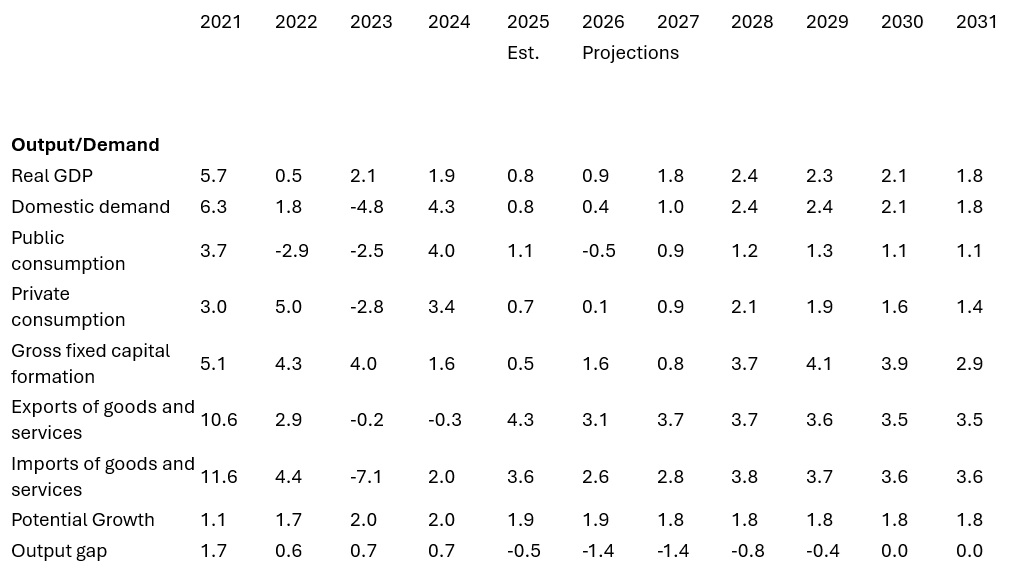
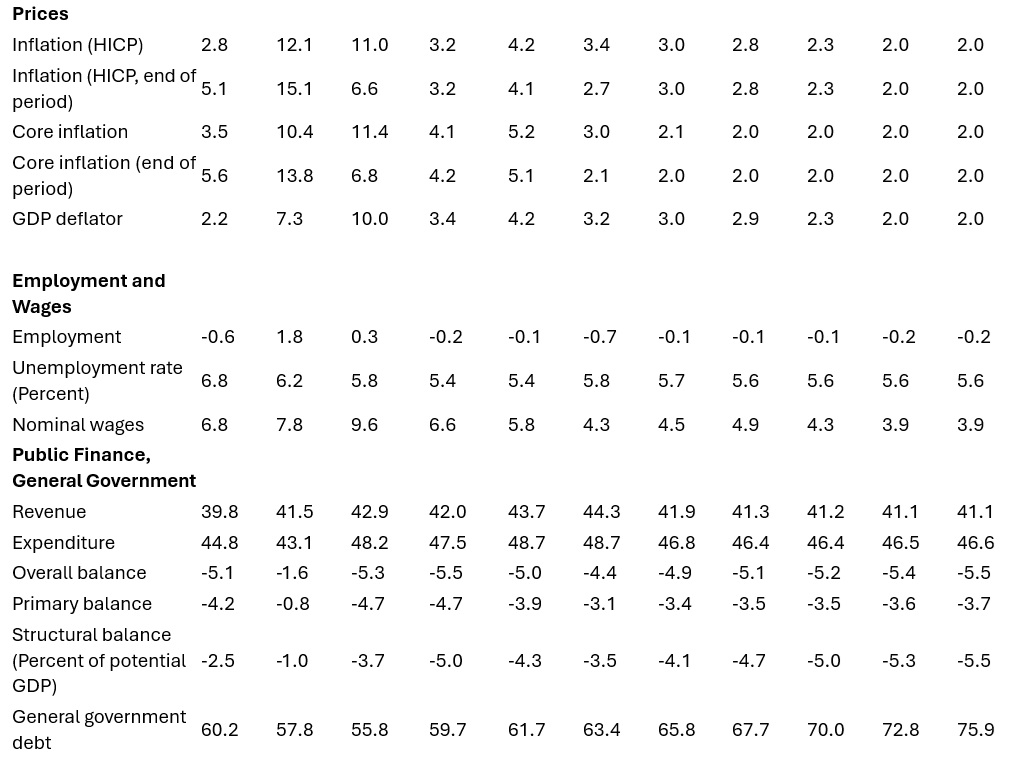
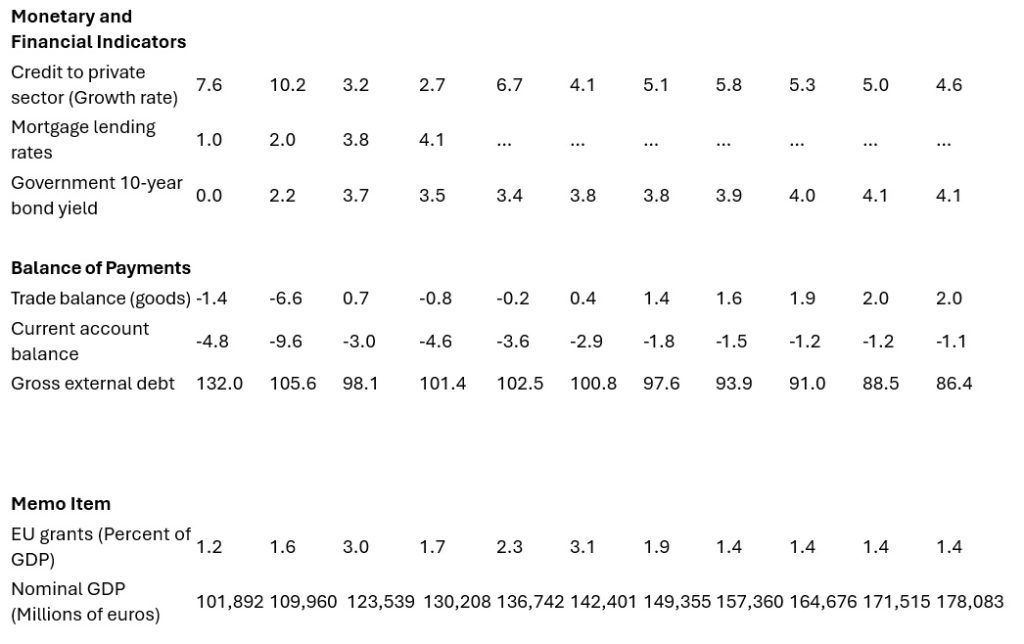
Sources: National Authorities; and IMF staff estimates and projections.
(1) Under Article IV of the IMF’s Articles of Agreement, the IMF holds bilateral discussions with members, usually every year. A staff team visits the country, collects economic and financial information, and discusses with officials the country’s economic developments and policies. On return to headquarters, the staff prepares a report, which forms the basis for discussion by the Executive Board.
(2) Under the IMF’s Articles of Agreement, publication of documents that pertain to member countries is voluntary and requires the member consent. The staff report will be shortly published on the www.imf.org/en/countries/svk page.
(3) At the conclusion of the discussion, the Managing Director, as Chair of the Board, summarizes the views of Executive Directors, and this summary is transmitted to the country’s authorities. An explanation of any qualifiers used in summings up can be found here: http://www.IMF.org/external/np/sec/misc/qualifiers.htm.