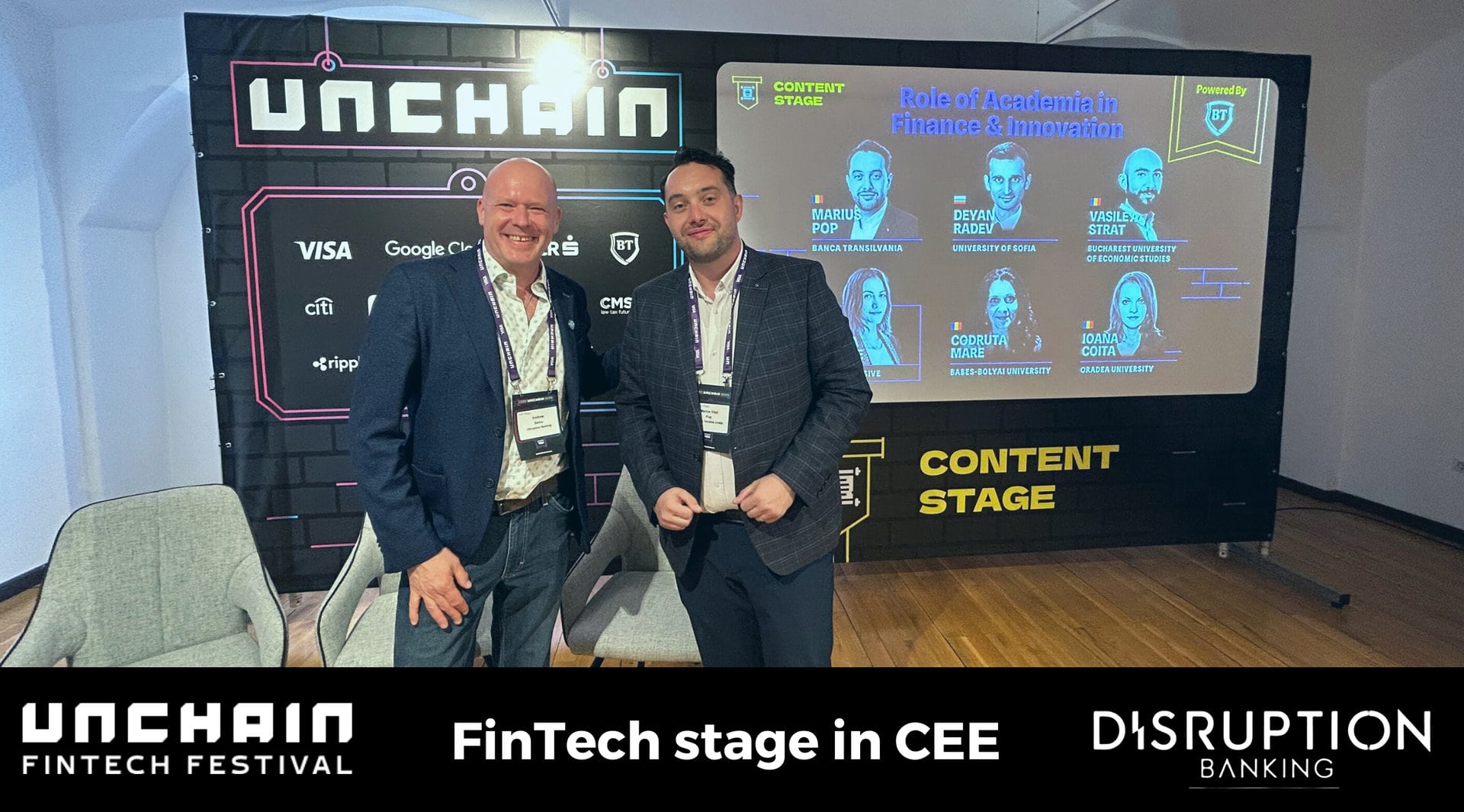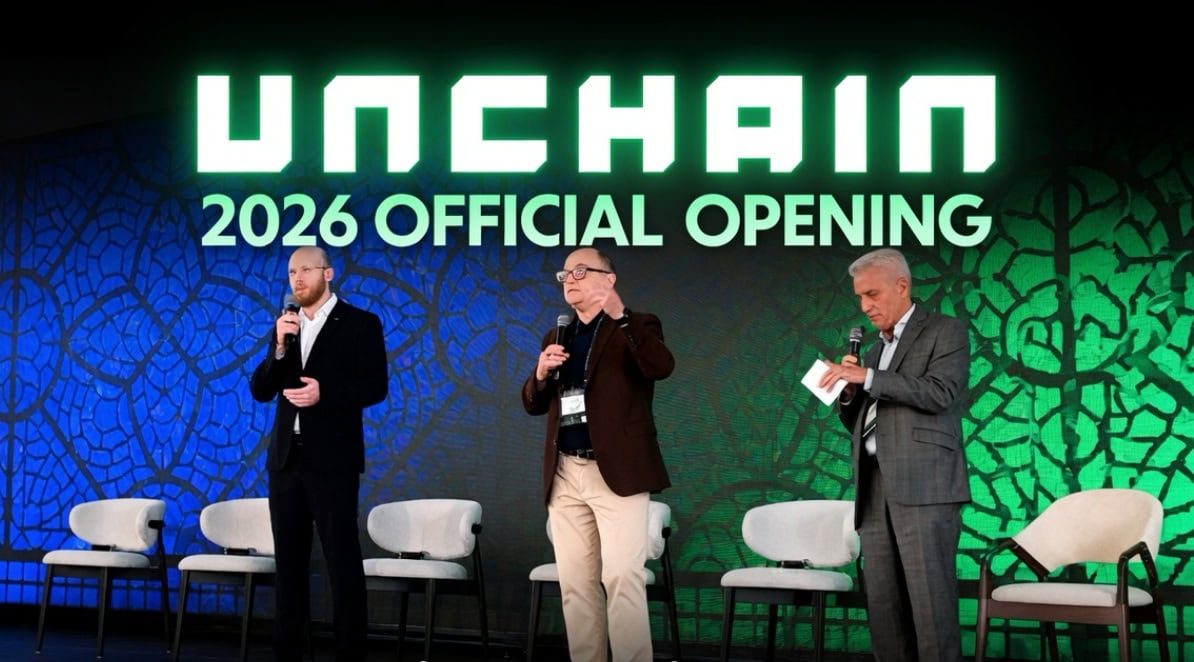
For the first time ever there were a few rainclouds overhead as delegates headed to the Fintech Fortress in Oradea. The event celebrates its 5th anniversary this year amidst continued disruption in the global economy. That didn’t stop delegates from attending in record numbers, with Banca Transilvania and VISA making up a large part of the ecosystem that has long supported Central Eastern Europe’s most important fintech event.
This year’s master of ceremonies hails from Austria. Gerd Bommer is an investor and a long-time supporter of UNCHAIN as well as an excellent host to this year’s Unchain Festival. He warmly welcomed delegates just as the sun appeared over the fintech fortress.
National Bank of Romania at UNCHAIN
As each year, Csaba Balint of the National Bank of Romania greeted delegates who had made their way to the western city of Oradea. A Board member at the NBR and a familiar face at UNCHAIN, Balint, who hails from Oradea himself, delivered thoughtful opening remarks that blended history, economics, and optimism for the fintech future.
Balint began by thanking the organizers, speakers, and participants for making the event possible. “You really deserve it. Congrats,” he told the crowd. He then highlighted the symbolic power of the venue, noting that Oradea was once home to the zero meridian, “something like the Green Ridge”, for several centuries. “Now it has become the heart of the fintech ecosystem,” he said. “It is a great comeback.”
He placed the current digital transformation in a much broader historical context. Comparing today’s rapid changes to the Industrial Revolution, Balint traced humanity’s major shifts: from hunter-gatherer societies to agriculture (taking thousands of years), the Industrial Revolution (several centuries), and more recently the shift to a services-dominated economy (just decades). “We can observe that big shifts are happening faster and faster,” he observed.
A self-described “classic monetary policy maker” with a technical and macroeconomic background, Balint drew a clever line from ancient clay tokens used for accounting in Sumerian society to the invention of writing and ultimately to today’s explosion of knowledge sharing. “If we have tokens, if we can somehow register information and knowledge, we can go farther and faster,” he explained. “Information and knowledge is not lost anymore.”
He encouraged delegates to make the most of UNCHAIN: to collaborate, exchange ideas, and build on each other’s knowledge, just as every modern achievement, including his own macroeconomic reports, stands on layers of prior innovation.
VISA at UNCHAIN
Catalin Cretu of VISA, a prominent sponsor of the festival since its early days, took the stage next with infectious energy and a clear message of regional momentum.
“It’s a big pleasure to be at UNCHAIN, which we consider the most relevant event in the financial services industry in Central and Eastern Europe,” he began. He highlighted the festival’s impressive growth as a powerful signal: from around 350 participants five years ago, to 700 last year, and over 1,000 expected this year. “This is the rate of growth. This is how we grow in Central Eastern Europe,” Cretu noted. “We’re no longer catching up. We’re starting to set the direction.”
He pointed out that ideas and projects born in Romania are now influencing global thinking, even reaching boardrooms in San Francisco. The true value of UNCHAIN, he emphasized, lies in unparalleled access to C-level executives from banks, fintechs, retail, agriculture, mobility, and beyond. “They can no longer escape, jump in a car and say sayonara,” he joked. “They are here with us for two days and one night.”
Cretu praised the event’s unique positioning at the intersection of industries: finance, technology, retail, mobility, and agriculture, where the most impactful innovation occurs. As a platform player, VISA is deeply committed to embedding payments across sectors, fostering collaborations between fintechs and traditional institutions, and extending financial services into new areas. “That is why VISA has been a sponsor for all these years, and we will continue to participate and turn this into the state-of-the-art event,” he said.
Former Polish PM calls for deeper EU integration
Marek Belka, former Prime Minister of Poland and ex-President of the National Bank of Poland, brought a seasoned policy perspective to the stage. He admitted accepting the invitation partly out of curiosity, noting that fintechs are “almost absent in Poland” because established commercial banks have largely driven financial innovation there. “When you think of Polish banks, you think they are almost as good as fintechs,” he quipped.
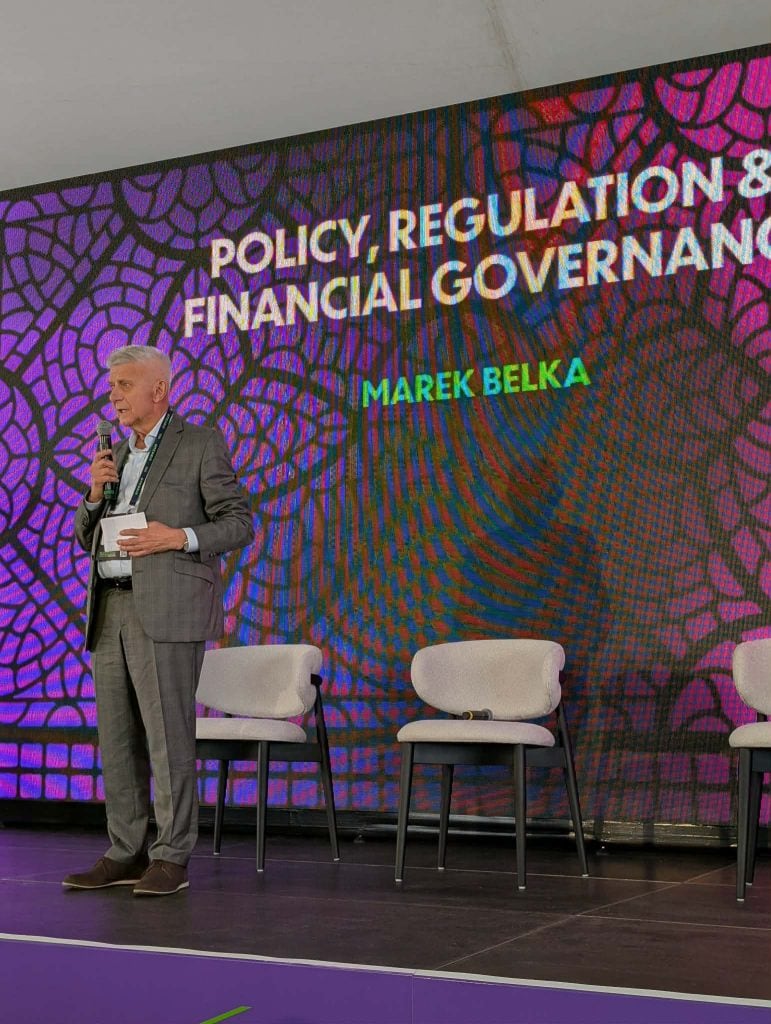
Shifting to broader themes, Belka reflected on Europe’s evolving geopolitical reality. He noted that when the EU opened to the region, Western fears of backwardness proved unfounded. In fact, Central and Eastern European countries often demonstrate stronger policies than many core EU members. However, he warned of growing skepticism toward the European Union amid a series of “black swans” like the 2008 financial crisis, COVID, the war in Ukraine, and shifting global leadership.
He critiqued past EU missteps rooted in naivety, particularly on immigration and the Green Deal, calling for greater realism. On security, Belka stressed that Europe can no longer fully rely on NATO and must build its own coherent structures. He framed the euro as more than a monetary choice: “Euro is not only about payment, about monetary policy, it’s about security.”
Addressing non-euro countries like Romania and Poland, he highlighted the risks of high public debt and fiscal pressures, especially with rising defense spending. Staying outside the euro, he argued, leaves these nations more exposed to market sentiment shifts. Pointing to successful adopters like Croatia, the Baltic states, and Bulgaria, Belka urged Central and Eastern Europeans to support the European Monetary Union. “This is where our good future lies,” he concluded. “There is no way, no time, and no space for us to doubt about the European Union.”
Conclusion
As the first few sessions ended, UNCHAIN’s 5th anniversary opening delivered a rich mix of perspectives. From Csaba Balint’s historical reflections and Catalin Cretu’s energetic vision for cross-industry collaboration, to Marek Belka’s strong call for deeper EU and euro integration, the discussions captured both the region’s momentum and its nuances.
CEE is varied, and not everyone shares the same views on the pace or shape of European integration. While frameworks like MiCA bring welcome clarity, many delegates also highlighted Europe’s tendency to regulate before fully enabling innovation, a challenge the more agile CEE ecosystem is well placed to help address.
In Oradea’s fintech fortress, the real value remains the unparalleled access and exchange of ideas. The rainclouds cleared, record numbers arrived, and the conversations that matter are only just beginning.
Author: Andy Samu
See Also:
Can BLIK Make Poland Europe’s Payment Sovereignty Champion? | Disruption Banking
Central Eastern European Fintech Associations gather at Unchain Festival | Disruption Banking
UNCHAIN 2025: Igniting Finance, Innovation, and Collaboration in CEE | Disruption Banking