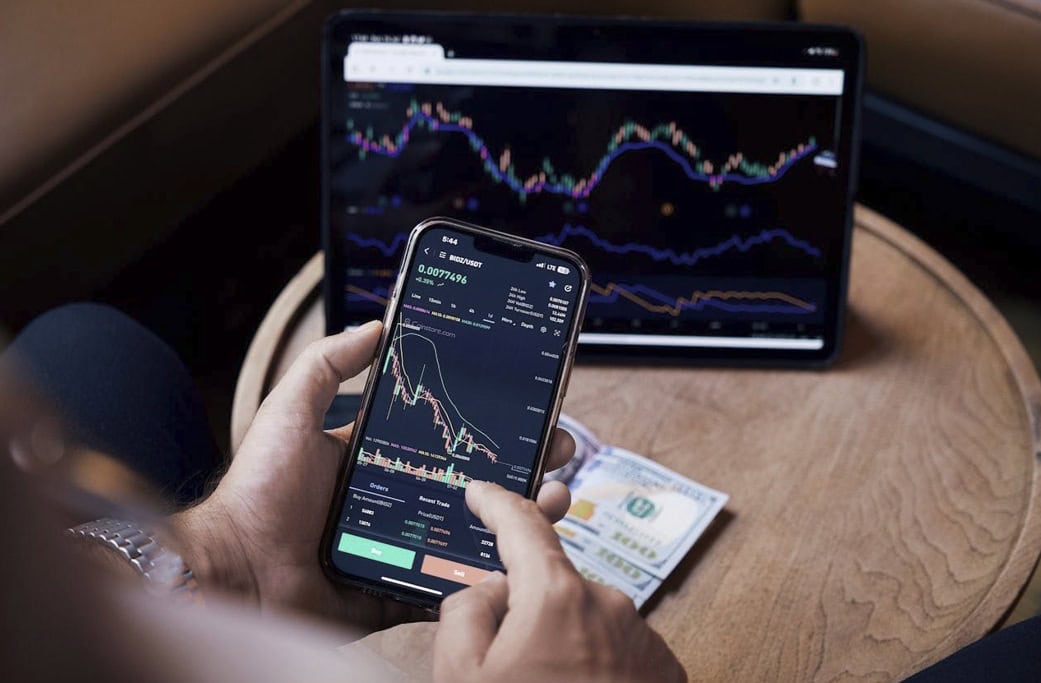
Foreign exchange (forex) trading has expanded rapidly in emerging and developing economies, driven by the growth of mobile trading platforms and increased internet access. According to the Bank for International Settlements in its Triennial Central Bank Survey (2022), the global forex market reached an average daily turnover of USD 7.5 trillion, highlighting both its scale and increasing accessibility across jurisdictions.
Institutional and regulatory determinants of market safety
At the same time, the safety of forex trading varies depending on regulatory capacity and institutional strength. The International Monetary Fund noted in its Global Financial Stability Report (October 2022) that the resilience of financial markets in emerging economies depends heavily on supervisory effectiveness and institutional quality.
Similarly, the World Bank has emphasised in multiple financial development reports (e.g. Global Financial Development Report 2019/2020) that weak regulatory frameworks increase systemic and consumer-level financial risks.
In many developing countries, financial regulation is still evolving. Even where legal frameworks exist, enforcement capacity may be limited. According to IMF research (Global Financial Stability Report, 2022), supervisory effectiveness often depends on administrative capacity, funding and technical expertise of regulatory authorities.
One of the most commonly cited risks is the presence of unlicensed or weakly supervised brokers. The International Organization of Securities Commissions warned in its report Retail Market Conduct Task Force – Final Report (2020) that online trading environments are increasingly used for cross-border investment fraud, often involving entities operating without proper authorisation.
IOSCO further highlighted in its Investor Alerts Portal (ongoing, updated regularly) that unregulated brokers frequently:
- misrepresent risk levels,
- advertise unrealistic returns,
- operate from offshore jurisdictions,
- limit or block withdrawals.
Investor protection mechanisms
Investor protection varies significantly across jurisdictions. In more developed regulatory environments, authorities impose safeguards such as capital requirements, segregation of client funds and compensation schemes.
For example, the Financial Conduct Authority requires authorised firms to comply with client asset rules under the CASS framework (Client Assets Sourcebook). All that while the European Securities and Markets Authority introduced stricter rules on retail trading, including leverage limits and risk warnings, in its Product Intervention Measures (2018).
The Organisation for Economic Co-operation and Development noted in its report Consumer Policy and Financial Innovation (2018) that gaps in investor protection frameworks significantly increase exposure to financial misconduct, particularly among retail investors.
Financial promotion and information asymmetry
Misleading financial promotion is another widely documented risk. IOSCO highlighted in its report Retail Distribution Review (2013) and subsequent updates that financial promotions, particularly in digital channels, often fail to adequately disclose risk.
More recently, regulators such as the FCA warned in Consumer Investments Data Review (2022) that social media and influencer-driven promotion contribute to increased participation in high-risk trading without sufficient understanding of associated risks.
This creates a structural imbalance in information, where retail investors may rely on incomplete or misleading signals when making financial decisions.
Supervisory capacity and enforcement challenges
Even when regulation exists formally, enforcement may vary. The IMF noted in its Global Financial Stability Report (2022) that regulators in emerging markets often face operational challenges, including:
- limited resources,
- difficulties in supervising cross-border entities,
- constraints in enforcement and investigation.
This can result in a gap between regulatory standards and actual market practice.
Determinants of safety: jurisdiction vs regulation
The safety of forex trading is not determined solely by whether a country is classified as developed or developing. IOSCO emphasised in its Report on Cross-Border Regulation (2019) that regulatory fragmentation and multi-jurisdictional operations complicate investor protection.
As a result, the level of protection depends primarily on:
- the regulatory authority overseeing the broker,
- the legal jurisdiction of the trading account,
- enforcement mechanisms available in that jurisdiction.
Some international brokers operate under local licences in multiple jurisdictions rather than serving clients globally from a single offshore entity. This multi-entity regulatory model is used to align services with local legal frameworks and supervisory requirements. It can be observed across different types of online trading and investment firms, including forex and CFD brokers, multi-asset platforms and financial technology groups.
For example, IG Group operates through regulated entities in markets such as the United Kingdom, the European Union, Australia, Singapore and South Africa. Saxo Bank provides services through entities supervised in jurisdictions including Denmark, the United Kingdom, Switzerland, Singapore, Australia and Japan. Pepperstone has regulated entities in countries such as Australia, the United Kingdom, Cyprus, Germany, the United Arab Emirates and Kenya. Equiti also uses a multi-entity structure, with regulated entities in jurisdictions including the United Kingdom, Jordan, the United Arab Emirates, Kenya, Seychelles and Cyprus.
These examples illustrate that regulatory coverage in online trading is often organised through separate local or regional entities. For retail investors, the relevant question is therefore not only the name of the broker, but also which legal entity provides the service, where the trading account is opened and which supervisory authority is responsible for that entity.
Role of financial literacy
Financial literacy is an important factor influencing investor risk exposure. The OECD reported in its OECD/INFE International Survey of Adult Financial Literacy (2020) that individuals with higher levels of financial literacy are significantly more likely to assess risk accurately and avoid fraudulent schemes.
Conversely, lower levels of financial literacy, which are more prevalent in some developing economies, are associated with increased vulnerability to investment scams and misleading financial products.
In the context of forex trading, this suggests that the question of safety is not determined solely by the market itself, but also by the knowledge and preparedness of those participating in it. While forex trading can present opportunities, its risks are considerably amplified where financial literacy is limited, making education and informed decision-making essential to navigating these markets more safely.
The editorial team at #DisruptionBanking has taken all precautions to ensure that no persons or organizations have been adversely affected or offered any sort of financial advice in this article. This article is most definitely not financial advice.