




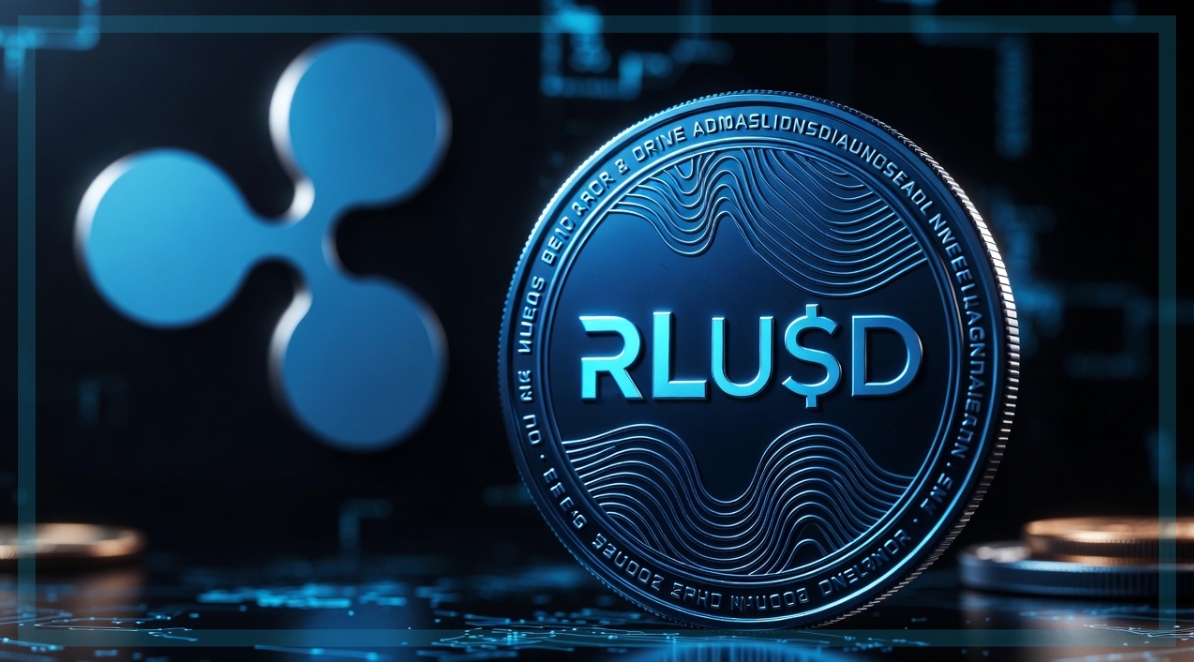
Ripple’s payments infrastructure is working. Banks are signing up. Institutional money is flowing. The problem? Most of that money is going into RLUSD, not XRP. That’s the uncomfortable story behind one of crypto’s most impressive stablecoin launches in recent memory.
RLUSD’s Explosive Numbers Tell a Blunt Story
Launched in December 2024, the RLUSD stablecoin has crossed $1.56 billion in market capitalization, up from just $132 million a year ago, recording 1,278% year-to-date growth. Over the past 30 days, RLUSD has processed 515,000 transactions, with adjusted transaction volume reaching $3.5 billion. Jack McDonald, Ripple’s SVP of Stablecoins, has openly acknowledged that growth is even outpacing internal projections.
This didn’t happen by accident. Ripple built its war chest deliberately. The company spent close to $2.5 billion on acquisitions, like Hidden Road for prime brokerage, Rail for cross-border stablecoin payments, and GTreasury for Fortune 500 treasury operations. Each deal was built to move institutional money through Ripple’s ecosystem, with RLUSD at the center of that flow.
Deutsche Bank, SBI, and BlackRock: Who’s Really Powering RLUSD?
Deutsche Bank has integrated Ripple’s payment infrastructure, and SBI Holdings rolled out RLUSD in Japan in Q1 2026. Japan recently cut its crypto tax rate from 55% to 20%, making the timing strategically sharp for a regulated stablecoin entering a market that rewards compliance.
Then there’s BlackRock. Via the tokenization platform Securitize, RLUSD serves as a settlement layer for BlackRock’s BUIDL and VanEck’s VBILL tokenized funds, enabling holders to swap fund shares for RLUSD on demand and creating a 24/7 stablecoin off-ramp for tokenized treasuries.
BlackRock isn’t holding RLUSD as broad collateral across its balance sheet. The stablecoin’s role is currently focused on settlement within tokenized fund infrastructure rather than general collateralization. But being embedded in the settlement layer of the world’s largest asset manager still matters enormously.
LMAX Group has also made RLUSD a core collateral asset for banks, brokers, and buy-side institutions across spot crypto, perpetual futures, and CFD trading. Meanwhile, a Ripple survey published on March 21, 2026, showed 74% of finance leaders now see stablecoins like RLUSD as key tools for cash-flow efficiency.
Ripple Wins Big and XRP Keeps Sinking
XRP peaked at $3.65 in July 2025 and has been falling since, dropping to $1.42 today. In that same window, RLUSD went from nothing to $1.56 billion, picked up BlackRock, Deutsche Bank, and LMAX as partners, and became one of the fastest growing stablecoins ever launched.
RLUSD directly competes with XRP’s core use case as a bridge asset in cross-border payments. The more RLUSD is adopted, the less XRP is needed. When banks settle transactions with a dollar-pegged stablecoin, they have zero reason to take on XRP’s price volatility. When institutions use XRP as a bridge, they buy and sell it almost simultaneously. Every transaction creates volume, but not lasting demand, because the token is passed through rather than held. RLUSD works differently: banks hold it, post it as collateral, and use it to manage treasury operations across time zones, thereby creating demand that stays in the system.
The geography of RLUSD’s supply compounds this. Roughly 82% of RLUSD’s circulating supply sits on Ethereum, with the remaining 18% on the XRP Ledger. Ripple executive Reece Merrick has said he expects XRPL volume to eventually overtake Ethereum. That may prove true, but it is not today’s reality.
RLUSD’s Clear Runway Toward $2 Billion in 2026
RLUSD’s path to $2 billion looks unobstructed. RLUSD is regulated under dual oversight from the OCC and the NYDFS, and in Brazil, it already has five major financial partners backing its distribution. That dual regulatory structure is exactly what institutional capital demands before it commits.
The passage of the GENIUS Act establishes a federal framework for payment stablecoins, which RLUSD is well-positioned to comply with, transforming it from a crypto product into a compliant financial instrument eligible for regulated treasury management and cross-border settlement.
The tension between XRP’s utility promise and RLUSD’s real-world institutional traction is the defining story inside Ripple’s ecosystem right now. Ripple, the company, is executing an institutional strategy that most blockchain firms can only imagine. Whether XRP investors get to share in those gains or simply watch from the sidelines is a very different question.
Author: Ayanfe Fakunle
The editorial team at #DisruptionBanking has taken all precautions to ensure that no persons or organizations have been adversely affected or offered any sort of financial advice in this article. This article is most definitely not financial advice.
See Also:
Ripple Just Dropped Its Full Crypto Banking Stack in Brazil | Disruption Banking
XRP Poised for Major Repricing if CLARITY Act Passes in 2026 | Disruption Banking









One Response
This has also been my observation. Anyone disagrees, please share.