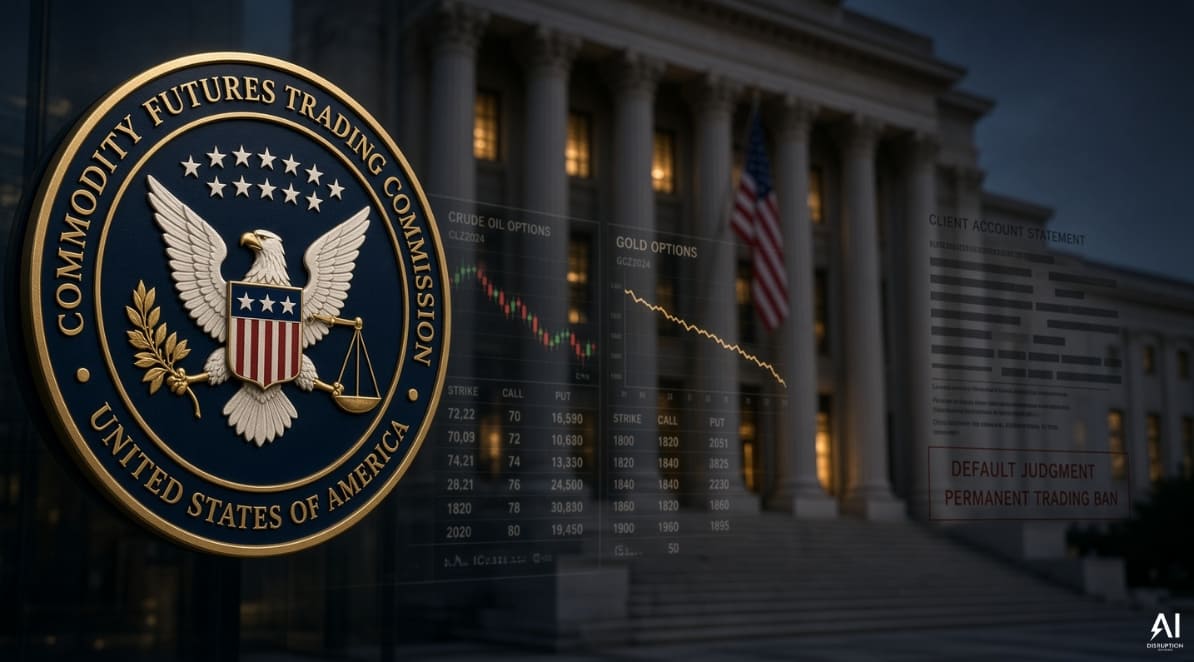
Michael Frederick Staryk was already permanently banned from trading when he and others obtained approximately $600,000 from at least 26 U.S. retail clients for purported commodity-options investments between 2021 and 2022. The court later ordered $547,616 in restitution. The promised trading never occurred. The earlier fraud findings were not disclosed.
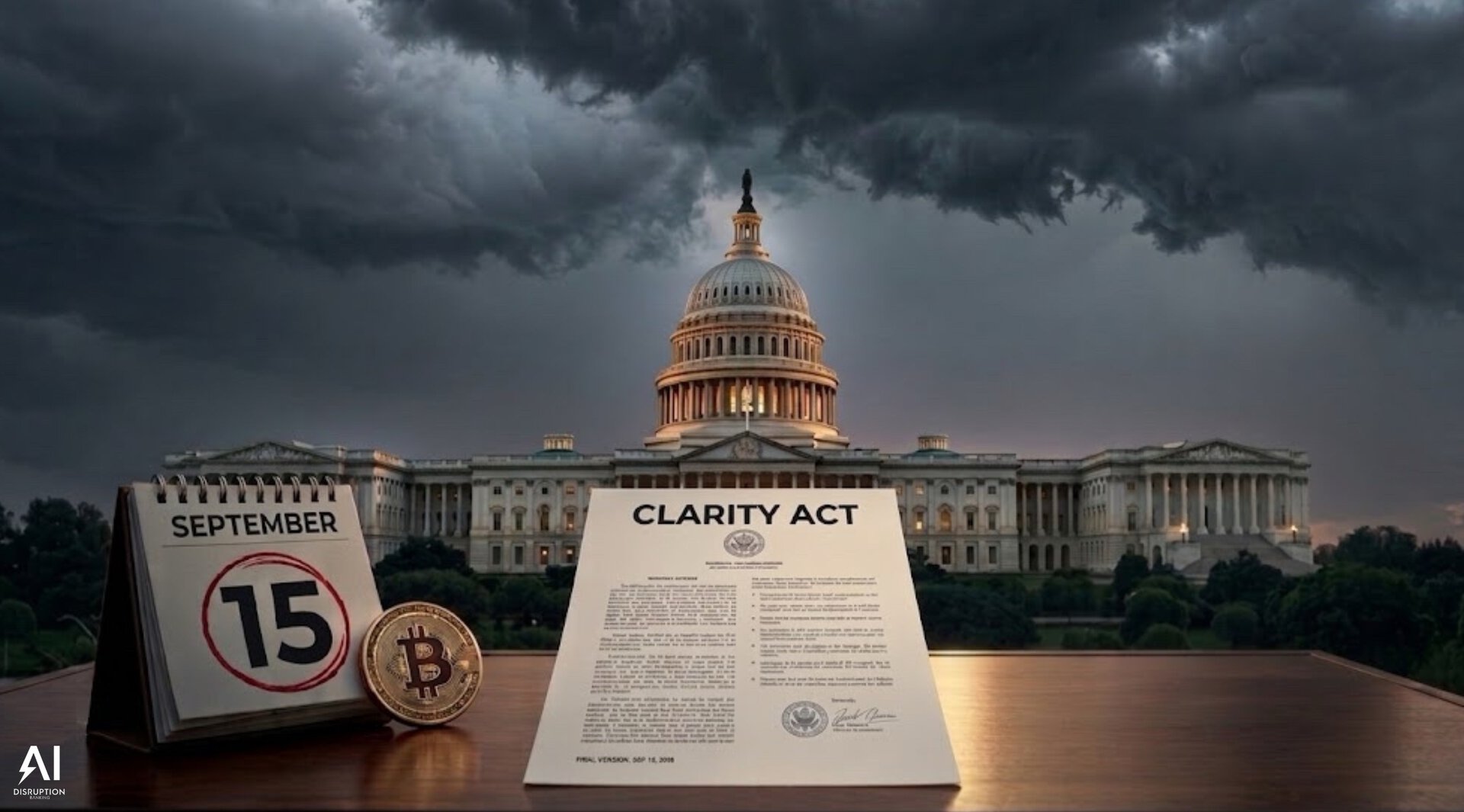
On 15 September 15 2026, the Commodity Futures Trading Commission (CFTC) announced that the U.S. District Court for the District of Connecticut had entered a default judgment against Staryk, the Florida resident who operated Magestic World Wide Finance (also known as Magestic WW Solutions and Magestic World Wide Solutions). Because Staryk did not appear or defend the case, the court’s findings track the CFTC’s complaint rather than evidence tested at trial. The case was filed in Connecticut because the bank accounts that received the client wires belonged to a Connecticut LLC.
The court ordered Staryk to pay $547,616 in restitution and a $5,907,720 civil monetary penalty (together $6,455,336 before interest), alongside permanent injunctions and trading and registration bans. The civil penalty is roughly eleven times the restitution figure. Separately, relief defendants Yvonne Stephanie Solerti-Coto and Global Financial Institution LLC were ordered to disgorge $110,509.86 in client funds they received with no legitimate claim.
The CFTC posted the judgment on X.
The Playbook Staryk Never Abandoned
From at least 2021 through at least 2022, Staryk and people working under his direction solicited clients to trade options on commodity futures, including oil and gold contracts. Clients were told accounts would be opened and managed at Magestic World Wide. No such trading took place.
The CFTC’s complaint described false performance claims, promises of profitable trading and a website displaying fictitious account statements. Clients wired funds into the Connecticut bank accounts of Global Financial Institution LLC. The money was then misappropriated and moved to accounts in Costa Rica and the United States. An account balance shown on a promoter’s website was no proof that the money had reached a trading account.
The Ban Staryk Concealed
The earlier proceedings began with a 1995 CFTC complaint covering conduct that started in August 1991. In December 1998, Administrative Law Judge Bruce C. Levine revoked Staryk’s registration, imposed a permanent trading ban and assessed a $1,327,500 civil penalty. Levine found that Staryk knowingly misled customers about the profit potential and risks of heating oil and unleaded gasoline options. In 2004 the Commission affirmed the core sanctions, including the permanent trading ban and registration revocation.
Staryk had previously insisted: “I have never told anyone that they can expect profits from trading options on commodity futures.” By October 2022 he had pleaded guilty in the Northern District of Texas to conspiracy to commit wire fraud based in part on overlapping conduct. Public records available at the time of writing do not show the final criminal sentence or whether any criminal restitution has been paid.
What a Trading Ban Actually Does
A permanent trading ban binds the individual and the contract markets. It does not freeze a Florida d/b/a (doing business as) from cold-calling retail clients or from taking wires into a Connecticut LLC. That is the practical limit this case illustrates. The documented methods were concealment of the prior ban, use of purported traders, and fictitious account statements.
The CFTC thanked the Superintendencia General de Valores de Costa Rica for assistance. The agency’s announcement does not report how much of the ordered restitution or penalty has been collected. The ordered amounts cannot be treated as money already available to victims.
The check that mattered here was the receiving account. The pitch was Magestic. The wires went to Global Financial Institution LLC. That mismatch is the point.
Author: Richardson Chinonyerem
This article is for information only and is not legal or investment advice.
See Also:
Manhattan Prosecutors Charge Hedge Fund Founder Over Fake Return Statements
Two Robinhood Engineers Charged With Fraud Over Crypto Listing Trades