
The oil market’s war premium has changed shape. It is no longer primarily pricing the probability of escalation. It is pricing something slower to unwind: whether Gulf crude can physically and commercially move on terms that owners, charterers, and insurers will accept.
This is the essence of route risk. It is not just about whether tankers can avoid missiles. It is about whether they can sail under commercial terms that make economic sense: acceptable war-risk insurance premiums, availability of escorts, clear transit rules, and shipowners’ willingness to nominate vessels without excessive risk. These factors change far more slowly than headline diplomacy. Even if strikes pause, the memory of recent attacks, higher insurance costs, and operational friction can keep the premium elevated for weeks or longer.
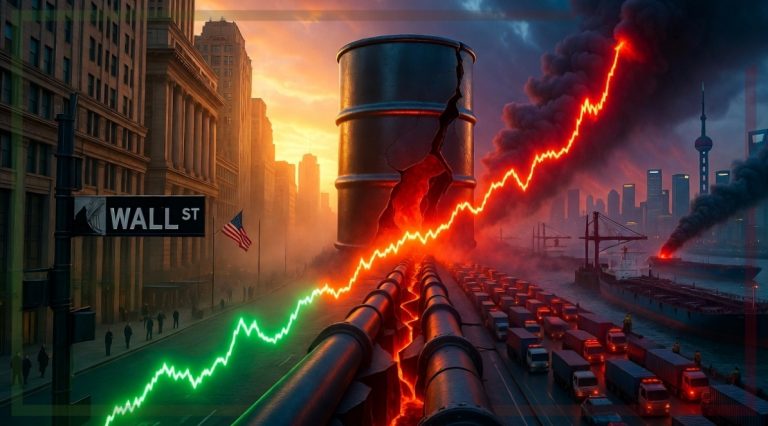
Permutable AI’s Brent sentiment indices picked up the shift before the price move. Their data showed bullish signals in both Geopolitics & Conflict and Policy & Regulation themes converging in early-to-mid July. This was well before Brent jumped 9.6% on 13 July and pushed above $86 intraday on the 14th. As of mid-July, Brent was settling around the $85 level.
From Escalation Premium to Route Premium
Earlier in the conflict, the premium was largely about the risk of sudden escalation, a risk that diplomacy or a pause in strikes could remove quickly. June’s sentiment reflected that more temporary fear.
By July, the picture changed. Missile strikes, renewed US blockade measures, tighter transit rules, and attacks on workaround routes (including Iranian strikes on ADNOC vessels Al Bahyah and Mombasa B in Omani waters) forced the market to focus on deliverability. For the first time, Permutable’s two key themes moved together in bullish territory.
The Strait of Hormuz, which normally carries around 20% of global oil, saw traffic collapse dramatically, from roughly 130 ships per day pre-war to as low as 9 by mid-July. Even bypass efforts have come under pressure, with attacks extending beyond the main passage.
This is why route risk is stickier. An escalation premium can evaporate in days on positive headlines. Route risk unwinds only with hard evidence: repeated safe transits, falling war-risk insurance premiums, normal chartering activity, and clarity on blockades and escorted passage.
Limited Bypass Options
Bypass pipelines provide only partial relief. Saudi Arabia’s East-West Pipeline (Petroline) can move up to 7 million barrels per day from the eastern oil fields to the Red Sea port of Yanbu. This allows Saudi crude to avoid the strait entirely and load on the western coast. However, the route still faces risks further down the line, particularly Houthi activity in the Red Sea.
The UAE has the Habshan-Fujairah pipeline, which can carry around 1.5–1.8 million barrels per day directly to the port of Fujairah on the Gulf of Oman, completely bypassing the strait. While valuable, neither pipeline can replace the full volume normally shipped through Hormuz (historically ~17–20 million barrels per day across all producers). Tankers loading at Yanbu or Fujairah still compete for limited port capacity and, in many cases, do not fully offset lost flows from other Gulf exporters.
This infrastructure gap means a significant portion of crude would still need to take the long route around the Cape of Good Hope, adding substantial time and cost. Physical markets are already tight, with US crude and product inventories at their lowest levels since 2003.
Political and Commercial Outlook
Politically, both sides may prefer containment. Lower oil prices matter for US midterms, while Iran seeks sanctions relief. But commercial confidence returns slowly. Shipowners, charterers, and underwriters need proof, not promises.
This is very different from the extreme demand shock seen in 2020, when Brent briefly traded at negative prices during the height of the COVID-19 pandemic. That was a collapse driven by oversupply and storage shortages. Today’s premium is rooted in constrained supply routes and heightened risk perception, factors that are structurally harder to reverse.
Why This Matters Beyond Oil
This repricing has ripple effects. Higher and more volatile fuel costs hit airlines and logistics, feeding into broader inflation expectations. For banks, traders, and corporates with energy exposure, understanding whether the premium sits in war fear or passage friction is now critical.
Permutable’s sentiment split offers a useful real-time lens. If Geopolitics & Conflict turns bearish while Policy & Regulation stays elevated, the premium has not disappeared. It has simply migrated into deliverability constraints.
The live question for markets: Will a ceasefire actually crash Brent? Or has the war premium quietly become a route-risk premium that will take weeks or months to unwind?
Author: Tejas Bansal
See Also:
Strait of Hormuz Tensions Weigh on Chinese Stocks as Oil Surges | Disruption Banking
The Price of Passage: How Geopolitical Sentiment Led the Repricing of Gulf Crude-Flow Risk