

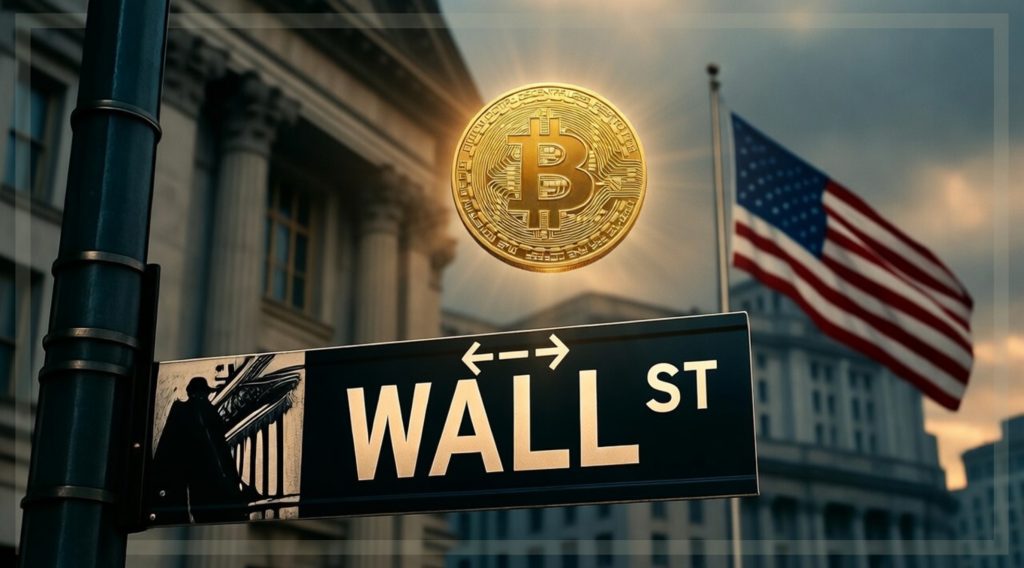
Wall Street bankers finally got on board with digital assets when the government came out with clear rules last year. Custody fees quickly replaced compliance fears across major lending institutions. This article details how banking integration stabilised market volatility.
Sitting at a cafe looking over market charts from early 2026 shows a distinctly different trading environment than previous cycles. Bankers simply figured out a basic financial truth regarding digital coins.
Collecting fees from holding client assets makes much more sense than ignoring a growing sector. Regulators handed down clear rules, giving legacy lenders green lights to build secure holding facilities. Volatility dropped naturally as institutional liquidity flowed into standard brokerage accounts. You will notice price action behaving predictably now that established financial firms handle daily order flow.
Federal Regulators Clear The Path For Traditional Lenders
Financial mechanics updated rapidly following new regulatory frameworks in the U.S. More on that in a minute, it’s important to look at the numbers first. The recent bitcoin price stability seen throughout the first quarter of 2026 is a direct result of these major lenders providing deep-tier liquidity. Spot market depth also grew as a result.
Record books show 24-hour volume hit $35.6 billion in late March 2026. Institutional participation naturally reduces wild price swings. Binance price records indicate a trading range maintained between $69,805 and $72,026 during late March 2026.
That’s somewhat tied to when federal watchdogs changed banking rules back on May 28, 2025. Reuters reported that US banks received significant regulatory green lights to expand crypto services well beyond small pilot programs. Lenders avoided digital assets previously due to steep capital penalties.
Clear guidelines removed those barriers. While some see Wall Street as historically anti-crypto, the 2025 data points to executives simply hating lost custody revenue due to legal gray areas.
Market Friction In The 14 Billion Dollar Expiry Window
Calendar events regularly dictate temporary gridlock in financial markets. Watching overlaps of equity and digital markets shows unique pressure during quarterly expirations.
According to recent Binance Insights, “Triple witching plus the S&P quarterly rebalance can drive high intraday equity volatility, followed by a large BTC options expiry (~US$14B, max pain ~US$75K) that can pin price and keep spot action choppy.”
Spot prices often feel stuck when billions of dollars in derivatives approach settlement. If you’re watching the ticker today and wondering why the price feels stuck, you’re likely seeing the “pinning” effect of $14 billion in options contracts reaching their expiry, based on analysis on Binance Square. Dealers hedge their books to remain neutral. A target of $75,000 acts as a psychological and mechanical anchor for pricing.
Sophisticated participants expect these windows of friction. Spot prices bounce within narrow corridors until options clear out. Mathematical formulas drive outcomes rather than random market sentiment. Prices usually move freely once options settle. Have you considered how derivatives dictate your daily portfolio value?
S&P Global Research Highlights New Liquidity Standards
Supply mechanics strongly influence how analysts view current valuations. Researchers confirmed on March 6, 2026, that 95% of the total 21 million bitcoin supply already circulates, according to S&P Global reports.
Look at the supply side; when 95% of an asset is already in circulation as of March 2026, the price action stops being about new coins and starts being about global dollar liquidity.
Digital assets function today as a sensitivity gauge for broader economic health. Analysts noted several defining features of 2026 market behaviour:
- Bitcoin volatility reached a multi-year low in 2026, according to S&P Global
- Institutional portfolios treat digital assets as a hedge against a 4% annual debasement of fiat currencies, based on financial market data
- Direct bank custody replaced 60% of third-party exchange reliance for US-based hedge funds, shown by 2026 industry surveys
Downward volatility trends define current trading environments. Bitcoin volatility entered a secular downward trend as of early 2026, behaving more like a global liquidity indicator than a speculative tech stock. Professional traders watch liquidity cycles closely to time their entries.
Real Returns Mean Capturing Direct Digital Asset Returns
Wall Street loves packaging free air and selling it back to you for a management fee. You’re likely paying a 2% management fee to a guy in a suit who fails to beat the 5.2% monthly return of a simple Bitcoin-backed treasury strategy, according to 2026 performance metrics.
High-fee structures fail to justify their cost when regulated banks offer direct asset holding. Capital allocators prefer holding underlying coins through standard brokerage accounts.
Market size reached a point forcing serious institutional participation. Total crypto market capitalisation hit $2.44 trillion on March 26, 2026, according to data from crypto exchange Binance. While retail participants focus on risk, the 2026 data points to a level of scale accommodating large pension fund entry. Direct ownership removes mechanical drag associated with synthetic tracking funds.
Buying a wrapped crypto fund basically means you’re giving up your potential profits to someone who’s just sitting there holding a digital key. New federal rules finally put an end to relying on those pricey synthetic products.
When you hold your coins directly in a regulated bank account, you cut out all the unnecessary red tape that slows down your portfolio. Plus, working with a trusted institutional custodian means your money is sitting right next to the actual asset. Pure ownership always beats paying for a derivative imitation.
Author: Andrew Samu
See Also:
S&P Global Publishes Findings on Bitcoin’s Evolving Role in Financial Markets
Making America the Bitcoin Superpower: Inside the Bitcoin Lobby’s D.C. Takeover | Disruption Banking

Andrew Samu
Andrew Samu, Editor-at-Large at Disruption Banking, shapes the publication’s global coverage of banking, capital markets and digital assets. Based at London’s Level39, he combines market analysis with a strong commercial perspective, informed in part by his role as Commercial Director at Verita HR.