The House Financial Services Committee convened on March 25 for what is unambiguously the most consequential congressional examination of tokenized securities in U.S. history. The title was: “Tokenization and the Future of Securities: Modernizing Our Capital Markets.”
The conclusion? Both parties agree that the technology is coming. However, nobody has agreed on the rules yet.
$26.5 Billion in Tokenized RWAs, Zero Legal Framework
The tokenized real-world asset (RWA) market reached approximately $26.5 billion in on-chain value as of March 23, up 5.25% in the prior 30 days alone. BlackRock, JPMorgan, Franklin Templeton, and Circle have all deployed institutional-grade tokenized products. The market exists and is growing. What doesn’t exist is a statute that says who governs any of it.
Settlement risk, custody obligations, and investor protections all depend on legal clarity Congress hasn’t yet delivered.
Two Draft Bills, One Big Question: Who Governs Tokenized Securities?
Two draft bills were on the agenda. The Modernizing Markets Through Tokenization Act of 2026 would require a joint SEC-CFTC study on tokenized derivatives, compelling both agencies to end their jurisdictional standoff and provide answers. The Capital Markets Technology Modernization Act goes further, codifying the right of broker-dealers to use blockchain-based record-keeping under existing law.
Neither bill is law yet. But their presence signals that Congress has moved past “is this real?” and firmly into “what do we do about it?”
Blockchain Association CEO Summer Mersinger testified that tokenized securities are still securities; it’s the plumbing beneath them that changes. She stated plainly: “Tokenization infrastructure will develop regardless.” Congress should take that as a warning, not a reassurance.
CLARITY Act Emerges as the Structural Fix
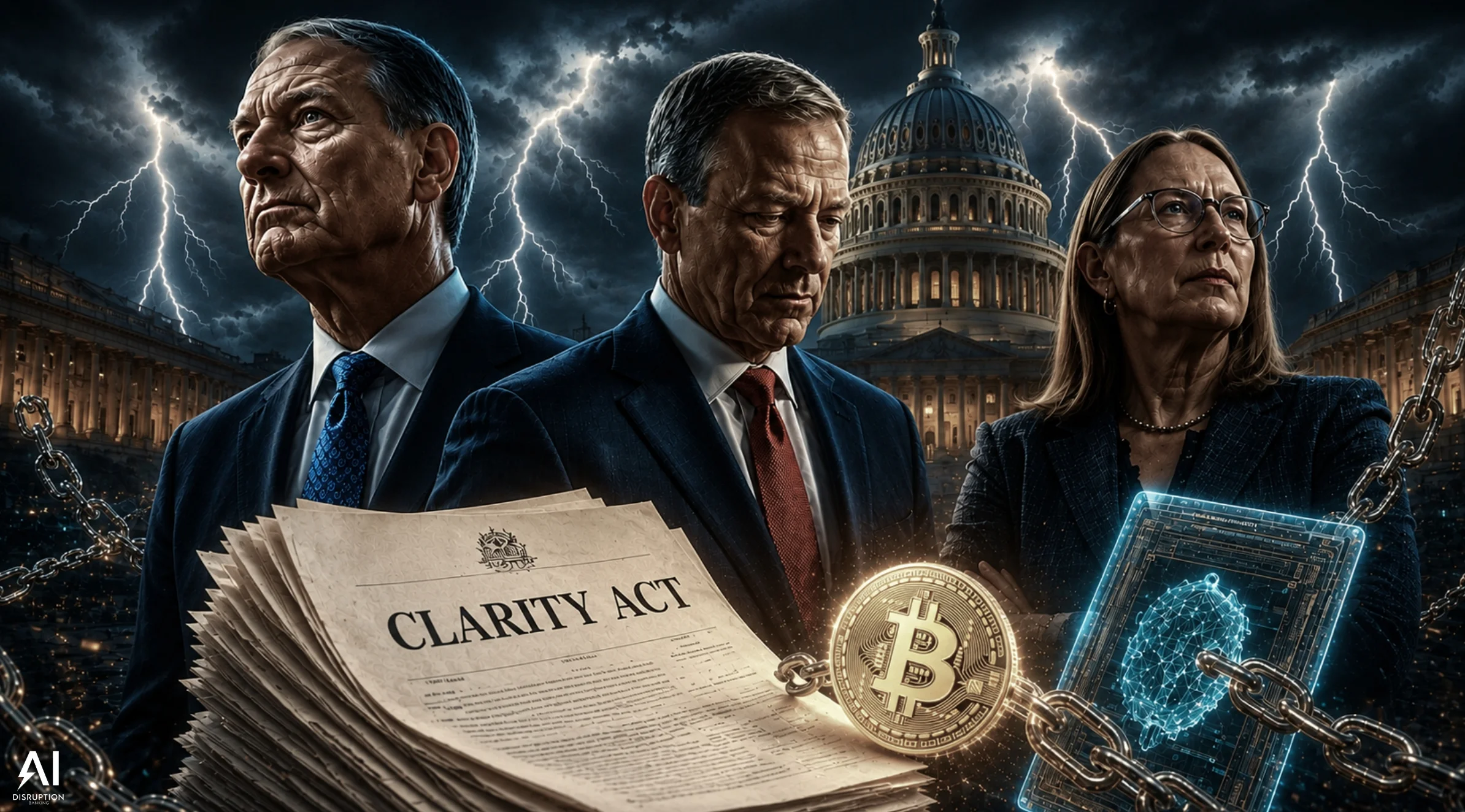
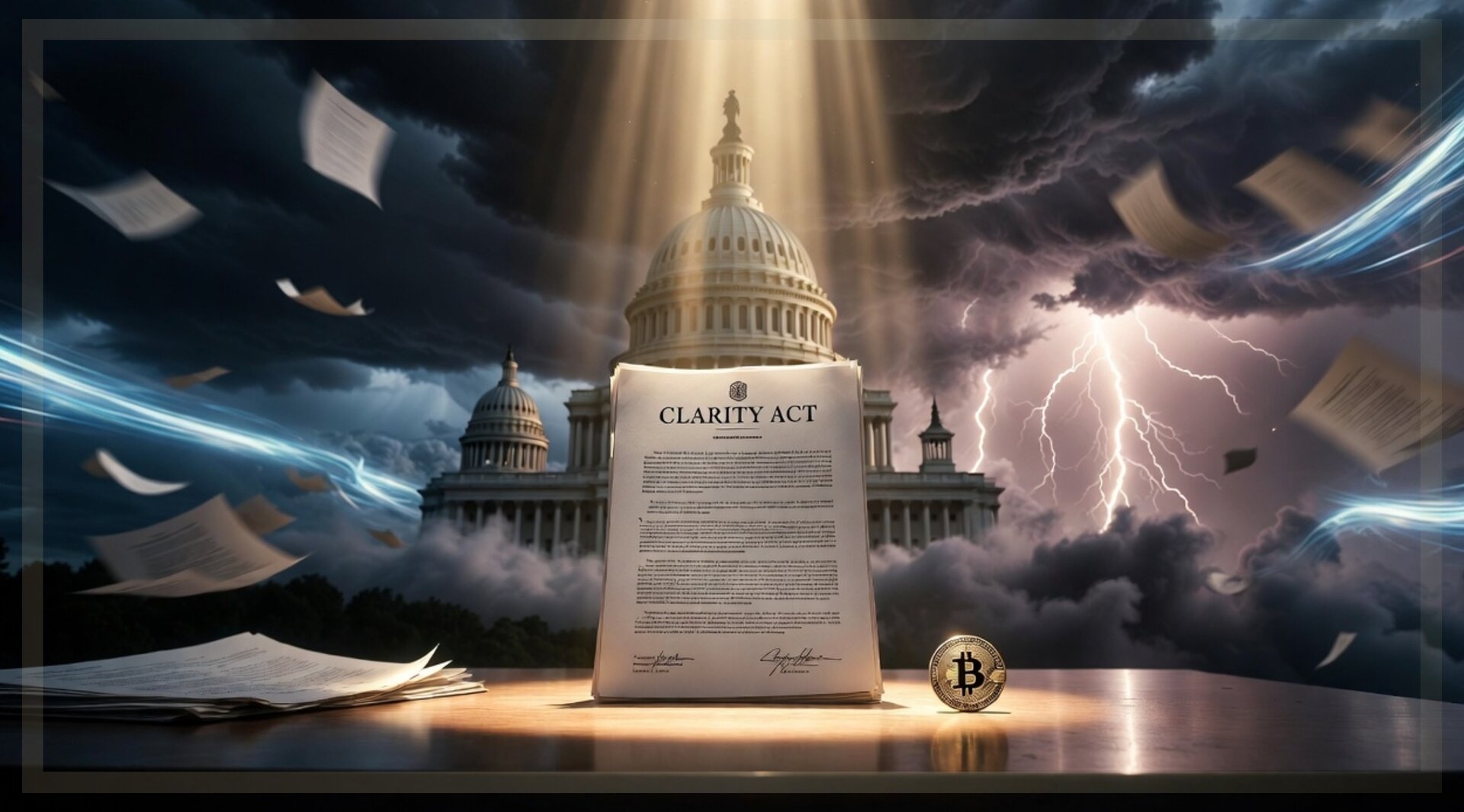
The hearing didn’t arrive in isolation. Last week, the CLARITY Act cleared a major sticking point after senators agreed on stablecoin yield language. The bill, which passed the House 294-134 in July 2025, would establish by statute whether a given tokenized asset falls under SEC or CFTC jurisdiction. That single determination cascades through every downstream legal question: which registration rules apply, which exchanges can list it, which investor protections attach.
The Senate Banking Committee markup is now targeted for late April. If it slips, the clock gets brutal. Singapore and the United Kingdom are not pausing for Washington to catch up.
Chairman French Hill opened by describing tokenization as a structural transformation, not a niche upgrade, calling it a change to how securities “are issued, traded, and recorded” at a foundational level. It’s the first time a committee chair has put it on the record at that scale.
66% of Institutional Investors Are Waiting on Legal Clarity
The regulatory drag has a measurable cost. A January 2026 EY-Parthenon and Coinbase survey found 66% of institutional investors cite regulatory uncertainty as the primary reason they aren’t deploying into digital assets, a market that the BIS projects could represent 10% of global GDP by 2034.
Ranking Member Maxine Waters raised real concerns: anonymous wallets masking foreign ownership, DeFi’s KYC gaps, and the gamification risk that always-on, frictionless trading creates. Any framework that dismisses them won’t survive enforcement.
The Howey Test Wasn’t Built for Blockchain
The core legal tension and hearing witnesses identified that the Howey Test was designed for a fundamentally different operating reality. A tokenized Treasury bond that settles in minutes on a public blockchain, earns yield through a DeFi protocol, and crosses borders without a custodian, doesn’t fit neatly into 1946 jurisprudence. Less than 0.1% of the world’s assets are currently tokenized. What happens when that number climbs, and it will, isn’t a theoretical problem. It’s an incoming regulatory emergency.
What Wednesday’s hearing produced is exactly what it needed to: a bipartisan, on-the-record acknowledgment that the current framework is broken for this market. The CLARITY Act is the most direct path to a fix. A late April markup that stalls pushes real decisions into late 2026. By then, capital will have made choices elsewhere that the U.S. may not get to reverse.
Author: Ayanfe Fakunle
The editorial team at #DisruptionBanking has taken all precautions to ensure that no persons or organizations have been adversely affected or offered any sort of financial advice in this article. This article is most definitely not financial advice.
See Also:
CLARITY Act Showdown: March 1 Red Line on Stablecoin Yield | Disruption Banking
CLARITY Act Unblocked: Stablecoin Yield Compromise Reached | Disruption Banking