

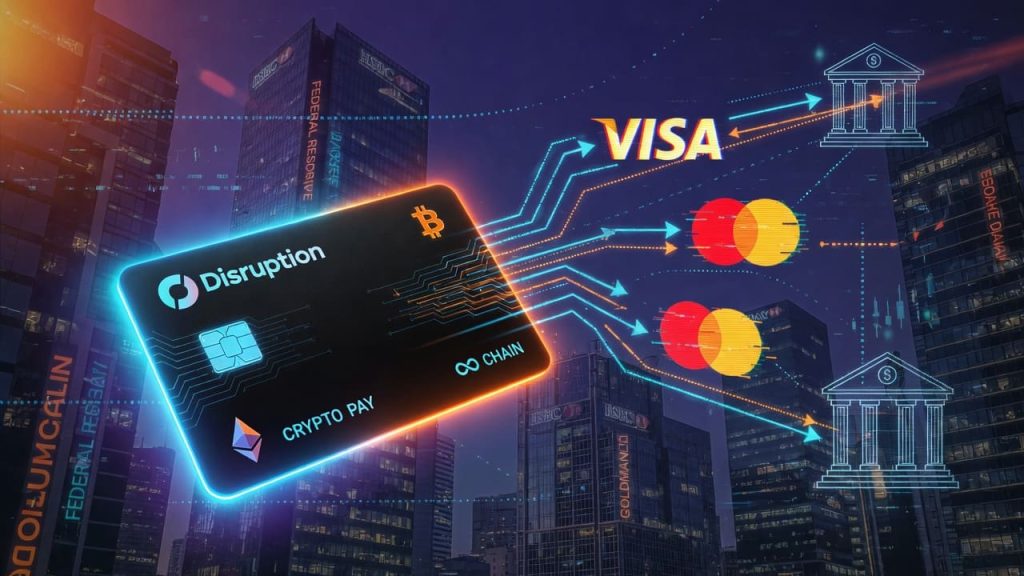
Banking’s relationship with cryptocurrency has shifted dramatically over the past few years. What began as mutual suspicion has evolved into a genuine working partnership, with banks and crypto platforms finding common ground through a practical tool: the crypto payment card.
These cards let users spend digital assets at any merchant that accepts Visa or Mastercard, making cryptocurrency genuinely useful in everyday life. Understanding how this integration works reveals a great deal about where the sector is heading.
The Shift From Resistance to Integration
Banks once kept cryptocurrencies at arm’s length, citing regulatory uncertainty and volatility risks. That stance has softened considerably. Consumer demand, particularly from younger and digitally engaged customers, pushed financial institutions to reconsider. Banks and cryptocurrency are no longer opposites. They are increasingly complementary, with institutions recognising that offering crypto-linked services keeps them relevant and competitive. Regulatory frameworks have also matured in many markets, giving institutions clearer guidelines to work within.
How Crypto Payment Cards Actually Work Within Banking Infrastructure
At its core, a crypto payment card bridges two worlds. A user holds cryptocurrency in a digital wallet, and when they make a purchase, the card system converts that crypto into fiat currency in real time, then processes the payment through standard banking rails.
The merchant receives ordinary currency with no direct exposure to crypto at all. As adoption continues to grow, services built around the crypto debit card model are helping financial institutions connect blockchain-based assets with traditional payment infrastructure in a way that feels familiar and accessible for everyday users.
Solutions such as the Bitget Wallet Card support multi-asset spending and real-time settlement functionality, reinforcing how crypto card infrastructure is becoming increasingly compatible with mainstream financial systems.
Visa and Mastercard are central to how this works in practice. Both networks have developed programmes that allow licensed crypto platforms to issue cards under their branding. When a transaction occurs, the card network handles authorisation and settlement just as it would for any debit or credit card, dealing only in traditional currency once the crypto-to-fiat conversion has taken place.
Visa handles over 90% of on-chain crypto card volume and currently supports more than 130 stablecoin-linked card programmes across over 40 countries.
Most crypto payment cards rely on real-time conversion at the point of sale. Some platforms are beginning to explore direct crypto spending at merchants that have adopted blockchain-based payment acceptance, though this remains far less common.
Real-time conversion continues to dominate because it requires no changes on the merchant side and preserves the familiar payment experience consumers already expect.
Crypto payment processors sit between the digital asset ecosystem and traditional banking infrastructure. They manage wallet balances, execute conversions, handle compliance checks, and push fiat settlements through established banking channels.
The Technology Stack Enabling Crypto Card Integration
Blockchain serves as the underlying record layer for crypto card transactions, providing a transparent, tamper-resistant ledger that logs wallet activity and supports faster settlement cycles compared to some traditional interbank processes.
Fewer intermediaries can reduce operational friction and improve transaction efficiency, benefiting both institutions and customers.
APIs connect crypto platforms to bank systems, enabling real-time balance checks, transaction authorisation, and compliance data sharing. This connectivity allows banks to introduce crypto payment services without rebuilding their core infrastructure from scratch. Stablecoins, pegged to fiat currencies, complement this by reducing conversion complexity.
Some programmes hold user balances in stablecoins by default, making transaction processing simpler and limiting exposure to price fluctuations.
How Banks Are Adopting Crypto Payment Card Programmes
Neobanks moved first. Unburdened by legacy infrastructure, they built crypto card features directly into their platforms and attracted digitally native customers.
Established banks are now following by forming partnerships with specialist crypto processors, licensing the technology and compliance infrastructure needed to launch products faster while meeting regulatory obligations. White-label solutions also allow traditional institutions to issue crypto cards under their own brand without committing to large-scale in-house development.
Regulatory and Compliance Considerations
Banks issuing crypto cards must apply the same Know Your Customer and Anti-Money Laundering standards they use for conventional products. Transaction monitoring remains particularly important given the pseudonymous nature of certain crypto assets.
Regulatory treatment also differs across jurisdictions, and issuers operating internationally require compliance frameworks that can adapt to local requirements without disrupting the customer experience.
Benefits for Banks and Their Customers
Crypto payment cards help banks reach audiences who hold digital assets but have found limited practical ways to use them in daily transactions.
Each transaction generates interchange revenue, foreign exchange fees may apply when spending crosses currency boundaries, and crypto-linked rewards programmes can create additional customer engagement. Together, these revenue streams make crypto card programmes commercially attractive for issuing banks while also increasing utility for consumers.
Key Challenges Banks Face
Price volatility in crypto assets creates operational complexity, requiring banks to decide whether to convert assets immediately upon card funding or at the point of purchase. Legacy infrastructure was not originally designed with blockchain integration in mind, and connecting these systems requires significant technical coordination.
Consumer trust also remains essential. Building confidence depends on transparent communication, strong fraud controls, and clear recourse processes, with security standards matching those expected of any mainstream financial product.
What the Future Holds for Crypto Cards in Banking
Banks and blockchain technology are likely to grow closer as infrastructure matures and regulatory standards become more consistent globally.
Crypto payment cards are expected to become a standard feature of digital banking rather than a niche offering. Stablecoin integration, broader merchant acceptance, and increasingly sophisticated API ecosystems will continue improving the user experience and making crypto-based payments more accessible over time.
FAQs: Crypto Payment Cards and Banking Integration
Can existing banks issue crypto payment cards without building new infrastructure?
Yes. Most banks enter the market through partnerships with crypto processors or by adopting white-label card solutions, allowing them to use existing infrastructure while adding crypto capabilities.
What cryptocurrencies are typically supported on crypto payment cards?
Bitcoin and Ethereum are the most commonly supported assets, alongside major stablecoins. Some cards also support a broader range of altcoins, depending on the issuing platform.
Are crypto card transactions treated differently for tax purposes?
In many jurisdictions, spending crypto via a card is treated as a disposal of an asset, which may trigger capital gains reporting obligations. Tax treatment varies by country, so users should consult local guidance.
How do crypto payment cards handle volatility at the point of sale?
Most cards convert crypto to fiat at the moment of the transaction, locking in the exchange rate instantly. This approach helps protect both the user and the merchant from mid-transaction price fluctuations.

Andrew Samu
Andrew Samu, Editor-at-Large at Disruption Banking, shapes the publication’s global coverage of banking, capital markets and digital assets. Based at London’s Level39, he combines market analysis with a strong commercial perspective, informed in part by his role as Commercial Director at Verita HR.