
South Korea’s Financial Services Commission (FSC) unveiled a government bill on November 24 that would bring the country’s crypto market under a single licensing statute, reopen initial coin offerings (ICOs) to domestic projects, and cap how much of an exchange any one shareholder can own.
The FSC presented the bill, formally the Act on the Innovation of the Digital Asset Industry and Protection of Users, at a Virtual Asset Committee meeting chaired by FSC Chairman Lee Eok-won.
The South Korea Digital Asset Act also changes the market’s official vocabulary. “Digital asset” replaces “virtual asset,” and platforms such as Upbit and Bithumb would be called “digital asset operators,” licensed, designated or registered according to whether they handle trading, intermediation, custody or asset management.
Exchanges Face a 20% Ownership Cap, With 34% as the Ceiling
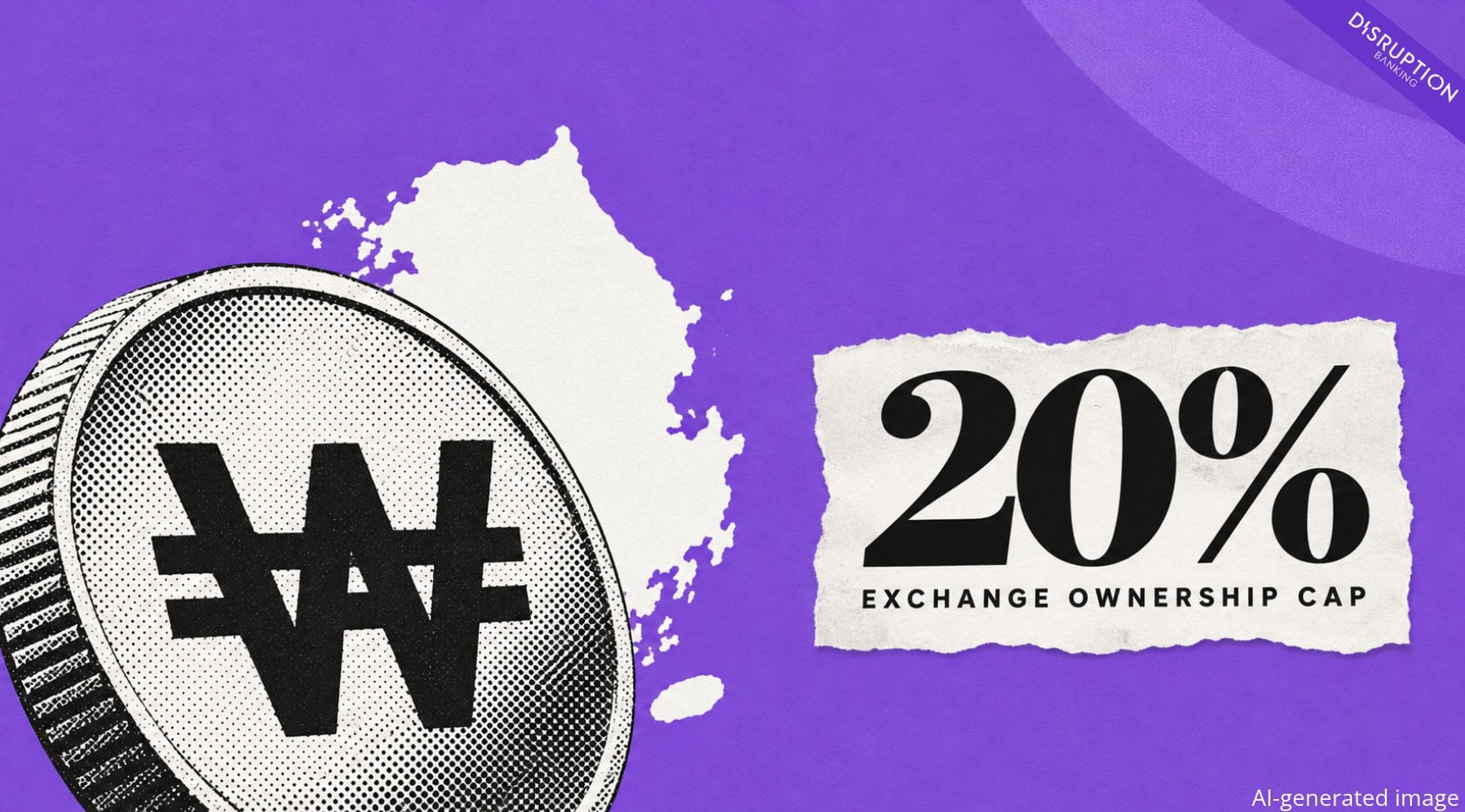
Each shareholder’s stake in an exchange is capped at 20% in principle, although an enforcement decree could allow up to 34% with FSC approval. The 34% level lets a shareholder block special resolutions at a general meeting, and the same limit already applies to internet-only banks in Korea.
Shares above the limit would constitute a legal violation, but the bill contains no forced-sale provision. The FSC can instead issue corrective orders, and an operator must resolve the violation before it can obtain other licenses or permits.
Exchanges get a three-year grace period after designation as operators. According to reports, Upbit and Bithumb are expected to fall under the 34% cap. Whether the limits extend to parent companies, a question that bears on Upbit operator Dunamu and its deal with Naver Financial, will be settled through parliamentary talks and enforcement decrees.
The cap followed months of negotiation. In January, the Digital Asset Exchange Alliance and the country’s five major exchanges publicly opposed the FSC’s plan, and the National Assembly’s research service later raised constitutional concerns about the rule. FSC officials said they reviewed that analysis and added the grace period in response.
Bank-Majority Consortia With 5 Billion Won in Capital Get First Stablecoin Licenses
Won-denominated stablecoins would be classified as “digital payment tokens.” In the first phase, only consortia in which banks hold a majority stake and that hold at least 5 billion won in equity capital may issue them, although a fintech or tech company may be the largest single shareholder. The FSC first confirmed that structure on the record earlier this month.
Foreign issuers supervised by their home regulator could issue and redeem stablecoins in Korea after opening a domestic branch and registering with the FSC, with Circle’s USDC cited as an example. Tether’s USDT could circulate domestically if it meets the requirements and is reported to the FSC.
The FSC said issuance could begin one year after the law is promulgated at the earliest, but it declined to give a firm date because issuers must first clear licensing and issuance approval.
What the Bill Allows Investors to Do
For investors, the most direct change is access to domestic token sales. Projects could issue and sell digital assets through ICOs if they disclose enough information, ending a ban the country imposed in 2017.
The bill also includes protections modeled on the Financial Consumer Protection Act, including a duty to explain products and a ban on unfair solicitation, and makes operators liable for losses from hacking or system failures even without intent or negligence.
Operators that breach computer security obligations face a punitive surcharge of up to 10% of sales. Market manipulation rules would extend from fiat-to-crypto trades to crypto-to-crypto trades. The FSC could freeze accounts or ban trading where it has substantial suspicion of unfair trading.
The bill does not set new rules on who may trade. Corporate crypto trading will be governed by separate guidelines that have not been written yet, while DeFi, derivatives and prediction markets are left to subordinate regulations. Those rules would cover a large retail base, as more than 10 million accounts have been opened at Korean exchanges.
Real-Name Accounts and Financial-Crypto Separation Remain Open
The bill now moves to the National Assembly, where FSC virtual asset division head Seo Na-yoon said in September it would be discussed at the legislative subcommittee in November.
Several issues sit outside the text. The Financial Intelligence Unit will review real-name account requirements separately after the bill is introduced, and the question of separating financial and virtual asset businesses is still under review.
Author: Ayanfe Fakunle
The editorial team at #DisruptionBanking has taken all precautions to ensure that no persons or organizations have been adversely affected or offered any sort of financial advice in this article. This article is most definitely not financial advice.
See Also:
South Korea Writes Crypto Into Its State Asset Rulebook After 76 Years | Disruption Banking