
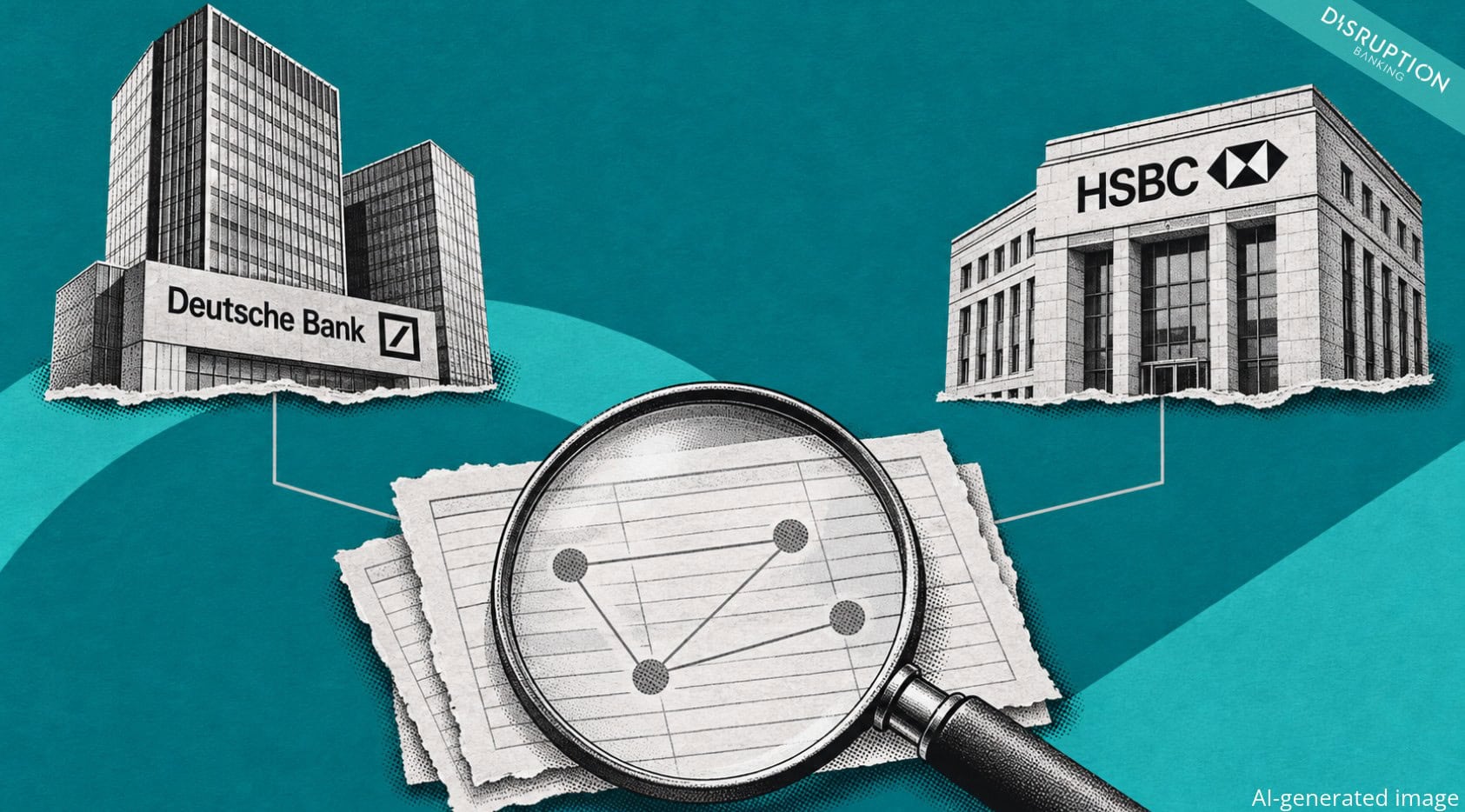
On 19 November 2026, Everett Stern, a former HSBC compliance officer, published an open letter to the two unidentified individuals who copied roughly 15 million internal Deutsche Bank documents and provided them to journalists.
Stern argued that the material exposed a correspondent banking trail across multiple banks rather than activity confined to Deutsche Bank alone. He wrote that while at HSBC in 2010 he had seen Deutsche Bank move money through HSBC’s correspondent division and stated: “I do not believe Deutsche Bank moved this money alone. No bank moves money across borders alone. I believe HSBC probably carried some of it, and I believe other banks did as well.”
To the unknown whistleblowers of Deutsche Bank @DeutscheBank:
— Everett Stern (@EverettStern1) November 19, 2026
No one knows your names. I know your future, because I have lived it.
You just did the bravest and loneliest thing a person inside a bank can do. You told the truth about where the money goes. You took no payment and…
He described the disclosure as “the bravest and loneliest thing a person inside a bank can do” because it showed “where the money goes” without payment or conditions. Stern urged the U.S. Justice Department and Treasury Secretary Scott Bessent to protect the sources and compensate them under the still-unused whistleblower reward programme. He also called on Bessent to follow the correspondent trail and pursue individual prosecutions rather than rely on fines.
Stern previously supplied the FBI and CIA with evidence of flows linked to drug cartels, terrorist groups and sanctioned regimes while at HSBC in 2010.
What Does Correspondent Banking Mean in the Deutsche Bank Case?
Correspondent banking is the arrangement in which one bank clears and settles payments for other banks that lack direct access to a particular currency or market.
Because the clearing bank typically sees only its immediate customer, the ultimate beneficial ownership trail can go cold once funds move through multiple institutions.
Deutsche Bank maintains correspondent relationships across more than 140 countries and has long ranked among the largest players in this business.
How Do the Leaked Documents Support Stern’s Claims?
The documents support Stern’s assertion that the correspondent channel functioned as a multi-bank conduit rather than activity limited to Deutsche Bank.
Internal materials show the business remained profitable even after repeated anti-money-laundering failures, generating roughly €4.7 billion in pre-tax income between 2007 and 2020. This was in part because higher-risk corridors carried higher fees.
A former head of anti-financial crime at the bank told colleagues that once money enters correspondent channels a bank cannot reliably determine whether it has been laundered. The same materials record a March 2021 internal discussion in which senior staff considered cautiously restarting relationships with high-risk correspondent clients.
This Week’s Disclosures and Earlier Scandals
Documents published this week by a consortium of more than 200 journalists show that Deutsche Bank processed nearly $582 million in Epstein-linked transactions later flagged as suspicious and continued business with Russian oligarchs into 2021 and 2022 despite internal compliance concerns.
The material also indicates that the bank concealed mortgage losses of up to €800 million at its Italian unit. Shares fell as much as 6% on 17 November, the steepest one-day drop in more than a year.
These findings sit within a longer pattern of large fines and deferred prosecutions. Deutsche Bank was heavily penalised over Russian mirror-trading schemes and served as a major correspondent for other banks, through which more than €200 billion in flows passed with heavy Russian exposure.
It paid roughly $150 million over its dealings with Jeffrey Epstein and entered a U.S. deferred prosecution agreement in 2021. Settlements for market manipulation, money-laundering, mis-selling and related conduct have exceeded €18 billion in total since 2012.
In early 2026 German authorities searched their Frankfurt headquarters in a money-laundering probe tied to transfers involving Roman Abramovich. BaFin, Germany’s financial regulator, has repeatedly ordered fixes to transaction-monitoring systems and in November 2026 fined the bank €8 million over failures in the Postbank customer migration.
Deutsche Bank has described the material as historical. The bank states that the incidents were reviewed at the time, that it has spent around €7 billion strengthening controls and compliance since 2019. It said that it is “a different bank today” under Chief Executive Christian Sewing. Chairman Alexander Wynaendts publicly backed Sewing, stating that the supervisory board saw “no new insights” in the reporting.
The Open Question Stern Raises
Stern’s letter frames the immediate question as what happens next to the people who exposed the documents and whether authorities will treat the multi-bank correspondent-banking channel and individual accountability as seriously as the size of the next settlement.
Deutsche Bank has paid more than €20 billion in penalties and settlements since 2000. HSBC paid $1.92 billion in 2012. No individuals were imprisoned in the HSBC case.
On 18 November, the data-protection commissioner Alexander Rossnagel for Hesse, Deutsche’s headquarters opened a formal investigation. He said he will look into whether Deutsche Bank maintained adequate technical and organisational safeguards around the leaked documents.
Author: Scott Danaher
See Also:
Why Did a Deutsche Bank Private Banking Chief Siphon Client Funds? | Disruption Banking
Can Deutsche Bank Restore Investor Confidence? | Disruption Banking