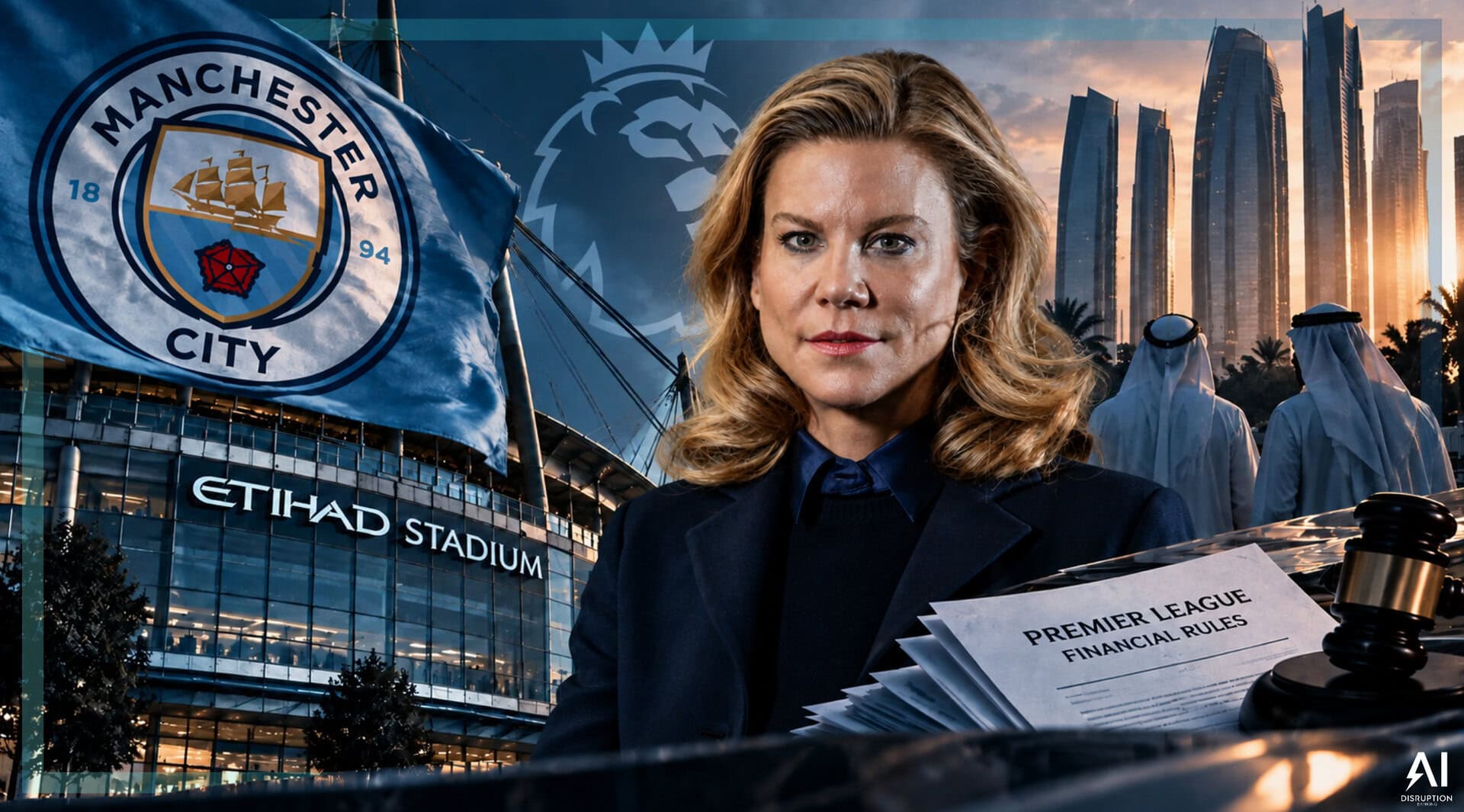
Manchester City were found guilty on September 29 of serious breaches of Premier League financial rules over nine seasons. An independent commission said the club arranged sham commercial deals so that sponsors paid only part of the stated fees, and that the scheme disguised funding that inflated revenue and reduced costs by more than £900 million. City lodged an appeal on October 1. The findings are not final and sanctions have not been set.
The breaches begin in 2009-10, the first full season after Abu Dhabi United Group bought Manchester City. PCP Capital Partners, the firm founded by Amanda Staveley, helped facilitate that sale. PCP is not a party to the case and is not accused of anything in it. But the verdict does put the ownership model the firm built its business around under closer scrutiny than it has ever faced before.
On Sunday City beat Liverpool 3-0 at Anfield, their first league game since the decision. The commercial model is now what the public is looking for answers about.
The Barclays deal that made the model possible
In 2008 PCP led a £3.25 billion Abu Dhabi-backed investment into Barclays for Sheikh Mansour bin Zayed Al Nahyan. It formed part of a £7.3 billion raise that kept the bank out of state hands. PCP’s fee was £30 million and the capital provided was Sheikh Mansour’s. PCP made the introduction and closed the deal.
The same year PCP helped facilitate the sale of Manchester City to Abu Dhabi United Group. That transaction set the template for state-backed ownership in the Premier League.
Newcastle and the associated-party rules
In 2021 PCP facilitated the £305 million takeover of Newcastle United from Mike Ashley. Saudi Arabia’s Public Investment Fund took 80 percent. The Reuben brothers’ RB Sports & Media and PCP each took 10 percent. PCP’s stake was later diluted because it did not put in extra money. In July 2024 PIF and RB Sports & Media bought it out, taking PIF’s stake to about 85 percent and subsequently, Staveley and her husband Mehrdad Ghodoussi left the board.
Newcastle operates under the same associated-party rules that exist to stop owner-linked sponsors inflating revenue. The City verdict raises the scrutiny on every club owned this way.
The bids that did not close
In 2025 a consortium through PCP International Finance was reported to have failed in a bid for Tottenham after Daniel Levy stood down as executive chairman. In August 2026 Staveley and Ghodoussi agreed a deal to buy the Gold family’s 25.1 percent stake in West Ham, working with Chicago-based Ashland Forest Capital Partners. Sky Sports reported the agreement. Existing shareholders exercised pre-emption rights and blocked it. Staveley said she was disappointed. She also said the original offer had been for both David Sullivan’s stake and the Gold family’s.
In January Staveley said there was still a lot of interest from the Gulf in the Premier League, but that the era of multi-hundred-million-dollar sovereign takeovers was ending and that investors now favoured minority stakes. The West Ham bid was exactly that type of deal, but it was stopped by the mechanism that protects existing holders.
The Barclays case that still defines the firm
In February 2021 Mr Justice Waksman found that Barclays had been guilty of serious deceit toward PCP, but he dismissed the claim. The court held that PCP had succeeded on liability and failed on causation and loss, because it could not have raised enough to join the 2008 rescue. The judgment is available at the National Archives. PCP-linked funds later brought a fresh claim at the International Chamber of Commerce in Paris.
The outcome is the cleanest way to see how the business works. Staveley proved she was deceived but still lost, because the court held she could not show that the deceit impacted her financially. PCP is the vehicle for capital; it does not supply the capital.
What the verdict changes
The product PCP sells is access to Gulf capital and the ability to close a deal. The City decision, if it survives the appeal, makes that access more expensive to underwrite. Associated-party rules already exist. A finding that owner money was presented as commercial income gives those rules a precedent. Many rival clubs are expected to seek compensation.
Staveley is not accused in the case and PCP is not a party. But the question is whether the market for what it sells is smaller, or merely slower, when sovereign-linked ownership faces this level of scrutiny. In September she joined the board of Ctrl Alt, a tokenisation firm, as a director and strategic adviser, with a remit across the UK and Middle East. She said she had spent her career closing deals where access to capital was the binding constraint.
The result at Anfield does not affect the accounts. However, it does show that the commercial model is now visible to the wider public. Whether City’s appeal and the sanctions hearing alter how the Premier League treats this form of ownership is still open. Whether PCP finds another route into English football, or follows the Ctrl Alt seat into the infrastructure behind private-market investment, is the other question.
Author: Tejas Bansal
See Also:
OKX partners with Manchester City to build trust in crypto | Disruption Banking