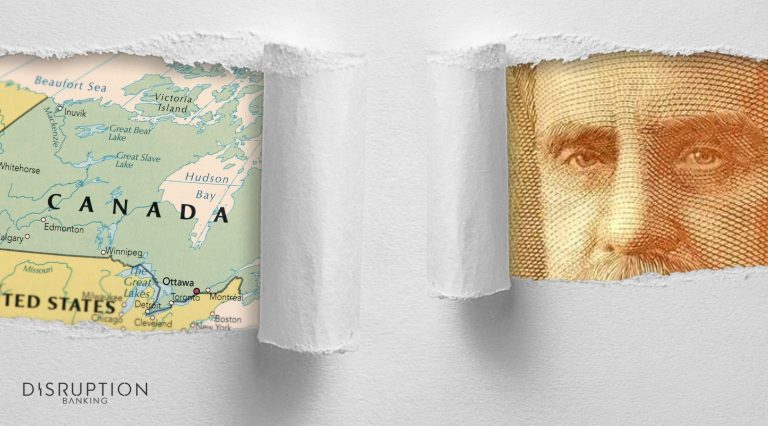

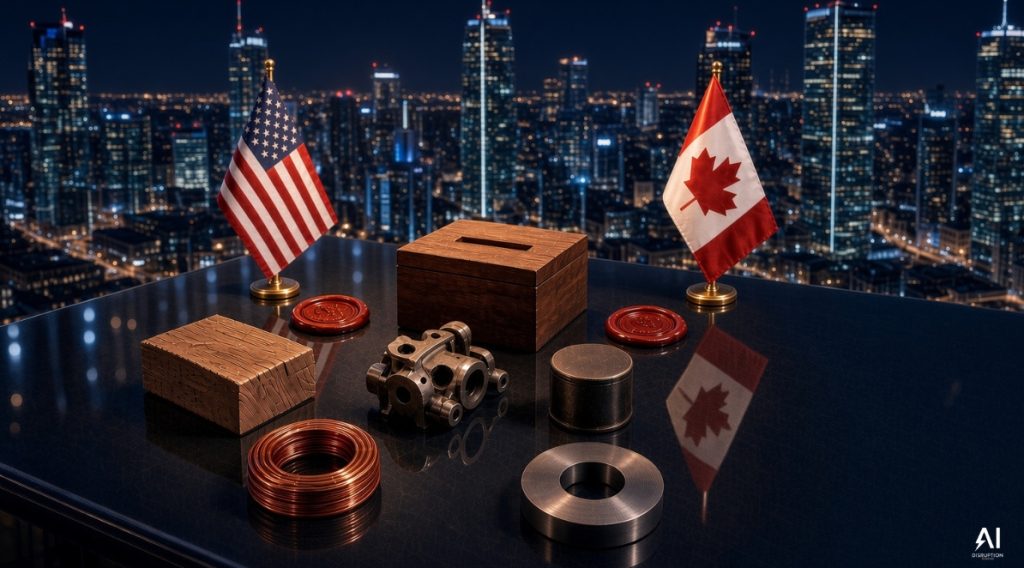
Since trade talks between the U.S. and Canada collapsed on August 21st, 50% tariffs have gone into effect on $20 billion of Canadian goods, while reciprocal Canadian tariffs are set to begin on September 8th. The U.S. duties were imposed under Section 338 of the Tariff Act of 1930, a provision no president had used since it became law.
Since the collapse of the talks, a relentless blame game has filled the airwaves. According to the U.S. camp, Canada blew up the negotiations with last-minute changes. In Canada’s telling, it was the opposite and due to competing factions within the American negotiators.
Commerce Secretary Howard Lutnick, doing his best Trump impression, laid the blame entirely on the Canadians. “They blew it up for political reasons only,” he told CNBC.
Adding to the enlightened discourse, President Trump signed an executive order instructing federal agencies to call Lake Ontario “Lake America,” then posted an AI-generated video of armed Canada geese wearing his hairstyle patrolling the newly renamed water. Defense Secretary Pete Hegseth posted a photograph of two teenage Canadian army cadets captioned “this is real,” the latest in a run of administration jabs at Canada’s armed forces.
Canadian Prime Minister Mark Carney was having none of it. “When the Americans stop doing memes, stop throwing shade, stop trying to be tough and start being serious about having those discussions, we can have those discussions.”
Two Votes in October, One Blame Game
Quebec’s provincial election on October 5 and Alberta’s referendum on October 19 could both strengthen the separatist hand. Quebec dissolved its National Assembly on August 27 with the sovereigntist Parti Québécois leading the polls, and Alberta will ask voters whether the province should begin the legal process toward a binding vote on separation. In Lutnick’s telling, those two votes explain the breakdown in trade negotiations with Canada.
Simply put, the Canadian federal government is trying to sway those votes by looking tough against the U.S. Once October is over, Canada will come back to the table in time for the U.S. midterms. Or, that’s at least how Lutnick sees it.
United States Trade Representative Jamieson Greer, who has mostly led the U.S. effort, initially explained that the dispute was number-based. Clearly, Lutnick has indicated different motivations by Canada.
However, reports show that Lutnick entered the talks late. Some wonder if there was a lack of coordination between the Commerce Secretary and Greer, which in turn broadsided the Canadian team with new demands late in negotiations.
Whose Turf Is It Anyway?
Section 232 of the Trade Expansion Act of 1962 gives the U.S. president the power to impose tariffs if a government study shows those goods threaten national security. That places steel, aluminum, and cars under Lutnick’s purview.
“Lutnick viewed all this as his turf, and here is Greer, who is the designated guy to be effectively the trade minister…conducting the negotiations,” said William Reinsch, a senior adviser at the Center for Strategic and International Studies.
Ottawa Knows Which States Vote
While the Trump Administration seems intent on antagonizing Canada for political points, it runs the risk of aggravating the U.S. economy just two months before the midterms.
Canadian politicians are well aware of the looming U.S. elections and how and where to apply pressure. Industry Minister Mélanie Joly said as much on NPR, acknowledging that the retaliation list targets midterm states. Across the Midwest and the Northeast, American manufacturing and agriculture could soon feel the pain.
Among the vulnerable politicians is Senator Susan Collins in Maine. In Collins’ words, “This is not China we’re dealing with. It’s Canada, our best friend, a country with whom our economy is completely intertwined.”
Indeed, Canada is Maine’s largest and most important international trading partner. Collins puts the state’s dependence at 95% of the heating oil Mainers burn. The Governor’s Energy Office puts it at 90% of all petroleum products. Either figure is a problem in November.
Additionally, certain industries require raw materials and products moving back and forth across the border. The seafood industry is one such industry. However, the proposed Canadian tariff of 25% on seafood was dropped on August 27th, when, based on feedback, the levy was predicted to cause economic hardship for Canada as much as the U.S. Ottawa kept the total intact, swapping in 50% duties on copper wire and wood charcoal where the seafood lines had been.
Sixty Years of Welded-Together Assembly Lines
The reversal is notable when considering a similar supply chain dynamic present in auto manufacturing. In this case, U.S. automakers have publicly said they don’t want tariffs on Canadian goods, but the administration has not budged.
U.S. auto manufacturing is deeply intertwined with Canada and has been since the Auto Pact of 1965. The agreement itself was struck down by the World Trade Organization in 2001, but the cross-border production system it created is still standing 60 years on, and it would not be easy to abandon.
Greer traces the whole arrangement back to Canadian leverage. In the 1960s, he told CNBC, Canada did “a very ‘Trumpian’ thing” by telling the American Big Three that selling into the Canadian market meant building there.
Automakers have designed their supply chains to maximize efficiency and profitability within this system. Temporary tariffs are unlikely to unwind these arrangements, and the car industry, as well as Canadian politicians, know this only too well.
Canada Still Buys the Cars America Builds
Despite President Trump’s claims that the U.S. doesn’t need Canada, Canada has been the largest export market for American-made passenger vehicles and light trucks for more than a decade. Carney put it more bluntly on August 22. Canadians buy more American-built cars than the United Kingdom, Japan and China combined, and Census figures back him up.
But that could be changing. U.S.-built vehicles made up 36% of Canada’s passenger vehicle imports in the first 10 months of 2025, against a 49% average over the previous decade, as automakers shifted sourcing to plants outside the United States to dodge Canadian counter-tariffs.
The Map Is the Message
Dairy producers in Midwestern states like Wisconsin could feel the pain of tariffs. So could American companies in the industrial hubs of Ohio, Michigan and Indiana that sell into Canada.
In many of these states, there are competitive Senate races. In Ohio, former Senator Sherrod Brown is running to reclaim a seat in the chamber he served in for 18 years, against Jon Husted, appointed after JD Vance became vice president. Brown led by eight points in an August Fox News poll, though polling averages have the race close to a tie. He lost Ohio’s other seat to Bernie Moreno in 2024 by under four points while Trump carried the state by 11. A protectionist Democrat running against a Republican trade war is the kind of reversal that decides close races.
The Deficit Is Just Oil Wearing a Costume
Canada supplied roughly 60% of all U.S. crude oil imports in 2025, averaging 3.9 million barrels per day. Canadian oil, specifically from the oil sands in Alberta, is heavy crude, which most U.S. refineries are optimized to process.
The U.S. is the largest oil producer in the world and has been for several consecutive years. However, U.S. shale produces light sweet crude, which those refineries are not built to run. The American refinery infrastructure exists as it does because U.S. refineries predate the shale revolution that propelled U.S. petroleum production to the top.
President Trump speaks often of trade deficits as evidence of the U.S. being ripped off by other countries. In 2025, the U.S. ran a goods deficit with Canada of $48.3 billion, down 21% from the year before. However, the deficit is largely driven by Canadian energy exports, particularly oil.
Strip oil out of the Canadian import column and add in services, where the U.S. ran a $27.7 billion surplus with Canada last year, and the country being ripped off comes out ahead.
Of course, Canadian oil could become less of a bargaining chip in the future if the U.S. opts for Venezuelan heavy crude. But the switch couldn’t happen overnight. Moreover, the U.S. also relies on Canadian minerals for national security and manufacturing. Ontario Premier Doug Ford has said high-grade nickel, refined uranium, and the province’s electricity exports are all on the table, and has urged Ottawa to consider using oil and potash as leverage.
The Bill Arrives Before the Ballot
The argument over whether the deficit is real is an argument for economists. Nobody casting a ballot in November is going to run the service numbers.
What they will do is buy heating oil. In Maine, most of it comes from refineries across the border, and Collins is defending a seat she has held for 30 years against a Democrat already running on her failure to stop the tariffs. In Ohio, Michigan and Indiana, the plants that sell into Canada find out on September 8 what a dollar-for-dollar response costs. Ottawa did not pick those sectors by accident.
Both governments are playing to a calendar. Lutnick says Carney manufactured the collapse to look strong before Quebec votes on October 5 and Alberta votes on October 19. Carney says the Americans should stop posting memes and come back when they are serious. Each man is betting his own voters reward the fight.
Only one of them faces an electorate that will already be paying for it. Trump renamed a lake. In November, Michigan, Ohio, and Maine get to name a senator.
Author: Tim Tolka, Senior Reporter
#Crypto #Blockchain #DigitalAssets #DeFi
The editorial team at #DisruptionBanking has taken all precautions to ensure that no persons or organizations have been adversely affected or offered any sort of financial advice in this article. This article is most definitely not financial advice.

Tim Tolka
Tim Tolka, Senior Reporter at Disruption Banking, covers digital assets, monetary policy and the politics of global finance. Based in Mexico City, he brings an investigative edge to his reporting, informed by a Master's in International Affairs and his work as an author and screenwriter.