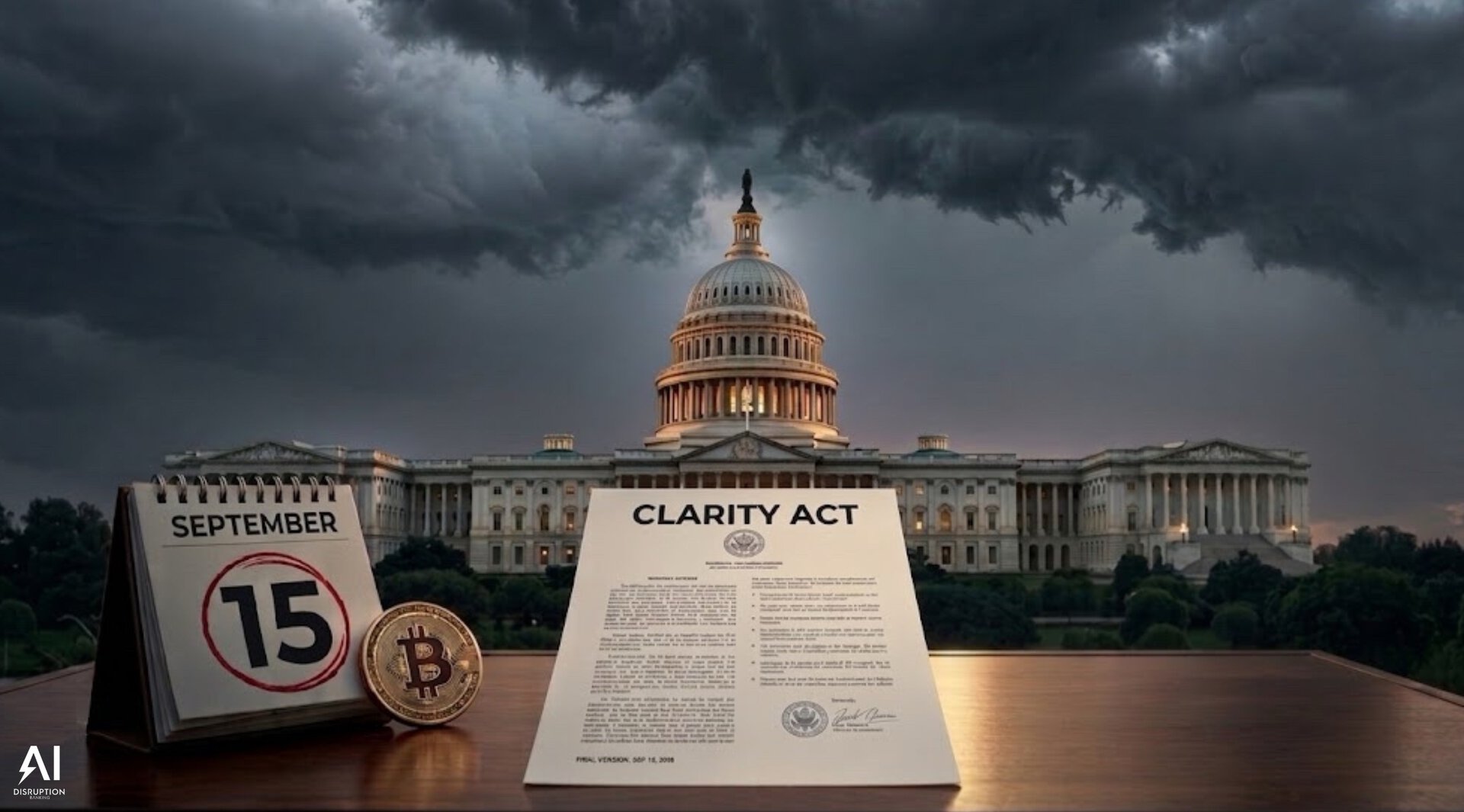
The Digital Asset Market Clarity Act did not clear its first real test on the Senate floor. On Tuesday afternoon the chamber voted 49–50 on cloture, well short of the 60 votes needed to begin debate on the bill. For a bill years in the making, it was a quiet way to lose.
BREAKING: 🇺🇸 The Crypto CLARITY Act has failed to pass the Senate cloture vote. pic.twitter.com/0VAw1H9Eyl
— Bull Theory (@BullTheoryio) September 15, 2026
What a Failed Cloture Vote Actually Means
Cloture is the step that lets the Senate begin formal debate. Clear it, and lawmakers can add amendments and head toward a final vote. Miss it, and the bill stays parked. There is no debate, no amendments, and no floor vote this year.
That is where the CLARITY Act now sits. The House already passed it in July 2025 by a 294–134 vote, sending it to a Senate that never warmed to it. Republicans hold 53 seats, so they needed at least seven Democrats to cross over. They came up short.
Why the Numbers Never Added Up
The math was the whole story, and it kept getting worse. Galaxy Research cut its odds of passage in 2026 from 75% in May to about 10% by mid-August. By September 14, prediction-market traders on Polymarket still priced the bill’s chances of becoming law this year near 31%; those odds collapsed into the mid-teens on Tuesday as the vote approached.
Three fights blocked the path: ethics rules covering officials who hold crypto, developer liability in decentralized finance, and a stablecoin yield provision that put Coinbase’s revenue at stake. Republican sponsors offered a revised draft with 126 Democrat-requested changes. Still, it wasn’t enough.
What Happens to Crypto Regulation Now
Nothing about the law changes overnight. Exchanges continue to operate under the same rules they had on Monday. The difference is who writes those rules.
With no statute, the Securities and Exchange Commission and the Commodity Futures Trading Commission continue to set crypto policy through enforcement and rulemaking, the patchwork the bill was meant to replace. That approach shifts with each administration, which is exactly what the industry wanted to lock down. Payment stablecoins remain governed by the GENIUS Act, signed in July 2025.
Senator Cynthia Lummis, one of the bill’s chief authors, had warned that a loss could push the next serious attempt to 2030. With midterms approaching and the calendar thinning, that timeline no longer sounds dramatic.
The industry spent years and hundreds of millions chasing federal clarity. On Tuesday, it left with none.
Author: Ayanfe Fakunle
The editorial team at #DisruptionBanking has taken all precautions to ensure that no persons or organizations have been adversely affected or offered any sort of financial advice in this article. This article is most definitely not financial advice.
See Also:
SEC Moves on Crypto Rules Without Waiting for the Clarity Act | Disruption Banking