As banks worldwide grapple with the dual challenges of post-quantum cryptography (PQC) migration and the quest for quantum advantage, a new collaborative initiative is offering mid-tier and Global South institutions a practical, low-risk entry point. Launched in March 2026 at the Black Swan Summit Australia in Perth, Q-FINEX (Quantum Finance Industry Experimentation) is supported by the Global Finance & Technology Network (GFTN), The University of Western Australia’s QUISA research group, and ST Engineering. The aim is to get quantum computing out of the lab and into the hands of banks and financial institutions.
This comes at a pivotal moment. Singapore has long led with forward-looking guidance from the Monetary Authority of Singapore (MAS) on quantum cybersecurity risks. Meanwhile, major players like IBM and HSBC have dominated headlines with quantum-safe pilots and algorithmic trading breakthroughs. Yet, industry readiness remains uneven, with many institutions (including mid-tier banks) lacking urgency, resources, talent, and overall quantum strategy amid competing priorities like AI.
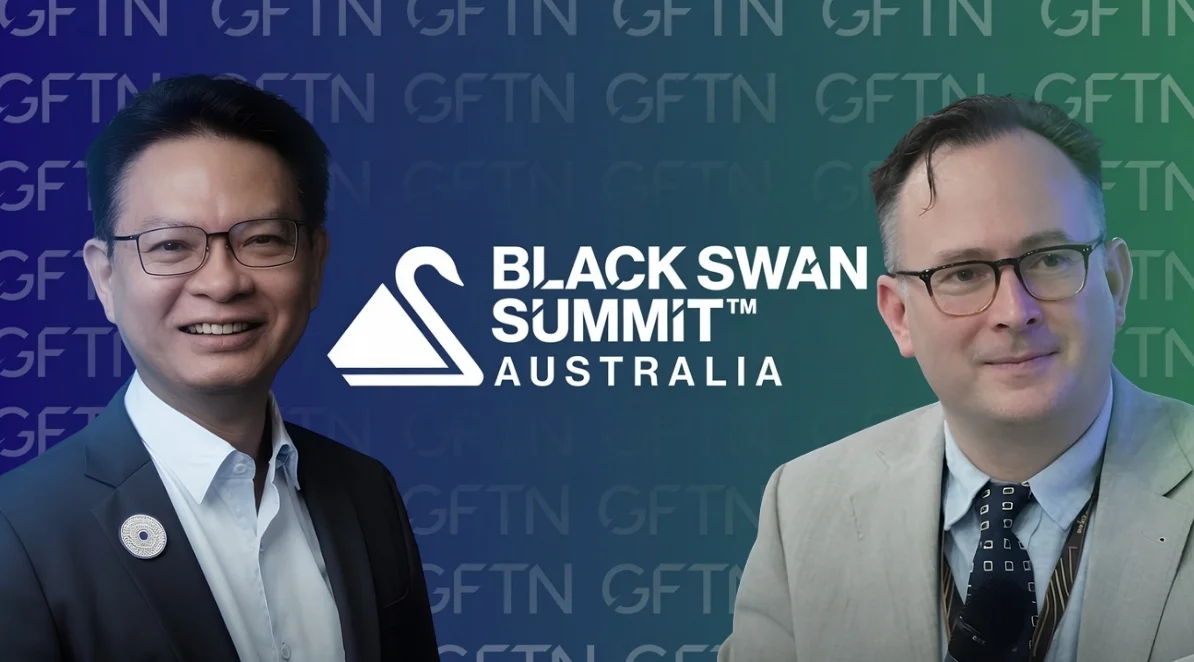
The team at Disruption Banking spoke with James Boey of GFTN and Dr. Andrzej Gwizdalski of The University of Western Australia. The pair explained why collaborative platforms like Q-FINEX could help banks move beyond compliance toward genuine resilience and opportunity.
Industry Readiness for Post-Quantum Cryptography and Quantum Computing
Gwizdalski describes readiness as “deeply uneven.” Leading global banks have completed cryptographic inventories, appointed migration leads, and begun testing quantum-resistant algorithms. The majority, however, fall into a “quantum-aware” but inactive category, or remain completely unprepared. “That gap matters because the migration to PQC can take years,” Gwizdalski warns.
The risks for mid-tier banks are threefold: vendor shortages during a potential “Q-day” rush, the “harvest now, decrypt later” threat (where adversaries collect encrypted data today for future decryption) and significant opportunity costs. Treating PQC purely as a compliance exercise misses a once-in-a-generation chance to build crypto-agility and modernise ageing infrastructure. Institutions that approach it strategically, Gwizdalski says, “will emerge with better systems, not merely compliant ones.” And the risks are interconnected, because unsecured correspondent banks in the Global South could expose the entire system.
Boey sees a persistent lack of urgency across the industry. “There’s a lack of that awareness, a lack of that push, and the regulatory requirements are also not very clear at this point in time,” he says, contrasting it with heavy AI investment. He explains that some governments are moving faster than their banks, pointing to Shanghai’s newly launched quantum hub, Spain’s national quantum strategy, and the UK’s development lab in Edinburgh. There are progressive pockets too, such as a local Singapore bank quietly collaborating with research institutions on quantum security.
Curiously, the loudest voices on PQC over the past year have come from crypto, including figures like Vitalik Buterin. Gwizdalski sees why. Exposed public keys and millions of coins in lost wallets mean “if you theoretically had a powerful quantum computer… you could potentially claim a big honeypot.” Boey believes nimble digital asset firms could be the ideal first movers. For a large bank, cryptographic migration “is like changing the direction of an oil tanker in the ocean.“
Q-FINEX: A Practical Testbed for Quantum Experimentation in Banking
Q-FINEX is positioned not as a vendor showcase or a pure research project. Instead, it’s an accessible four-step framework: scoping, prototype formulation, benchmarking, and showcase. It is also designed around real business use cases. Banks submit challenges such as portfolio optimisation, risk simulation, fraud detection, or derivative pricing, and UWA researchers simulate quantum or hybrid solutions using the university’s quantum resources and powerful supercomputing facilities.
The model is low-to-zero cost and low-resource. It lets mid-tier and Global South banks evaluate value without massive upfront investment in hardware or specialised talent. Benchmarking compares classical, hybrid, and quantum approaches. Even a negative result has value, arming institutions “against vendors who are trying to sell them things that they may not need,” as Gwizdalski puts it. Boey describes the whole model as a “risk-managed pathway to quantum readiness,” anchored in measurable outcomes. For Gwizdalski, the mission is wider. “It’s not just disruption, it’s inclusion.”
The work extends into GFTN’s broader engagements with central banks and governments, from a digital sandbox in India’s Bihar to work in Pakistan, embedding quantum components into wider digital solutions.
The Black Swan Summit and Its Role in Driving Quantum Progress for Banks
The Black Swan Summit, hosted in Perth, draws its name from the moment European explorers encountered black swans in Western Australia, upending the settled assumption that “all swans were white”. It’s a metaphor that aligns perfectly with quantum’s potential to upend finance. The event serves as a practical forum connecting policymakers, researchers, industry, and GFTN’s global network. “This is a place where things get done,” says Gwizdalski.
The summit facilitated Q-FINEX’s launch, with the research side led by Professor Jingbo Wang, founder and director of UWA’s QUISA group, and underscores long-standing Singapore–Western Australia ties in digital economy, policy, and research. Next year’s edition (5–7 April 2027) will expand significantly on quantum finance themes, including readiness indices and the risk of their use for exclusion. Before that, GFTN will showcase a global quantum experience zone at the Singapore FinTech Festival this November.
Call to Action: Shaping the Quantum Future in Finance
Q-FINEX and the Black Swan Summit represent a timely push for inclusive quantum preparedness across banks. As Boey and Gwizdalski noted, this is just the beginning. Banks and institutions are encouraged to submit use cases for Q-FINEX, follow GFTN’s work, and join the next Black Swan Summit in Perth to witness (and shape) the quantum future in finance firsthand.
Author: Andy Samu
See Also:
Quantum Finance Testbed Launched: GFTN, UWA & ST Engineering Partner on Q-FINEX
How the Black Swan Summit Made an Impact in Western Australia