
Carlo Messina, chief executive of Intesa Sanpaolo, on November 12 criticised the new levy on banks in Italy’s 2027 budget and the plan to spread Superbonus tax credits over ten years.
The budget seeks an additional €5.9 billion from banks in 2027 to fund tax cuts and spending. The figure rises to €12 billion in 2029. It also spreads roughly €20 billion of Superbonus tax credits intended for 2027 over ten years.
Messina said the punitive tax measures are partly unconstitutional so shareholders can take legal action.
He also warned that European Central Bank rules risk classification problems. Messina claimed the ECB could treat the delaying of tax credits as forbearing and ask Italian banks to cut their sovereign exposure. His remarks did not say whether the ECB has opened any review.
Messina added that “600 billion euros of public debt are in the hands of banks and insurers.” Intesa paid €5 billion in tax on €8.2 billion of nine-month profit, he said, including €1 billion agreed last year. He added that Intesa is the main investor in Italian government bonds and is suffering significant losses on them.
What the Bank of Italy says about the budget
Andrea Brandolini, head of the Bank of Italy’s economics and statistics department, said at a hearing before the budget committees that the tax burden on banks and insurers rises by €4.4 billion in 2027, €2.5 billion in 2028 and €800 million in 2029.
Brandolini said the installment rule helps contain public debt in 2027 but could significantly hit banks’ 2026 income statements. He also said “frequent or unexpected tax changes increase uncertainty and affect operators’ investment choices.”
Messina argued that the measures break a prior three-year agreement reached with the government the previous year for a more limited contribution of around €10.5 billion until 2029 in some accounts. He said the government is changing terms without consultation.
Speaking at a press point in Dublin, Prime Minister Giorgia Meloni said “I would have been happier to reach the same result with an agreement, as happened in past years.” She also said that higher taxation of the financial sector was a matter of fairness. She cited banks’ strong profits aided by government measures, pandemic guarantees and ECB rate hikes.
Tax Credit Spreading Hits Bank Liquidity
Italian banks are also impacted by the 2027 budget’s changes to Superbonus tax credits. The scheme was introduced in 2020 under the Decreto Rilancio, Article 119, as a temporary incentive for energy-efficiency and upgrades of buildings.
Banks and other intermediaries bought large volumes of these tax credits from builders and homeowners. The banks recorded them as receivables to offset them against their own tax liabilities on a fixed schedule. This supplied liquidity to the construction sector while earning a margin.
The budget forces the final 2027 tranche of credits to be split into ten equal annual instalments through 2036. Of the roughly €20.5 billion that holders expected to use in 2027 only about one-tenth remains available that year. The rest is deferred without interest. Banks therefore face a liquidity shortfall, a lower present value of the assets, and estimated write-downs of around €3 billion largely hitting 2026 accounts, according to the Italian Banking Association (ABI) .
Messina Calls the Move Forced Forbearance
Messina accused the government of adopting a “South American” approach to debt management by unilaterally stretching the Superbonus tax credits. He described the step as a form of forced forbearance.
In his parliamentary hearing he said spreading the 2027 tranche over ten years amounted to a “debt restructuring one year before the deadline” and “South American-style formulas for managing debt towards one’s creditors.”
He noted that banks had bought the credits expecting clear near-term recovery schedules. Instead a credit due the following year is being pushed out over a decade with no interest. He argued the move was made without consultation and prioritised short-term fiscal relief ahead of elections.
Under ECB and EBA rules forbearance is any concession granted to a debtor that modifies the original contractual terms because the debtor is in difficulty. In this case the Italian government is the debtor for the tax credits. By stretching the maturity and removing interest one year before the due date, Messina says it is imposing exactly that kind of concession.
He claimed that the ECB could therefore classify the altered credits as forborne exposures. That classification triggers stricter rules on valuation and risk-weighting of sovereign debt holdings.
Risk to Italian Government Bond Holdings
Messina warned that forbearance could lead the ECB to treat the altered credits as riskier and ask Italian banks to reduce their exposure to government debt.
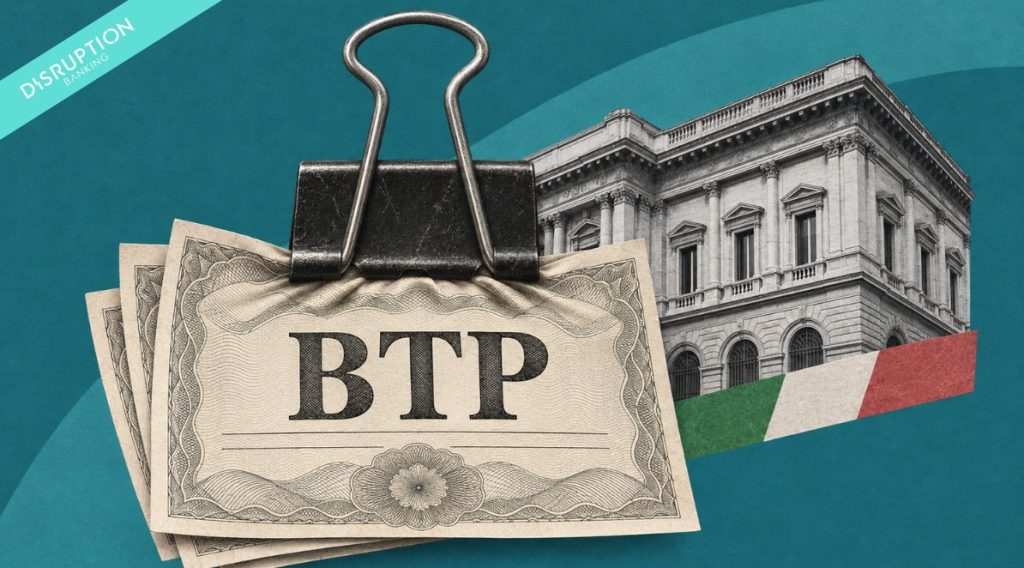
He also warned of contagion to government bonds (BTPs). Messina claimed that if the ECB decides the Italian government has changed the terms of what it owes banks without their agreement, it could treat the move as a sign of higher risk around Italy’s public debt.
As the direct supervisor of Italy’s largest banks, the ECB sets the capital and risk rules that govern how those institutions must treat sovereign exposures. It can therefore raise capital charges or concentration limits on ordinary BTPs, prompting banks to sell those bonds. Italian banks hold about €600 billion in sovereign debt according to Messina.
The ECB continuously monitors the bank-sovereign nexus for Italian banks and their reliance on Italian sovereign bonds as collateral. In the past, especially after the 2010–2012 crisis, it has pressed Italian banks to limit or diversify their concentrated holdings of domestic debt.
No formal ruling has been made as of yet by the ECB. The bank is reportedly preparing a legal opinion on the budget measures and the Bank of Italy has already warned of material effects on banks’ 2026 earnings and liquidity. As for now the argument remains a supervisory-risk assessment made by Messina and the ABI rather than an existing ECB decision.
Author: Scott Danaher
See Also:
Italy: Staff Concluding Statement of the 2026 Article IV Mission | Disruption Banking
Why Italy’s Largest Bank is Embracing Bitcoin | Disruption Banking