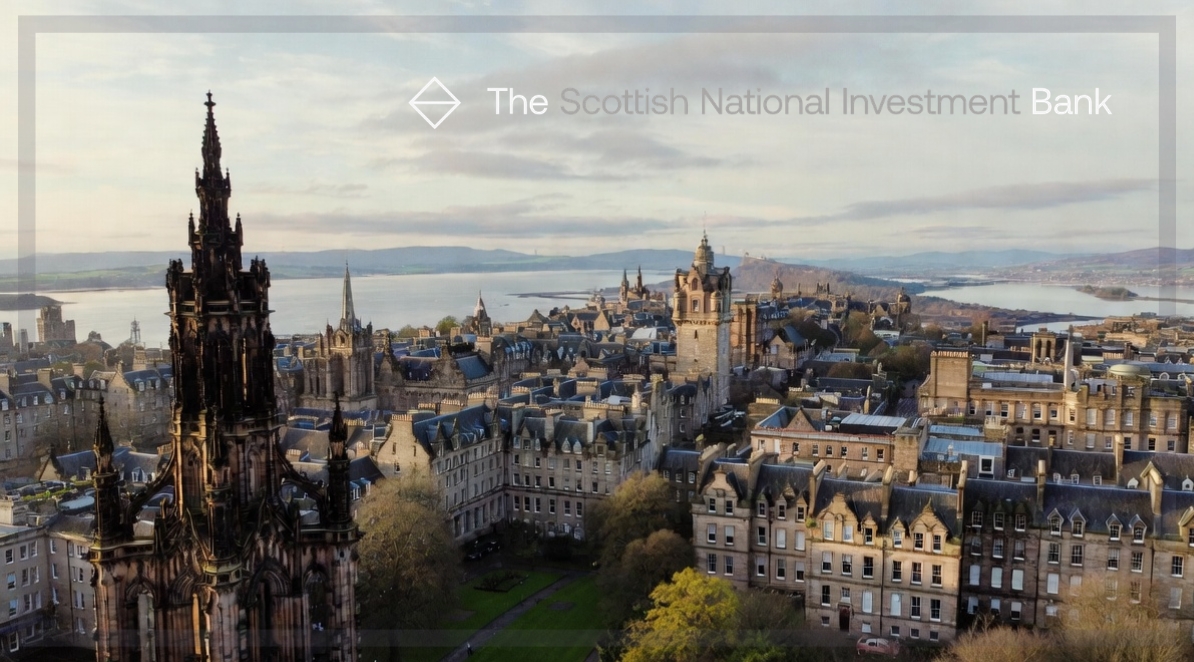
The Scottish National Investment Bank (SNIB) staged its 2026 annual conference, “Investing with Impact: Unlocking Potential,” last week in Aberdeen. Beneath the polished speeches and optimistic rhetoric loomed a lack of discussion about taxpayer exposure, repeated failures, and whether SNIB truly delivers on its ambitious promises.
The SNIB was launched in 2020 by Nicola Sturgeon to provide patient, long-term capital that would empower Scotland’s most promising start-ups and drive sustainable economic growth. Backed by the Scottish Government, it aims to serve as a pillar of the nation’s innovation ecosystem, free from short-term pressures and focused on high-impact, mission-led investing.
Five years on, the “impact” is far more troubling than promising.
SNIB 2026 Annual Conference: Fireside Chat with New CEO David Ritchie Kicks Off Aberdeen Event
Partnered with Energy Voice and The Press and Journal, the SNIB’s annual conference took place on March 9 at The Marcliffe Hotel in Aberdeen, bringing together investors, founders, policymakers, and online viewers.
The event included panels on accelerating the energy transition, scaling high-growth businesses, harnessing innovation for global markets, and investing in place-making for evolving cities.
“This is a moment for them [the Bank] to hear from you, get your feedback, to have a debate and discussion as well”, said host Sepi Golzari-Munro in her opening remarks.
The conference opened up with a fireside chat between Golzari-Munro and the newly appointed CEO David Ritchie, who was promoted internally in January 2026 from his previous role as chief strategy officer.
According to her personal website (where she offers professional booking services), Golzari-Munro describes herself as a “communicator, writer and strategist” and can “transform tricky, technical, policy or political issues into clear and persuasive reports“.
She spent seven years working in the UK Government, including five years at the Ministry of Justice and designed government reform programs, followed by two years as Head of the Capital Markets Climate Initiative at the Department of Energy and Climate Change.
SNIB CEO Admits Post-COP26 Hype Fails to Deliver
The discussion began with Golzari-Munro asking Ritchie how the changed economic and technological landscape since SNIB’s 2020 launch would shape its strategy for the next five years.
In response, Ritchie first spoke about the initial launch in 2020: “COVID was still quite a significant thing,” he said, creating major hurdles for both the bank’s setup and the broader economy.
At SNIB annual conference in Aberdeen. New CEO on stage bigging up investment and impact of the bank (as one would expect and hope). Suggest some AI investments on the horizon. pic.twitter.com/eg0QLOgLLd
— William Thomson (@Williamgallus) March 9, 2026
He pointed to the lingering effects of COVID, noting that “macroeconomic conditions were completely different” with low business and consumer confidence, plus limited investor appetite.
Turning to the energy transition mission, Ritchie admitted the post-COP26 hype had not delivered as hoped: “It was just off the back of COP 26 [with] huge amount of enthusiasm… in terms of the net zero opportunity, and some of the areas that we were anticipating investing in, such as offshore wind, has not crystallised in the way that we had initially envisaged.”
This rare admission highlights a core failure in SNIB’s sustainability push.
Launched to accelerate Scotland’s net zero transition, SNIB has committed heavily to offshore wind infrastructure and supply chains. Yet deployment lagged significantly, with expected scale and returns failing to materialise due to economic headwinds, supply chain delays, and slower project timelines.
Ritchie’s framing casts these shortfalls as unavoidable external changes rather than strategic misjudgments or execution gaps.
Ritchie Asked About ‘Elephants in the Room’ But Sidesteps the Actual Elephants
During the fireside chat, Golzari-Munro pivoted the conversation, stating “I, for one, love tackling elephants in the room … head on. And I know you do too”, before asking Ritchie: “What do you feel and what have you heard as some of the greatest misconceptions, or greatest… criticisms of the bank in the first five years?”
Ritchie acknowledged a “diverse set of views” and said he welcomed scrutiny given SNIB’s use of public funds.
He brought up what he considered to be the main criticisms: confusion over the bank’s role, with many expecting it to provide grant-like or sub-commercial funding; and perceptions that it moves too slowly.
He firmly defended SNIB’s commercial mandate under state aid rules: “we should not be crowded out of the private sector” and described its deliberate slow pace as essential for “extensive diligence” to protect taxpayer money, while promising improvements.
The response effectively reframed the criticisms as misunderstandings rather than structural flaws and noticeably avoided engaging with the most serious and recurring charges: specific high-profile investment failures, substantial taxpayer losses, governance shortcomings, and allegations of insider connections.
SNIB’s Latest PR Push: Why the 2026 Fireside Chat Changes Nothing for Scottish Taxpayers
Disruption Banking’s previous investigations exposed how the SNIB invested £16.5 million of taxpayers’ money into three companies with close ties to Scottish Government advisory boards, alongside separate revelations of £5 million going to Forrit (where a director held a personal stake) and the £7.5 million Travelnest deal involving family connections to a former SNIB analyst.
These findings sparked widespread concerns over potential conflicts of interest, lack of transparency, and whether well-connected firms gained unfair advantages in accessing public funds.
Our recent 2025 review, documented how unrealised impairments hardened into permanent losses. The August 2025 administration of the SNIB’s first investment M Squared Lasers wiped out more than £34 million of taxpayer money with zero recovery, while Krucial’s June collapse added another £4.6 million in irrecoverable exposure.
Audit Scotland’s 2025 report highlighted a fundamental tension: SNIB’s ambition to become a self-sustaining perpetual investment fund clashes with UK Treasury rules that prevent retaining returns for reinvestment, locking the bank into ongoing public funding dependence.
Stephen Boyle, Auditor General for Scotland, said: “The Scottish National Investment Bank was set up to deliver economic, social, and environmental benefits for Scotland, as well as a financial return – and it’s made a good start on those ambitions“.
“But for the bank to be successful, the Scottish Government needs to address the lack of flexibility around the bank’s budget, and the barriers presented by UK Treasury rules“, added Boyle.
NEW: SNP-founded bank makes huge £58.4m loss as investment slumps but bonuses rise https://t.co/PQiheM0iNe
— Scottish Express (@ScotExpress) August 21, 2025
The SNIB’s 2025 annual report revealed a statutory loss of £58.4 million, driven primarily by a £77 million unrealised loss on its portfolio which is equivalent to roughly 7% of deployed capital wiped out in a single year.
Ritchie’s fireside appearance at the annual 2026 SNIB conference in Aberdeen offers no answers to the widespread criticisms.
Five years after launch, the SNIB remains stuck in the same cycle of polished rhetoric masking repeated underperformance. Taxpayers continue to shoulder the downside as “patient capital” yields more patience than impact.
Author: Ruben McCarthy
See Also:
SNIB: Where Are They Now? A 2025 Review
SNIB Hands £20 Million To Businessman Who Oversaw Farepak Collapse | Disruption Banking
Questions Raised In Holyrood Over Conflicts Of Interest At The SNIB | Disruption Banking