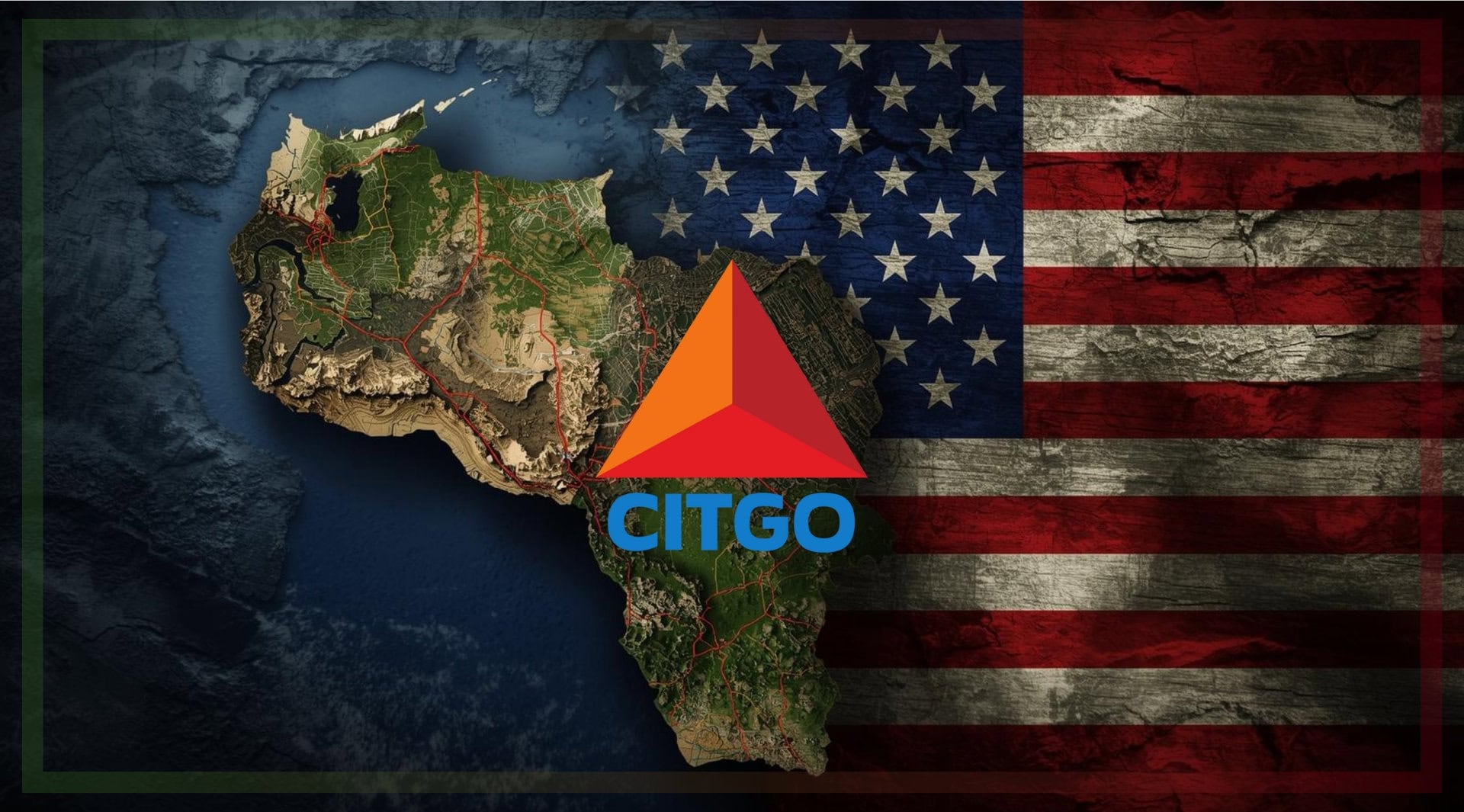
There is an ongoing battle in a Delaware federal court over control of Citgo Petroleum, the Houston-based refiner widely regarded as the crown jewel of Venezuela’s foreign assets. In late November, Amber Energy, an affiliate of Paul Singer’s hedge fund Elliott Management, won a court-supervised auction for Citgo’s parent company, PDV Holding. However, Gold Reserve, the losing bidder, has filed a bombshell appeal that will blow the case apart and the process will likely start over with a new judge.
Here Lies Irony
Singer is no stranger to Latin America. His firm has built a reputation on long, patient bets on distressed sovereign assets, often backed by aggressive litigation strategies, in some cases taking countries to court, as Disruption Banking wrote about here.
Citgo, with refineries across Texas, Louisiana, and Illinois, is not just another industrial asset: it is one of the largest refiners in the U.S. market and a strategic piece of energy infrastructure. Control over Citgo is therefore about more than creditor recovery; it is about who ultimately governs a critical node in the American energy system.
The auction itself unfolded as a pitched battle among global oil traders, U.S. energy firms, and distressed-debt specialists. But this financial contest did not occur in a vacuum. It played out against the backdrop of Donald Trump’s intervention in Venezuela’s political crisis, his administration’s seizure and resale of Venezuelan oil shipments, and the broader paradox of U.S. power projecting itself as both liberator and liquidator of a foreign state’s assets.
Trump’s installation of himself at the top of the socialist Chavista political party is a supreme irony in an age of ironic Orwellian contradictions, where war is peace, secrecy is transparency, and self-dealing is America First.
Citgo, Venezuela & The Maduro Question
The legal drama surrounding Citgo is inseparable from Venezuela’s political collapse. Citgo is ultimately owned by Petróleos de Venezuela (PDVSA), the country’s state oil company. When Venezuela defaulted on its debt in the late 2010s, Citgo became the most valuable reachable asset for creditors seeking compensation.
In early January, the appeals court invited the federal government to submit comments on whether Trump’s abduction of former Venezuelan President Maduro would affect the litigation, but none were forthcoming by the deadline of January 8.
Meanwhile, the U.S. Treasury Office of Foreign Assets Control (OFAC) must approve the sale within six months for the deal to close. Without OFAC approval within six months, the Amber Energy deal cannot close. At the same time, Venezuela has asked the appellate court to vacate the sale order entirely, a request that remains unresolved.
The bondholders and their opponents have refocused their attention on Washington, lobbying privately, to sway the matter to their advantage.
It’s not clear how “the boss” (as Trump is known within the administration) feels about the auction. Sources told Reuters that the issue is “not a priority,” but that “Washington” (the boss?) would prefer Citgo to be run by an American company.
This ambiguity underscores a deeper tension: Citgo sits at the intersection of sanctions policy, creditor rights, and U.S. energy security.
Oil Sales, Sanctions, and Strategic Contradictions
The Citgo dispute is unfolding alongside another remarkable development: the U.S. government has begun selling Venezuelan crude oil under its own supervision. Along with Marathon Petroleum Corp, Citgo is preparing to bid on the first $2 billion worth of Venezuelan crude oil, consisting of about 30 million to 50 million barrels.
This creates a surreal feedback loop. On one hand, U.S. courts are overseeing the forced sale of Venezuela’s most important foreign refinery to satisfy creditor claims. On the other, the U.S. government is monetizing Venezuelan oil exports, with proceeds held in controlled accounts abroad. Venezuela’s oil is flowing, but under conditions dictated entirely by Washington.
These parallel processes together illustrate how Venezuelan sovereignty over its energy sector has been hollowed out. It’s the new-fangled Donroe Doctrine at work, and as confusing as it all seems, the MAGA faithful never tire of repeating, “Let the man cook,” eliding the question of who or what is being cooked.
Bondholders and the $19 Billion Question
The roots of the Citgo fight stretch back decades. Back in the glorious mid-1980s, the PDVSA acquired 50% of the firm and then bought out the rest by 1990, securing a foothold in the U.S. refining market. However, almost three decades later in the 2010s, PDVSA issued bonds using the Citgo stock equity as collateral.
The buyers of these bonds were foreign companies, retail investors, and various creditors of the Venezuelan government and the PDVSA. Next, in 2019, PDVSA defaulted on the bonds, paving the way for creditors to seize the refiner. Since then, bondholders have been fighting arbitration cases in District Courts in Delaware and New York City against the PDVSA and later a supervisory board controlled by Venezuela’s political opposition, which attempted to sandbag the creditors’ litigation, arguing the bonds were not issued according to Venezuelan law.
The court rejected that argument. In 2020, the bonds were upheld as valid, and that ruling was reaffirmed in September 2025 after appellate review. By then, creditor claims tied to defaults and expropriations had swollen to as much as $19 billion.
Against that backdrop, Delaware Judge Leonard Stark approved the $5.9 billion bid for Citgo’s parent, including a $2.1 billion pact for bondholders. That can’t be welcome news for the bondholders because they are collectively seeking up to $19 billion in total, but it seems that Citgo doesn’t yet command the type of coin to cover all the claims.
The question, then, is not whether creditors lose, but which creditors are paid, and why.
Gold Reserve’s Bombshell: Conflicts of Interest Alleged
That question lies at the heart of the most explosive and least reported part of the case, for some unknown reason. Venezuelan parties have filed a motion to disqualify Amber’s bid due to a conflict of interest, seeking to void the sale and disqualify the judge.
The Toronto-listed miner, one of 15 creditors vying for proceeds from the sale, Gold Reserve court brief exposed a bombshell allegation that the advisers hired by the court, Weil Gotshal & Manges LLP (Weil) and Evercore, Inc. (acting as arms of the court) had extensive undisclosed relationships with Elloitt and the winning bondholders.
A Weil partner intervened internally, warning colleagues not to alienate Elliott as a client. The advisers discussed with Elliott how to avoid commitment fees, skip the topping round, and submit a post-recommendation “unsolicited” bid instead.
According to an internal email, Elliott would, “submit something not fully committed… then wait to see what our recommendation is and try to beat that with an unsolicited offer.”
It is certainly odd that the court chose Amber Energy’s bid when Gold Reserve’s bid was $2.1 billion higher than Amber’s, a decision that is not only odd and suspicious on its face but also against the black letter language of the Delaware Code, which states that a sale of attached shares must be “public” and “to the highest bidder,” (Del. Code tit. 8, § 324(a) (emphasis added)).
Unsurprisingly, the judge dismissed the motion seeking his disqualification, but the allegations remain part of the appellate record and almost completely absent from mainstream coverage, including, suspiciously, Reuters, which has reported on every single twist and turn of the case.
Trump, Defacto Leader of Chavismo
The legal and financial threads converge in a broader political paradox.
Marcus Gak, an Argentinian journalist, captured it well on Instagram, “The ties between the Chavista political leadership in Caracas and Donald Trump’s White House continue to strengthen. The CIA director was in Caracas this past weekend, meeting with President Delcy Rodríguez. Meanwhile, the United States has begun selling Venezuelan oil. Currently, Donald Trump is the leader of Chavismo.”
The remark is intentionally provocative, but it points to a deeper irony. While Chavismo once defined itself in opposition to U.S. capitalism, Venezuela’s energy assets are now being sold, managed, and redistributed under American legal and financial authority. Citgo’s fate will be decided not in Caracas, but in Delaware courtrooms and Washington offices.
Whether Amber Energy ultimately takes control or whether the sale is unwound on appeal, the Citgo case reveals how sovereignty can be dismantled through contracts, sanctions, and court orders.
Author: Tim Tolka, Senior Reporter
#Crypto #Blockchain #DigitalAssets #DeFi
The editorial team at #DisruptionBanking has taken all precautions to ensure that no persons or organizations have been adversely affected or offered any sort of financial advice in this article. This article is most definitely not financial advice.
See Also:
Trump Wants Venezuela’s Oil. The Problem Is It May Cost $110 Billion Just to Start
From Market Crash to Crypto Boom: Venezuela’s Digital Currency Revolution | Disruption Banking