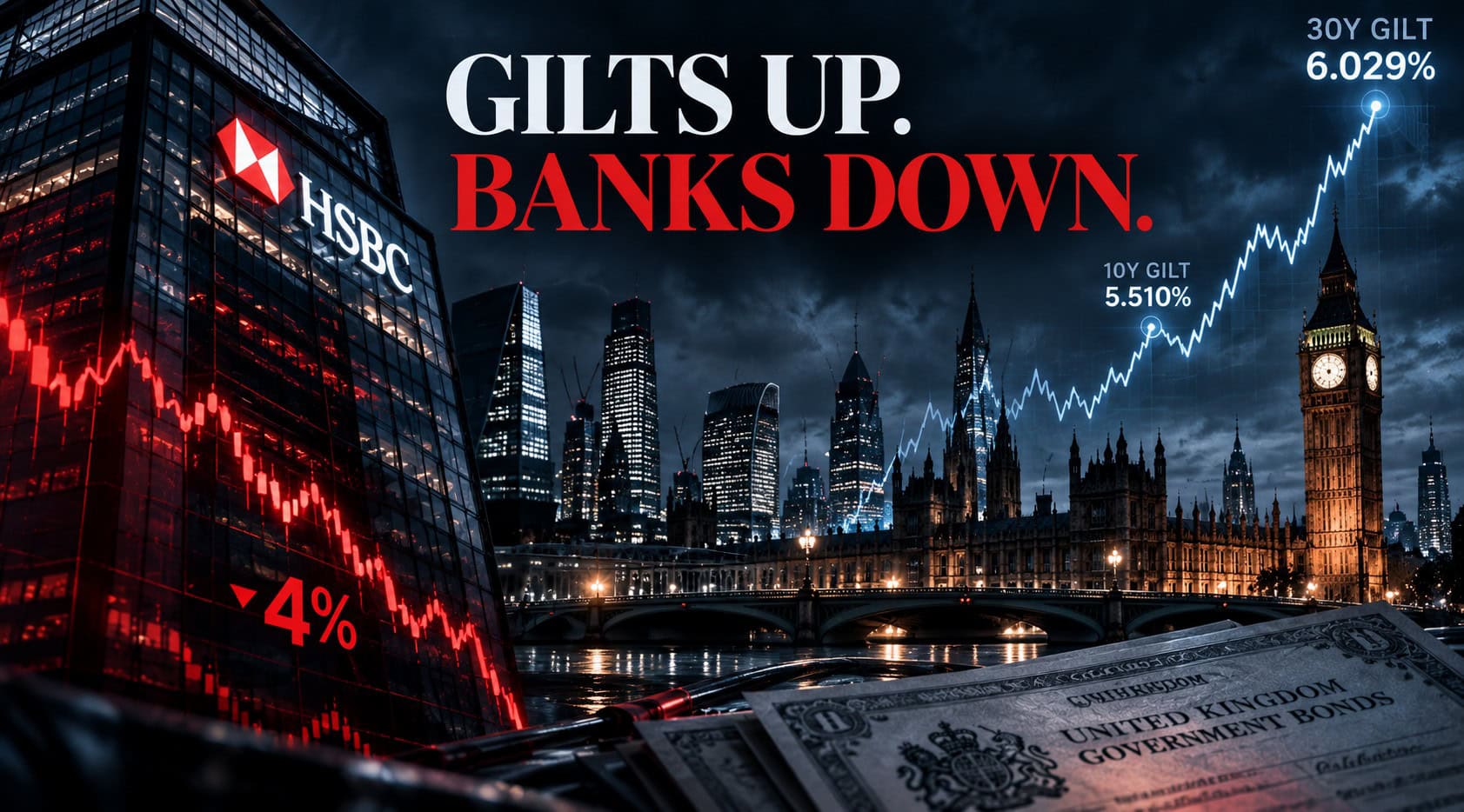
HSBC fell about 4 percent in London on 1 October, on the day the 30-year gilt yield reached 5.94 percent, the highest since early 1998. The 10-year gilt reached 5.40 percent, the highest since 2007. NatWest fell 5.2 percent, Lloyds 4.4 percent and Barclays close to 4 percent. The FTSE 350 banks index dropped 4.1 percent, its worst session since 5 May. An index of euro-zone banks fell about 3 percent. The session was reported that afternoon. The Bank of England holds an official record of UK government bond yields on its yield curve page.
HSBC had not put out a results filing or a cut to guidance. The London price moved with NatWest, Lloyds and Barclays. A group like HSBC Holdings, which reports in dollars, did not have a sterling announcement on the day.
Government borrowing got more expensive, and bank shares fell with it, in London and across Europe. UK names fell further. The London selling picked up after a report that Chancellor John Healey had asked the chief executives of Barclays, HSBC, Lloyds and NatWest to a meeting next Tuesday, ahead of the October 28 budget. Santander UK and Nationwide were also invited. The Treasury declined to comment.
Why UK banks fell more than the sector
The move in UK bank share prices is worth a harder look. A gilt at these levels can help a lender that prices loans off it. It can also mark down bonds the bank already holds, and it shows the government paying more to borrow into a budget.
Investors read the invitation as a sign that a bank tax is on the table for the October 28 budget. That is their fear. However, it is not a foregone conclusion. No tax has been announced, and the Treasury has not commented. Sector chiefs have been lobbying against a higher bank surcharge.
In the meantime, HSBC makes most of its money outside Britain, in dollars and in Hong Kong. A UK bank tax would hit the British book, but it would not rewrite the rest of the group. That is why a more domestic name, NatWest, fell further than HSBC today.
Healey sees the bank chief executives next Tuesday. The budget is on October 28. If the tax talk fades and the 30-year gilt stays near 5.94 percent, the shares can recover without the yield moving. If the shares recover after the meeting and the gilt does not, the invitation was what the market was pricing.
Author: Andy Samu
See Also:
What Liz Truss Is Teaching Andy Burnham About a 6 Percent Gilt | Disruption Banking