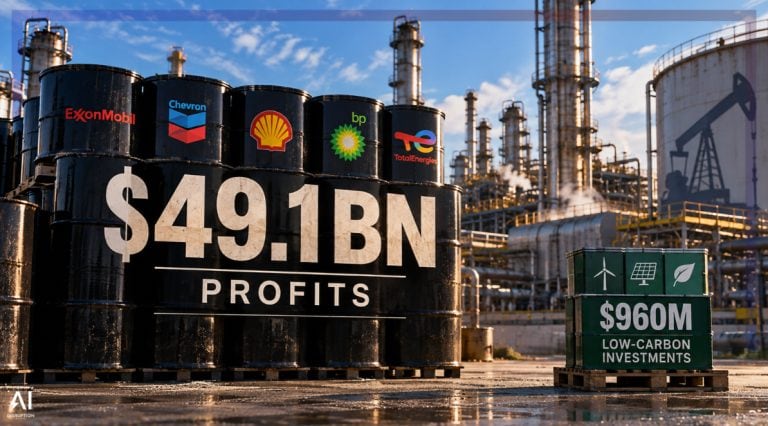

The benchmark for Brent crude sits roughly at roughly $66 a barrel. A worldwide supply glut could bring down the price further. Despite this, recent reporting shows that OPEC+ plans to increase production in April, while U.S. production remains at record levels.
What is the endgame for OPEC+ and for American producers?
Russia/Ukraine War or a Hedge Against Inflation?
The push for increased production amidst a supply glut is atypical. OPEC+ controls roughly a quarter of the world’s oil exports. Normally, the twelve-nation oil cartel curtails drilling when supply outpaces demand. However, due to various factors, that isn’t happening.
In January of 2025, at Davos, President Trump publicly pressured Saudi Arabia and OPEC+ to pump more oil to bring prices down. The primary reason Trump gave was a desire to end the Russia/Ukraine war. The Russian economy relies heavily on oil exports, and a depreciation of the price of crude would empty Russian coffers, thus forcing Russia, in theory, to negotiate for peace.
However, President Trump has also stated on numerous occasions about his desire to bring down the price of gasoline to under $2 a gallon in the U.S. While that hasn’t happened, cheaper gasoline in the U.S. has served to offset inflation brought about by on-and-off-again tariffs for the past year.
Meanwhile, the war in Ukraine continues inexorably. Russia’s economy is heavily strained by deflated oil prices, as well as sanctions, but is managing to survive due to its deft handling by the Central Bank of Russia. Moreover, as some have argued, Saudi Arabia and OPEC+ have used Trump’s push for more oil production to their advantage.
A Race to the Bottom
Ten years ago OPEC started a price war to try to win back the market share it had lost to American shale oil production. However, new technologies and cost-cutting allowed American companies to compete at lower prices and OPEC’s gambit failed.
The United States is presently the biggest oil producer in the world. U.S. crude oil output in September of 2025 hit almost 14 billion barrels per day, the highest output in the country’s history. However, this output, combined with that of OPEC+ and newcomer Guyana have put further downward price pressure on oil.
The question is whether these prices are sustainable for American producers. According to the Center for Strategic & International Studies, “the average breakeven price for new U.S. onshore oil wells is $65 per barrel, well above Trump’s preferred range in the $50s.”
Black Gold Hits Glass Ceiling
Some have observed that Saudi Arabia is happy to oblige Trump’s request for cheaper oil as a way to gain market share lost to American producers. Unlike ten years ago, U.S. shale producers have seen costs rise and returns lessen.
The Permian Basin oilfield, America’s largest, has seen reduced productivity and rising costs. Tariffs have also driven up the cost of raw materials needed for fracking. Meanwhile, Saudi Arabia’s lifting cost per barrel sits at $3 to $5.
But where do these price wars and a super glut of oil lead us? Dr. Siddharth Misra, a Professor at Texas A&M University, argues that the oil industry will soon hit a structural ceiling. Misra explains that emerging producers, such as Guyana, pump higher volumes to offset falling revenues, a cycle that repeats itself.
Dr. Misra also points to storage issues, in which it becomes too expensive for traders to hold onto inventory. The International Energy Agency predicts supply will surpass demand by 3.7 million barrels per day this year.
Yet, the price per barrel of oil isn’t in its death throes. Some attribute the relatively high price to a series of unknowns. First, the stock of oil worldwide is rising. However, China keeps its oil reserves largely underground, which cannot be detected by satellite. Second, increased geopolitical tensions, namely between the U.S. and Iran, have kept the price of crude up.
Going Forward
While President Trump has removed regulations and encouraged U.S. producers to “drill, baby, drill,” new drilling activity is waning. Currently, the output from preexisting oilfields is historically high and contributing to low prices, but this could change.
Some American shale producers have expressed displeasure with the president’s incessant push for lower prices, sneering at the prices the president would like to see the barrels priced at. Others have cited technological innovations as lowering the breakpoint for profitability, and seeing how a lower price point can work.
Meanwhile, the rest of the world is pumping oil, and lots of it. While Europe and parts of Asia are transitioning to electric cars, and national oil stockpiles are reaching capacity, producers keep pumping oil.
What that will mean in 2026, when an ever-increasing supply glut meets tepid demand, is lower prices, at least for a while.
Author: Tim Tolka, Senior Reporter
The editorial team at #DisruptionBanking has taken all precautions to ensure that no persons or organizations have been adversely affected or offered any sort of financial advice in this article. This article is most definitely not financial advice.
See Also:
Trump Wants Venezuela’s Oil. The Problem Is It May Cost $110 Billion Just to Start
How Strong will the Price of Brent Oil be in 2026? | Disruption Banking

Tim Tolka
Tim Tolka, Senior Reporter at Disruption Banking, covers digital assets, monetary policy and the politics of global finance. Based in Mexico City, he brings an investigative edge to his reporting, informed by a Master's in International Affairs and his work as an author and screenwriter.