Much like Singapore, Japan, and South Korea, Hong Kong does not regulate crypto through a single omnibus law. Instead, it has built a layered framework that now functions as its MiCA-equivalent in practice. As of the time of writing, that framework is no longer aspirational. It is live, enforced, and shaping market behavior.
The system is driven by the Hong Kong Securities and Futures Commission (SFC) and the Hong Kong Monetary Authority (HKMA). The policy direction is clear. Hong Kong wants crypto activity. But only inside a regulated perimeter. No shortcuts.
Licensing Regime for Crypto Trading Platforms
The cornerstone of Hong Kong’s regulatory framework is the SFC’s Virtual Asset Trading Platform (VATP) licensing regime, which took effect on June 1, 2023, under amendments to the Anti-Money Laundering and Counter-Terrorist Financing Ordinance (AMLO). Any crypto exchange operating in Hong Kong, or actively marketing to Hong Kong investors, must hold an SFC licence.
This is not a light-touch regime. Licensed platforms are treated much like traditional securities brokers. They must meet capital thresholds, maintain strict AML controls, segregate client assets, and submit to ongoing supervision. Custody rules are tight. At least 50% of customer assets held in cold wallets must be insured, and 100% of hot wallet holdings must be covered.
Retail access is permitted, but tightly constrained. Only a small set of large-cap virtual assets may be offered. Each token must be included in at least two recognized indices and pass internal due diligence. Every retail customer must complete a knowledge assessment before trading. Crypto derivatives remain prohibited. So do inducements such as trading rewards, referral bonuses, and airdrops.
By early 2025, the SFC had approved nine licensed platforms, including OSL and HashKey. By early 2026, this number had increased to eleven. Several global exchanges, such as OKX and Huobi, chose to exit instead of comply. Regulators contend that in the long run, a “regulated, safe and sustainable” digital asset market will attract both investors and quality crypto businesses to Hong Kong’s shores.
Stablecoins: Fully-Backed Only Under New Law
Stablecoins now sit under a dedicated statute. Hong Kong’s Legislative Council passed the Stablecoins Ordinance on May 21, 2025, which came into force on August 1, 2025. The law places stablecoin issuance squarely under HKMA supervision.
Per the ordinance, any issuer of a fiat-referenced stablecoin in Hong Kong, or any issuer abroad offering a Hong Kong dollar–pegged stablecoin, must be licensed. Marketing unlicensed stablecoins to the public is illegal.
The rules are strict by design. Stablecoins must be fully backed, 1:1, by high-quality liquid assets in the referenced currency. Algorithmic and partially backed stablecoins are explicitly excluded. Minimum paid-up capital is HK$25 million (around US$3.2 million). Reserves must be segregated, audited, and transparently disclosed.
Redemption at par is mandatory. Delays or discretionary gates are not permitted. Issuers may not pay interest. The intent is simple: stablecoins should behave like payment instruments, not yield products.
As at the time of writing, no issuer had yet received a licence, with the first batch expected in early 2026. That did not concern regulators. Officials have said openly that credibility matters more than speed. Hong Kong is positioning itself as an early jurisdiction where stablecoins are treated as regulated financial infrastructure, not experiments.
Hong Kong’s Early Signals on DeFi and Web3
Decentralized finance remains the hardest problem. Hong Kong has not attempted to regulate pure protocols with no operating entity. Instead, it applies a functional test. If an activity looks like a regulated financial business, and there is a party exercising control, existing laws may apply.
The SFC has repeatedly emphasized the principle of “same activity, same risk, same regulation.” That stance leaves room for future intervention without overreaching today.
At the same time, Hong Kong has leaned into controlled experimentation via the SFC’s February 2025 “A-S-P-I-Re.” Through policy statements and sandbox-style initiatives, authorities have encouraged tokenization, on-chain settlement pilots, and institutional blockchain use cases. The government itself has issued tokenized green bonds.
Regulators are also upgrading their surveillance tools. The SFC has expanded its use of blockchain analytics and cross-platform monitoring to track illicit flows and market manipulation, including activity linked to decentralized venues.
The signal is consistent. Innovation is welcome. Blind spots are not.
Investor Protections and Advertising Curbs
Hong Kong’s crypto framework is unabashedly investor protection-centric, especially regarding retail participants. Advertising restrictions are aggressive. Only licensed entities may actively market crypto services to the public. Overseas platforms targeting Hong Kong users without authorization face criminal exposure.
Licensed platforms face additional limits. No trading incentives. No misleading yield claims. Clear risk disclosures are mandatory. Token information must be accurate and current. Suitability checks apply.
These rules hardened after the collapse of JPEX in 2023. The unlicensed platform left more than 2,600 investors facing losses estimated at HK$1.6 billion. By 2025, police had made over 80 arrests. In November 2025, prosecutors charged 16 individuals, including prominent crypto influencers, with fraud and money laundering.
The response reshaped enforcement. The SFC now publishes a public list of licence applicants and a separate alert list of suspicious platforms. Naming and warning have become regulatory tools.
Enforcement Trends and Regulatory Tone
The overall regulatory tone in Hong Kong has evolved into one of cautious openness. On one hand, officials from the Financial Secretary down to the SFC Chief Executive routinely affirm that Hong Kong is “open for crypto innovation.” Pitching the city’s comprehensive framework as a competitive advantage for serious crypto firms. They highlight Hong Kong’s consistent, rules-based approach in contrast to the policy oscillations seen elsewhere.
Indeed, the government’s updated 2025 policy blueprint explicitly aspires to “new heights of global digital asset leadership,” tying the city’s economic future to the growth of the Web3 sector.
On the other hand, the messaging also makes clear that rule-breakers will face zero tolerance. Julia Leung, the SFC CEO, has emphasized that while she supports blockchain technology, the industry “must not compromise investor protection.” A tightrope of embracing good actors and expelling bad ones. The language used by officials often stresses balance.
“The key to success lies in maintaining an open, fair, balanced, and forward-looking regulatory approach that is conducive to the sustainable and responsible development of financial innovation, including Web3,” said Financial Secretary Paul Chan in early 2025.
In practice, this means Hong Kong’s regulators have been willing to adjust and refine rules (for example, exploring the introduction of token derivatives for professional investors in a calibrated way), but they remain unafraid to say no to products deemed too risky for the current environment.
Hong Kong is Pricing in the Next Crash
The regulatory framework in Hong Kong is still evolving. Authorities are consulting on licensing regimes for OTC crypto dealers and custodians, with legislation targeted for 2026. Discussions on professional-only derivatives are ongoing. Adjustments will come.
But the direction is locked in. Hong Kong’s MiCA-equivalent is not one law. It is a system. Structured. Enforced. And deliberately selective.
That is the bet. Fewer actors. Higher standards. And a crypto market that survives the next cycle.
Upcoming Event: Convergence of Capital and Innovation in Hong Kong
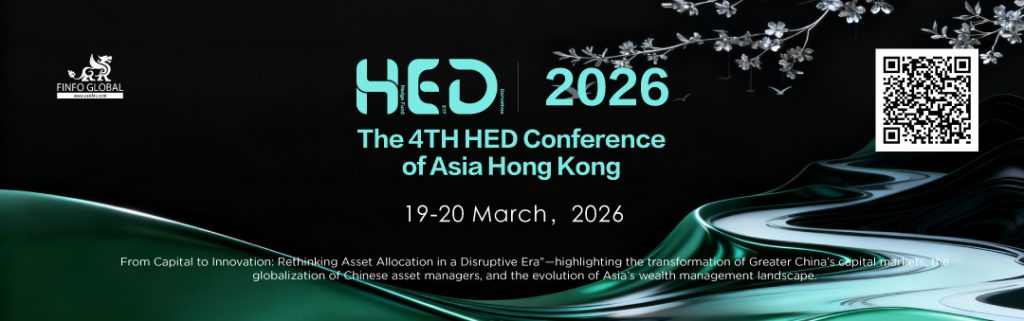
As Hong Kong solidifies its position as a premier regulated crypto and Web3 hub, industry leaders will convene to explore the intersection of capital, technology, and innovation in Asia’s evolving markets. The 4th HED Conference of Asia, themed “From Capital to Innovation: Rethinking Asset Allocation in a Disruptive Era,” will bring together 300 senior executives from sovereign funds, pension plans, family offices, and asset managers on 19-20 March 2026 in Hong Kong SAR. Organized by Finfo Global, this flagship event offers a timely platform to discuss tokenized assets, regulatory advancements, and strategies for sustainable growth in Greater China’s digital economy. Join the conversation where global capital meets Asian innovation.
Author: Ayanfe Fakunle
The editorial team at #DisruptionBanking has taken all precautions to ensure that no persons or organizations have been adversely affected or offered any sort of financial advice in this article. This article is most definitely not financial advice.
See Also:
Why Singapore’s Crypto Regulation Is Outshining MiCA in 2025
Crypto Regulation in Japan 2025: From FSA Rules to Tokyo’s Web3 Hub
How the Canton Network is Disrupting Capital Markets at Point Zero Forum