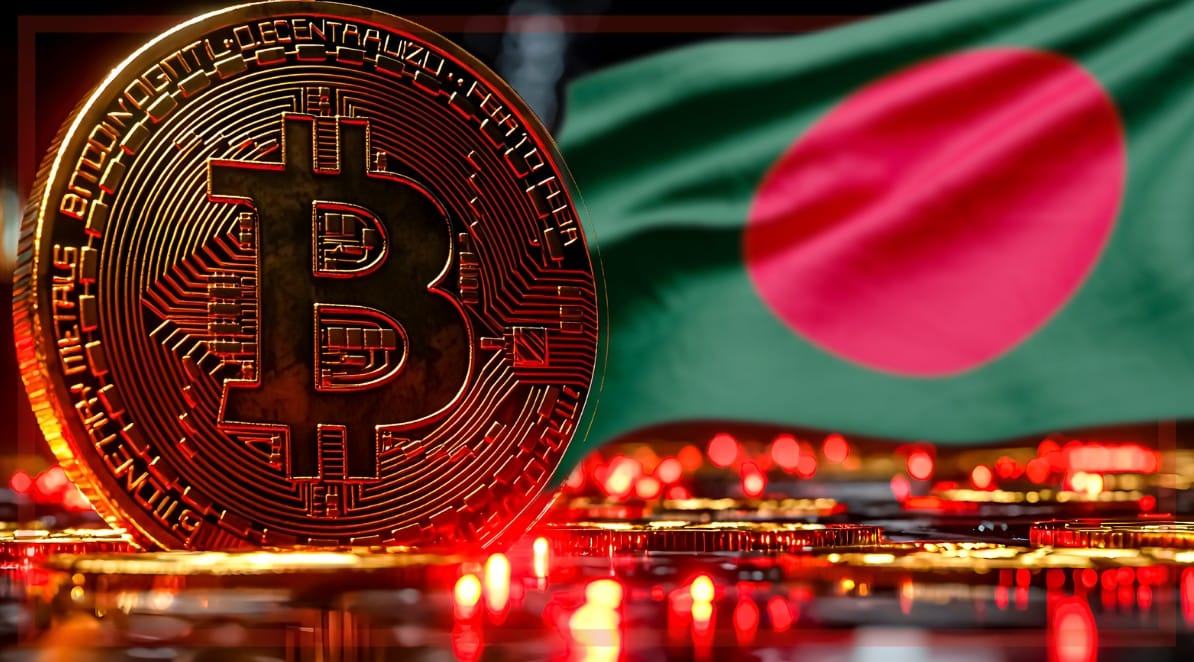
Cryptocurrency has quietly gained ground in Bangladesh despite official restrictions and bans. Global indexes put Bangladesh among the top crypto adopters in 2025. Chainalysis ranks it 13th worldwide in crypto usage, and TRM Labs places it at 14th despite the ban. Reports estimate around 3.1 million Bangladeshis now own crypto wallets, largely driven by remittance needs and dollar-denominated stablecoins.
As a matter of fact, many tech-savvy young people use foreign exchanges like Binance or Coinbase to trade Bitcoin, Ethereum, and other coins. They fund accounts with local mobile wallets like bKash or Nagad.
Banned Since 2017 – Yet Enforcement Is Patchy
Bangladesh Bank has repeatedly warned against crypto, citing foreign-exchange and anti–money laundering laws. The Bangladesh Bank in 2017 warned that crypto is not authorised legal tender. The 2022 FX regulations re-affirmed that “virtual currencies…are not permitted” in Bangladesh. No domestic exchanges are licensed, and local law enforcement treats unauthorized crypto trades as illegal.
In recent years, police have arrested groups accused of running underground crypto trading. One case in 2022 revealed Tk 12.78 crore in illicit transactions. Criminal investigators note that unregulated crypto deals often violate the Foreign Exchange Act and ML/TF laws. Yet enforcement is uneven.
The central bank still advises citizens to refrain from all crypto activities, while local IT leaders argue that blockchain innovation cannot be ignored. Syed Almas Kabir, head of the Bangladesh Association of Software and Information Services (BASIS), warned that “cryptocurrency is the future…we cannot be in denial” and urged Bangladesh to prepare for the technology.
Remittances & Dollar Shortages: The Real Rocket Fuel
Economic pressures fuel crypto’s appeal. Bangladesh is one of the world’s largest remittance recipients, with official inflows reaching over $20 billion in FY2023-2024. Yet remittance costs remain high, about 5.4% on average for South Asia.
Analysts note that using USD-pegged stablecoins could slash fees and speed up cross-border payments. An estimate suggested that if just a third of remittances used dollar-stable tokens at 1.5% fees instead of 5.4%, Bangladeshi families could save roughly $260 million annually.
Similarly, freelance professionals struggle with slow international payouts. Many now rely on crypto stablecoins to transfer earnings instantly. As Bangladesh’s foreign reserves dipped in 2024-2025, many saw stablecoins like USDT or USDC as a way to preserve dollar-value savings.
With a large unbanked or underbanked population using mobile money, crypto provides an unofficial hard currency alternative. In short, limited access to foreign exchange and persistent inflation have made crypto a de-facto hedge and payment channel for some Bangladeshis.
How Bangladeshis Actually Buy Crypto in 2025
In practice, Bangladeshis tap global crypto infrastructure. Centralised exchanges (CEX) like Binance and Coinbase are popular even though they aren’t regulated locally. Users fund accounts through mobile banking apps or OTC brokers. Peer-to-peer (P2P) networks are also active. Numerous offers circulate on social media and messenger groups for buying Bitcoin via bKash or bank transfers.
No domestic crypto exchange exists in Bangladesh, and crypto mining is effectively banned under the overall prohibition. Authorities could prosecute mining under the same laws used against trading.
On the positive side, Bangladesh has a growing IT sector and expanding mobile-finance infrastructure. Its 2020 National Blockchain Strategy recognized blockchain’s potential, citing global investments (reportedly $23 billion) in blockchain-related ventures.
To date, private fintech firms focus on mobile payments and digital banking, with only a few offering any crypto-related services under the table.
Underground Today, Regulated Tomorrow?
Bangladesh’s informal crypto rise carries clear risks. Scams, manipulation, and legal uncertainty in a market with no consumer protection or KYC/AML rules. Yet observers warn that bans also cost opportunities. With smart regulation, as seen in India and Pakistan, Bangladesh could curb abuse while supporting fintech growth. Global bodies like the IMF and World Bank continue urging clear frameworks.
For now, crypto activity is underground. Millions trade stablecoins, Bitcoin, and Ethereum on foreign platforms. As BASIS’s Syed Kabir notes, blockchain is coming regardless. The question is whether Bangladesh will stick to prohibition or move toward controlled regulation, especially given its young population and strong remittance flows.
#Crypto #Bangladesh #Adoption #Stablecoins
Author: Ayanfe Fakunle
The editorial team at #DisruptionBanking has taken all precautions to ensure that no persons or organizations have been adversely affected or offered any sort of financial advice in this article. This article is most definitely not financial advice.
See Also:
India’s Crypto Boom in 2025 | Disruption Banking
The Rise in Popularity of Crypto in Pakistan | Disruption Banking
How Have Protests In Bangladesh Impacted Remittances? | Disruption Banking